
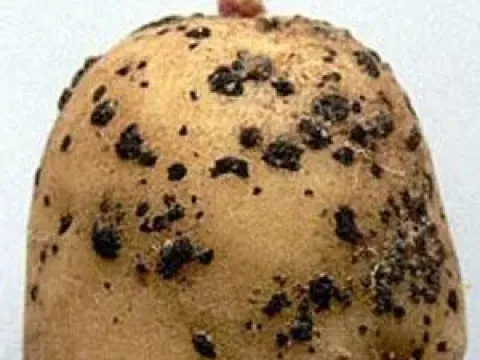
Thanatephorus sasakii
Thanatephorus sasakii
Thanatephorus sasakii is the teleomorph (sexual stage) of the soil-borne fungal pathogen Rhizoctonia solani (specifically anastomosis group AG-1 IA). It is a basidiomycete fungus known worldwide as the primary agent responsible for sheath blight in rice crops.
What the section contains
Thanatephorus sasakii
The mycelium of this fungus is characterized by rapid growth, branching at right angles, and the presence of septa. It forms sclerotia, which are dense hyphal aggregations that act as the primary overwintering structures, allowing the fungus to survive in soil and plant debris for several years.
Taxonomically, it belongs to the kingdom Fungi, phylum Basidiomycota, and class Agaricomycetes. Its biological success is attributed to its ability to function as a facultative parasite, seamlessly switching between saprotrophic and parasitic modes of existence depending on environmental availability.
As a pathogen, it utilizes a combination of mechanical force and cell-wall degrading enzymes to penetrate plant tissues. Its wide host range makes it a significant threat not only to rice but also to various weed species and other crops.
Identification in the field is usually based on the characteristic necrotic lesions on leaf sheaths, while laboratory confirmation involves morphological analysis of mycelial culture and molecular diagnostic techniques like PCR to confirm the specific AG group.
Rice (Oryza sativa) is the most significant economic host for Thanatephorus sasakii. The fungus primarily targets the leaf sheaths, stems, and occasionally panicles, causing localized cell death and restricting the flow of water and nutrients within the plant.
The economic impact of this pathogen is profound, with yield losses ranging from 20% to 50% under severe epidemic conditions. Damage manifests as premature leaf senescence, reduced grain filling, and empty glumes, which drastically lower both quantity and quality.
Severely infected plants often suffer from lodging, which makes harvesting difficult and reduces the efficiency of mechanical operations. Furthermore, the loss of photosynthetic leaf area weakens the plant, making it susceptible to secondary invaders.
The disease spread is rapid, especially in dense plant stands. The fungus moves between plants through contact and via irrigation water, quickly turning a localized outbreak into a field-wide infestation.
In addition to yield loss, the pathogen significantly degrades the nutritional and market value of the grain, making it less suitable for storage and processing, thus impacting the entire supply chain.
The disease cycle is triggered by the germination of sclerotia present in the soil. The pathogen is most active during the vegetative stage of rice, particularly from the tillering stage through to the milk-grain stage, which are the most susceptible developmental phases.
High relative humidity (above 90%) and warm temperatures (ranging from 25°C to 30°C) are the primary environmental drivers for disease development. These conditions facilitate the rapid colonization of leaf sheaths and the production of new sclerotia.
Frequent rainfall or high morning dew creates a moisture-rich microclimate within the rice canopy, allowing the mycelium to bridge the gaps between plants and spread the infection across the field.
Irrigation management plays a crucial role in the disease dynamics, as water serves as a vector for moving sclerotia throughout the flooded rice fields, accelerating the spread of the pathogen.
As the season draws to a close, the fungus shifts its metabolic focus to the maturation of sclerotia. These structures detach from the plant tissue and fall into the soil or water, serving as the inoculum source for the next season.
Initial symptoms are usually observed on the lower leaf sheaths near the water line. These appear as small, water-soaked, grayish-green lesions that gradually expand and darken.
- Lesions are often irregular or elliptical with a distinct dark brown or reddish-brown margin.
- Under high humidity, a white, cottony fungal mycelium may be visible on the surface of the lesions.
- Formation of brownish, mustard-seed-sized sclerotia on infected leaf surfaces.
- Progressive yellowing and wilting of leaves starting from the bottom of the plant.
- Stem rotting and collapse leading to premature plant death.
As the disease progresses, lesions merge to cover large areas of the foliage, giving the plants a scorched or blighted appearance. If the infection reaches the panicle, it can cause the development of unfilled grains.
The rapid expansion and the distinct pattern of lesions make sheath blight easily distinguishable from other fungal diseases once the characteristic symptoms have fully manifested on the lower canopy.
Managing Thanatephorus sasakii requires an integrated approach that focuses on reducing inoculum and modifying the environment to be less favorable for fungal growth.
Cultural practices are the first line of defense: avoiding excessive nitrogen fertilization reduces canopy density, which in turn improves air circulation. Deep plowing helps bury infected crop residues and sclerotia, reducing their viability.
Chemical control involving systemic fungicides (such as strobilurins, triazoles, or carboxamides) is highly effective when applied at the onset of disease. Timely application based on scouting reports is essential for success.
Seed treatment and the use of healthy, certified seeds are critical to prevent the introduction of the pathogen into new areas. Sanitation of equipment that moves between fields also prevents the dispersal of sclerotia.
Breeding for resistance or tolerance is the long-term solution. While full immunity is currently unavailable, utilizing varieties with moderate resistance levels can significantly suppress disease development and reduce the reliance on chemical inputs.