
Tilletia laevis
Tilletia laevis
Tilletia laevis is a parasitic fungus belonging to the Basidiomycota division. It is the primary causal agent of common bunt or stinking smut, a severe disease affecting various cereal crops, primarily wheat.
What the section contains
Tilletia laevis
The teliospores of the fungus are spherical to elliptical, characterized by a smooth surface, which distinguishes this species from Tilletia caries, which has a reticulated spore surface. Spores typically measure 15–22 microns.
The pathogen survives primarily as dormant spores on the surface of seeds or within the soil. These spores can maintain viability for several years in favorable environmental conditions.
Infection occurs during the germination of the wheat seed. The fungal spores germinate simultaneously with the host, forming mycelium that invades the seedling's growing point.
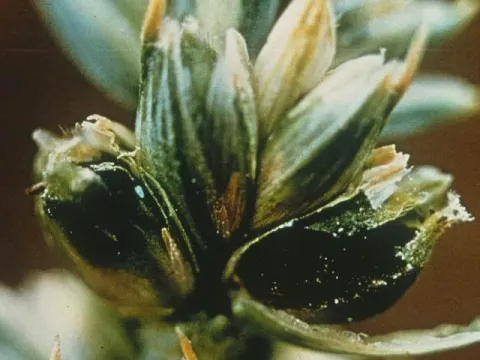
The fungus develops systemically within the plant without showing obvious symptoms until the grain heading stage, where it replaces the grain ovaries with masses of dark, powdery spores.
Common bunt primarily affects bread wheat and durum wheat, though it can occasionally infect other cereals such as rye or barley. It causes significant economic damage to grain production.
The primary damage is the replacement of the grain endosperm with fungal spores. This results in a massive loss of yield and renders the grain entirely unsuitable for milling or baking.
Even a small percentage of contaminated grains can spoil an entire harvest due to the production of trimethylamine, a compound that gives the grain a strong, unpleasant, fishy odor.
Beyond quantity, the quality of the seed is severely compromised, making it dangerous for subsequent plantings if not properly treated with fungicides.
High infestation levels lead to financial losses due to price discounts at elevators, increased cleaning requirements, and potential rejection of the grain lots by buyers.
The infection phase is limited to the period when the wheat seed is germinating and before the seedling emerges from the soil. Once the first leaf emerges, the plant becomes resistant to new infection.
The ideal conditions for spore germination and infection are relatively cool soil temperatures (5°C to 15°C) combined with moderate soil moisture.
Warmer soil conditions generally inhibit the development of the disease because the wheat seedlings grow through the susceptible stage more quickly than the fungus can penetrate.
The dispersal of spores takes place primarily during the harvest season. When bunt balls are crushed by harvesting equipment, clouds of spores are released, contaminating clean grain and soil.
The spores remain dormant in the soil or on seed surfaces until the next planting season, demonstrating high resilience against adverse winter conditions and drought.
Symptoms are rarely visible until the dough stage of the grain development. Affected wheat plants often appear stunted and have a distinct bluish-green color compared to healthy plants.
The infected spikes remain green longer than healthy ones and often have a more slender appearance. The glumes may spread apart slightly due to the pressure from the developing spore balls.
Upon inspection, the grains are transformed into "bunt balls"—hard, brittle structures filled with a dark mass of spores, covered by a thin, greyish membrane.
The most diagnostic sign, especially when dealing with large quantities of grain, is the distinct fishy odor caused by the release of trimethylamine from the spore mass.
If the field is heavily infected, the presence of these spores can be seen as a black dust covering the spikes, especially during harvesting activities or windy weather.
Effective management of Tilletia laevis relies on a combination of chemical seed treatment and sound agronomic practices to reduce the fungal inoculum.
- Treatment of seeds with systemic fungicides is the most effective method to eliminate surface-borne inoculum.
- Selection of resistant or tolerant wheat varieties is a key strategy in regions with high disease pressure.
- Crop rotation ensures that the pathogen levels in the soil decrease before the next wheat crop is planted.
- Utilization of certified, high-quality, and clean seed stocks to prevent introducing the pathogen to the field.
- Adjusting planting depth and timing to allow for rapid seedling emergence, reducing the window of susceptibility.
Modern fungicides, particularly those from the triazole family, provide excellent control and are considered standard practice for commercial wheat production worldwide.