
Thekopsora minima
Thekopsora minima
Thekopsora minima is a fungal pathogen belonging to the order Pucciniales. It is a highly specialized parasite that causes a severe foliage disease known as blueberry rust, affecting various members of the Ericaceae family.
What the section contains
Thekopsora minima
This fungus exhibits a complex heteroecious life cycle, which means it requires two different host species to complete its development. It often alternates between Vaccinium species and various conifers, such as hemlock or fir.
The fungus survives the winter primarily as mycelium within the infected tissues of evergreen hosts or as spores in plant debris. The pathogen spreads rapidly through the production of urediniospores carried by wind and rain.
The biology of Thekopsora minima is closely linked to humidity levels. Moisture on the leaf surface is essential for the germination of spores and the subsequent penetration of the fungus into the plant tissue.
Understanding the life cycle is crucial for effective disease management. By identifying the timing of spore release and environmental triggers, growers can optimize their protective treatment schedules.
The primary impact of Thekopsora minima is the premature defoliation of infected bushes. This loss of foliage limits the plant's ability to photosynthesize and accumulate carbohydrates for the upcoming dormant season.
Infected blueberry or cranberry crops often show reduced vigor, stunted growth, and diminished yields. If the infection occurs early in the season, the berries may be underdeveloped and lack necessary sweetness.
Persistent infections over several years can lead to the decline of entire plantations. The stress caused by the disease also makes the plants more susceptible to winter injury and opportunistic secondary pathogens.
In nursery settings, the rust can cause significant losses among young seedlings, leading to high mortality rates. This impacts the availability of healthy planting material for commercial farms.
Economic damage is caused not only by direct yield loss but also by the increased costs associated with repeated fungicide applications required to keep the disease under control.
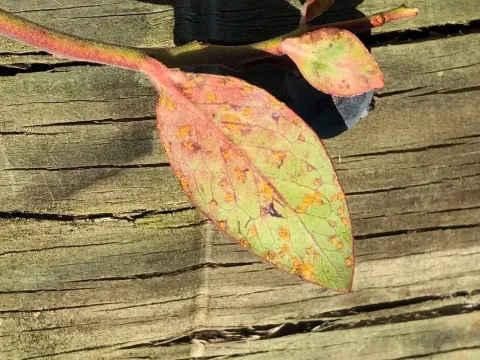
Early symptoms appear as small, chlorotic, or yellow spots on the upper leaf surface. As the infection progresses, these spots become more defined and can grow in size, often resulting in localized necrosis.
The most diagnostic feature is found on the underside of the leaves, where bright orange, powdery pustules (uredinia) erupt. These pustules contain a vast number of spores that easily disperse when disturbed.
As the disease advances, the infected leaves turn brown, become brittle, and eventually drop off. Severe cases lead to heavy defoliation, which is particularly detrimental if it occurs before the harvest.
- Yellow spots on the upper side of the leaves.
- Bright orange, powdery pustules on the undersides.
- Premature leaf drop starting in mid-summer.
- Poor branch development and reduced bud formation.
Close inspection during the mid-summer season reveals these distinct rust-colored clusters, confirming the presence of the pathogen.
The most effective cultural control measure is spatial isolation. Maintaining a significant distance between berry plantations and nearby coniferous forests can help break the rust's life cycle.
Sanitation practices play a vital role. Collecting and destroying fallen leaves during the autumn season reduces the amount of overwintering inoculum present in the field for the next growing season.
Implementing proper pruning techniques improves air circulation within the plant canopy. A well-ventilated bush dries more quickly after rain, significantly reducing the chances of spore germination.
Chemical control involves the use of registered fungicides. Applications should be timed based on local monitoring of spore dispersal and environmental conditions conducive to rust outbreaks.
Integrated Pest Management (IPM) strategies, including the use of resistant cultivars and careful moisture management, are recommended to maintain plant health and minimize reliance on chemical treatments.