
Taphrina wiesneri
Taphrina wiesneri
Description
How to identify
Taphrina wiesneri is a fungal pathogen classified within the Ascomycota division. It is an obligate parasite specifically targeting stone fruit trees, particularly species within the Prunus genus.
The fungus overwinters as mycelium embedded within the bark, buds, and twigs of infected trees, allowing it to survive adverse winter conditions.
During the early spring growth period, the fungus becomes active and invades the developing buds and emerging leaves, inducing significant physiological changes.
Its reproductive cycle involves the formation of asci on the leaf surface, which produce spores that are dispersed by wind and splashing rain to facilitate new infections.
This pathogen is primarily known for causing abnormal cellular proliferation, leading to the characteristic morphological distortions in host tissues.
What it damages
The primary hosts of this pathogen are cherry trees, where it causes severe structural and metabolic damage. Affected trees suffer from reduced vigor and productivity.
The most distinctive symptom is the formation of "witches' brooms," which are dense clusters of thin, stunted, and distorted shoots emerging from a single point.
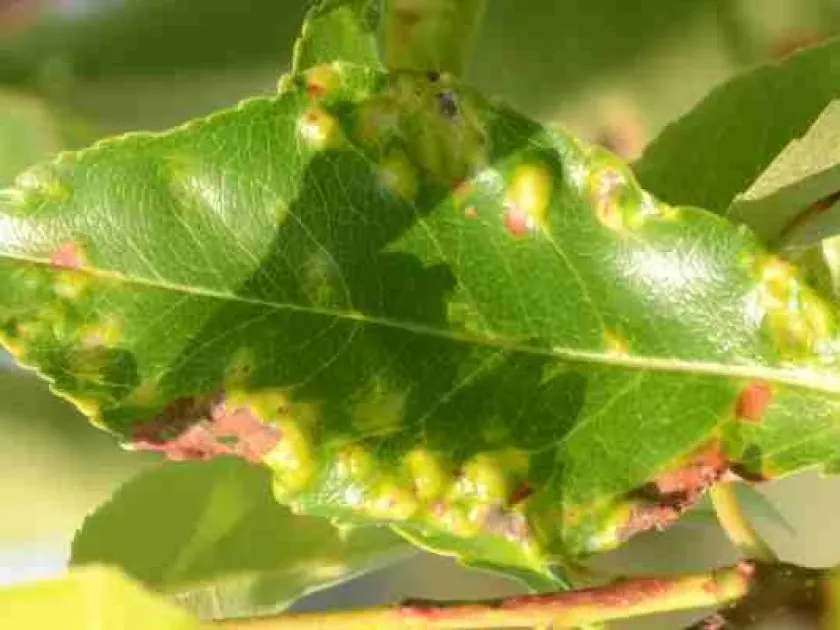
Leaf infection causes curling, thickening, and discoloration. These damaged leaves often show shades of yellow, red, or brown, disrupting effective photosynthesis.
Infection results in premature leaf drop and the deformation of developing fruits, which often fail to mature properly or fall off before harvest.
If left unmanaged, the cumulative impact of the disease weakens the tree's overall structure, reducing its lifespan and susceptibility to secondary infections.
When it appears
The infection phase is strictly tied to spring weather conditions, specifically cool temperatures ranging from 10°C to 15°C combined with high humidity.
The critical period for infection is the bud break stage, when young tissues are most vulnerable to fungal spore penetration.
Prolonged wet spring weather significantly increases the incidence and severity of the disease, as spores rely on moisture for germination and movement.
As summer temperatures rise and humidity levels drop, the fungus enters a dormant state on the surface, though internal mycelial growth may persist.
Predicting the infection window based on local weather forecasts is essential for timing protective fungicide applications effectively.
Signs of infestation
The most visible sign of infection is the abnormal growth of shoots that form dense, shrub-like masses known as witches' brooms.
Leaves on infected branches exhibit dramatic curling and swelling. They may also develop a pale, waxy, or dusty appearance on the underside due to fungal sporulation.
Colors of the leaves often change, displaying reddish or yellowish tints that stand out against healthy foliage.
Fruits on affected trees may show stunted growth, surface lesions, or become shriveled, making them unsuitable for consumption or market.
- Formation of witches' brooms
- Leaf curling and thickening
- Waxy fungal spores on leaf undersides
- Premature leaf and fruit drop
Control measures
Sanitation is the most critical management step. All branches displaying symptoms of witches' brooms must be pruned back and destroyed to remove the infection source.
Apply copper-based fungicides as a preventative treatment during the dormant season, specifically before bud burst, to kill spores on the bark.
Maintain orchard hygiene by clearing fallen leaves and debris, which can serve as reservoirs for fungal spores throughout the winter season.
Promote good airflow within the canopy through proper pruning techniques to reduce humidity levels, which discourages fungal spore development.
In high-risk areas, use systemic fungicides during the early spring vegetative growth phase to protect developing leaves from primary infection.
Causes diseases · 1
Discussion
No discussions yet — be the first.