
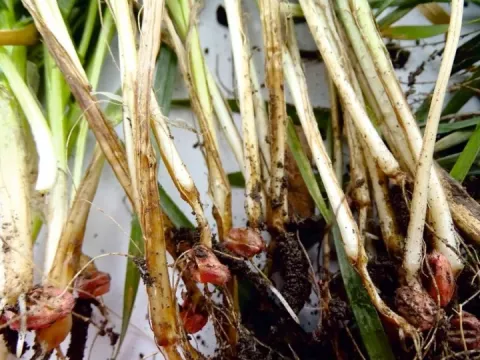
Spot blotch and common root rot
Cochliobolus sativus
Cochliobolus sativus is a highly destructive fungal pathogen belonging to the Ascomycota division. It is the teleomorph of Bipolaris sorokiniana, which is responsible for various cereal diseases worldwide.
What the section contains
Spot blotch and common root rot
The fungus produces dark-pigmented mycelium and multicelled conidia. These reproductive structures allow the pathogen to survive in soil debris for several years even in the absence of a host crop.
The life cycle involves both sexual and asexual reproduction. Primary infection is usually initiated by conidia that germinate and penetrate the roots or the coleoptile of young plants shortly after germination.
Environmental conditions strongly dictate the severity of the infection. Warm and humid conditions are ideal for the development of spot blotch on leaves, while dry spells often aggravate root rot.
It acts as a facultative parasite, meaning it can survive saprophytically on decaying organic matter in the soil, which complicates traditional eradication efforts and sanitation practices.
This pathogen primarily infects wheat, barley, and oats. It has a broad host range, including many grassy weed species that act as reservoirs, keeping the pathogen present in the field throughout the season.
The damage caused by Cochliobolus sativus is multifaceted, affecting root systems, foliage, and heads. This leads to significant yield losses, reduced kernel weight, and poor seedling emergence.
Infected seedlings often show brownish lesions on the coleoptile. As the disease progresses, the root system becomes necrotic and brown, causing stunting of the entire plant.
Foliar symptoms appear as small, dark brown or black spots that expand into irregular, blotchy lesions. Eventually, these lesions can merge, causing premature senescence of the leaves.
Integrated management is essential, starting with the use of certified, fungicide-treated seeds. Systemic seed dressings are effective in protecting the crop during the vulnerable seedling stage.
Implementing crop rotation cycles with non-host species like legumes or oilseeds is a key cultural practice. Proper fertilization and balanced nitrogen levels help strengthen plants against severe outbreaks.