
Sclerotinia
Sclerotinia sclerotiorum
Description
How to identify
Sclerotinia sclerotiorum is a widespread necrotrophic fungal pathogen, the causal agent of white mold disease. It belongs to the phylum Ascomycota and is notorious for its ability to produce sclerotia, which are hard, black, resting structures of fungal mycelium.
This pathogen has an exceptionally broad host range, infecting over 400 species of dicotyledonous plants, including oilseeds, legumes, and various vegetable crops. The fungus secretes enzymes like pectinases and cellulases to dissolve cell walls.
The life cycle involves both sexual and asexual stages. Sclerotia buried in the soil germinate to form apothecia, which are small mushroom-like structures that release ascospores into the air, facilitating spread.
Sclerotia are incredibly resilient and can persist in the soil for many years, providing a continuous source of inoculum for subsequent growing seasons, making eradication extremely difficult.
Spread primarily occurs through wind-dispersed ascospores, contaminated seed lots, or the movement of infested soil by machinery and agricultural equipment.
What it damages
The primary symptom caused by S. sclerotiorum is white mold (sclerotinia rot). The disease causes decay and tissue collapse in stems, roots, pods, and floral parts of infected plants.
Significant economic losses occur in sunflowers, canola, soybeans, and peas. When the main stem is girdled by the fungus, the entire plant often wilts and dies, leading to significant yield reduction.
In sunflowers, the pathogen targets the head, causing it to rot and lose seeds prematurely, which drastically decreases marketability and total yield output.
The pathogen severely affects crop quality, as infected seeds can become shriveled, discolored, and carry the fungus into the next generation, perpetuating the disease cycle.
Lodging caused by stem weakening is a major problem for mechanized harvesting, as it prevents combine headers from effectively gathering the plant biomass from the field.
When it appears
Disease development is highly dependent on environmental conditions, particularly high humidity, canopy wetness, and moderate temperatures ranging from 15°C to 25°C.
The flowering stage is the most critical window for infection, as ascospores colonize senescing petals that fall into leaf axils or onto other plant parts, providing the necessary nutrients for the fungus.
Persistent rainfall and frequent dew formation during the growing season significantly enhance the probability of an outbreak, often leading to rapid field-wide dissemination.
Throughout the late season, as plants mature and begin to die back, the fungus utilizes the weakening tissue to initiate the formation of new sclerotia, ensuring the pathogen's survival for the coming winter.
While drought conditions may temporarily halt the visible growth of the mycelium, the sclerotia remain dormant in the soil, ready to re-emerge whenever favorable moisture returns.
Signs of infestation
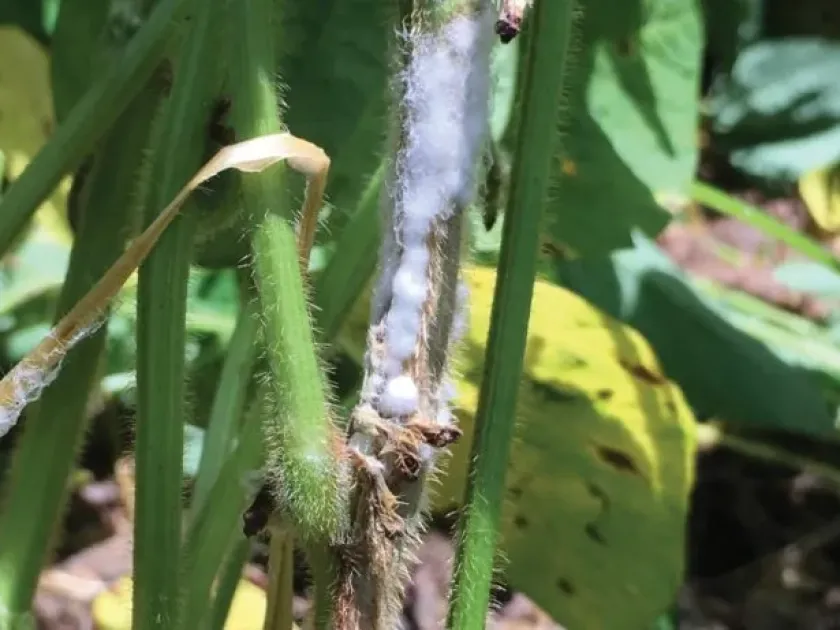
The hallmark sign of Sclerotinia infection is a thick, white, cotton-like mycelial growth on the surface of infected stems, leaves, or heads during periods of high humidity.
As the infection progresses, the tissues become bleached, water-soaked, and soft. Eventually, the infected plant part becomes brittle and dry, often breaking at the point of infection.
Hard, dark black sclerotia, which may vary in shape and size, are formed inside the hollow stems or on the surface of the rotted plant tissues as the infection matures.
Seedlings may experience pre-emergence or post-emergence damping-off, resulting in poor stand establishment and visible thinning of the crop early in the season.
Chlorosis and premature wilting of entire plants or specific branches are common field indicators that often precede the appearance of the distinctive white fungal mat.
Control measures
Managing Sclerotinia requires an integrated management approach, as no single method can fully eliminate the pathogen from the environment.
- Crop rotation with non-host species, such as cereals or grasses, for at least 3-4 years to reduce sclerotial survival.
- Using high-quality, clean, and certified seeds to prevent the introduction of sclerotia into new fields.
- Managing weeds, as many wild species can harbor the pathogen and contribute to local inoculum levels.
- Applying fungicides during the flowering period, which is the most effective time to protect the crop against ascospore colonization.
- Implementing deep tillage practices to bury sclerotia deeply in the soil profile, preventing them from germinating and reaching the surface.
Biological control agents, such as Coniothyrium minitans, can be applied to fields to degrade sclerotia, thereby reducing the soil-borne infection reservoir.
Selecting and planting resistant or tolerant crop varieties is a cornerstone of sustainable disease management and is critical in regions with high infection pressure.
Proper canopy management, including appropriate plant spacing and moisture control, can reduce the microclimate humidity levels that the fungus requires to thrive.
Causes diseases · 4
Discussion
No discussions yet — be the first.