
Rice dwarf
Rice dwarf
The causative agent of this disease is the Rice dwarf virus (RDV), a member of the Reoviridae family and the Phytoreovirus genus. This virus contains a double-stranded RNA genome and is one of the most significant pathogens affecting rice production in Asia.
What the section contains
Rice dwarf
The virus is a highly specialized pathogen that replicates within both the host plant and its insect vectors. It is an obligate parasite, relying entirely on these biological hosts to survive and proliferate within the agroecosystem.
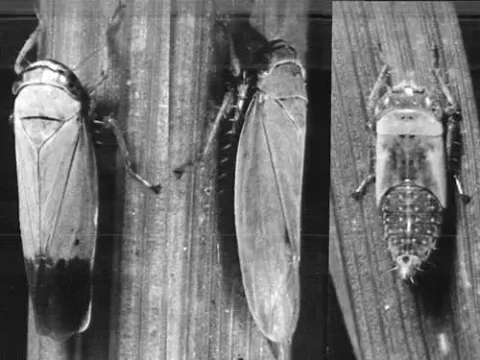
The primary vectors for RDV are leafhoppers, specifically Nephotettix cincticeps and Recilia dorsalis. The virus is transmitted in a persistent, propagative manner, meaning it circulates and multiplies within the insect, ensuring the vector remains infectious throughout its lifespan.
Taxonomically, the virus is classified among the phytoreoviruses, known for their icosahedral structure. This structural stability allows the virus to survive various environmental stresses while maintaining its ability to infiltrate plant phloem cells.
Identification of the disease in the field is usually based on visual symptoms, though definitive diagnosis often requires molecular techniques such as RT-PCR or ELISA to differentiate it from other viral or nutritional disorders.
Rice (Oryza sativa) is the primary host for the Rice dwarf virus. Infection at the early seedling stage is particularly devastating, often leading to total crop failure and significant economic losses for farmers.
Secondary hosts include various wild grasses and weeds that inhabit the surroundings of paddy fields. These plants serve as essential reservoirs for the virus during periods when rice is not being actively cultivated.
The economic impact is manifested through reduced plant height, stunted root systems, and limited grain filling. Infected plants produce very few, if any, viable seeds, severely impacting the final yield per hectare.
As a systemic pathogen, RDV disrupts the phloem, which inhibits the translocation of nutrients and photosynthates throughout the plant. This structural damage causes the entire metabolic process to fail, leading to overall plant collapse.
Persistent infection leads to field-wide outbreaks, especially when vector populations are high. This necessitates consistent monitoring to prevent widespread destruction of rice cultivation areas.
Disease transmission is closely tied to the lifecycle and seasonal activity of the leafhopper vector. The highest infection risk occurs during the tillering stage of the rice plant, as young, tender tissue is highly susceptible.
Environmental factors such as high humidity and warm temperatures significantly promote the breeding and migration of the insect vectors. In tropical and subtropical regions, the disease can be prevalent throughout the entire growing season.
The virus survives the off-season primarily within the overwintering insect populations or in perennial host weeds. As temperatures rise in the spring, these vectors migrate to newly planted rice, initiating new infections.
Outbreaks are often sporadic and highly dependent on vector density. Field observations indicate that sudden shifts in weather patterns often precede spikes in vector activity and subsequent viral transmission.
Agronomic management during the critical early growth phases is essential, as primary infections during this time determine the severity of the disease epidemic across the entire field.
The hallmark symptom of Rice dwarf disease is severe stunting. Infected plants appear significantly shorter than healthy ones, with significantly reduced inter-nodal growth, giving them a compact appearance.
Chlorotic spots and streaks, often appearing as pale yellowish or white patterns, manifest on the leaf blades. These symptoms are caused by the virus interfering with chlorophyll production and distribution.
Plants often exhibit excessive tillering, resulting in numerous, thin, and unproductive side shoots. These bushy, distorted plant structures are a key indicator of the disease’s impact on growth regulators.
- Stunting of the main plant body.
- Development of chlorotic streaks along leaf veins.
- Formation of many unproductive, weak tillers.
- Delayed or completely failed panicle formation.
- General chlorosis and lack of vigor.
The root system of infected plants is typically poorly developed and weak, which decreases the plant’s resilience against other environmental stressors such as drought or nutrient deficiencies.
The primary control strategy is the management of the leafhopper vector population using systemic insecticides. Timely application during the early growth stages is crucial to block initial transmission.
Effective cultural practices include the eradication of reservoir weeds surrounding the paddy fields. Keeping the field perimeter clean of alternative hosts significantly reduces the viral inoculum source.
The use of resistant rice cultivars is the most sustainable long-term solution. Breeding programs continuously focus on integrating resistance genes to reduce the reliance on chemical interventions.
Adjusting the planting schedule to avoid synchronization with peak leafhopper migration can effectively minimize infection rates. Strategic timing helps the crop pass its most susceptible phase when vector activity is naturally lower.
Continuous monitoring using yellow sticky traps allows agronomists to track vector population levels. This data-driven approach enables precise chemical applications, maximizing protection while minimizing the overall ecological footprint.