
Rice hoja blanca virus
Rice hoja
The causative agent of the disease is the Rice hoja blanca virus (RHBV), which is classified within the Tenuivirus genus. This virus is a specialized pathogen that primarily infects cultivated rice (Oryza sativa).
What the section contains
Rice hoja blanca virus
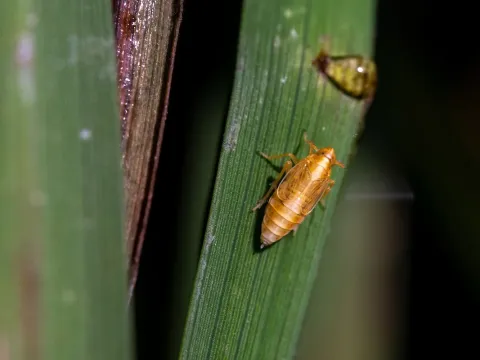
The virus is transmitted by the planthopper Tagosodes orizicolus. A critical feature of this transmission is transovarial transmission, where the virus is passed from the female insect to its progeny, ensuring the persistence of the pathogen in the agricultural environment.
The virus has a segmented, single-stranded RNA genome enclosed in a nucleocapsid. Due to its unstable nature, it cannot survive for long periods outside of the host plant or the insect vector.
The disease cycle is inherently linked to the life cycle of the planthopper. High population densities of the vector are directly correlated with increased incidences of the virus in rice fields.
Diagnostic identification relies on molecular techniques such as ELISA or PCR, as the virus can be easily mistaken for nutritional deficiencies, particularly nitrogen starvation, in field conditions.
Rice hoja blanca is considered one of the most destructive viral diseases affecting rice production in Latin America and the Caribbean, causing significant economic losses to farmers.
Infection leads to severe systemic physiological disturbances in the plant, hindering its ability to synthesize food through photosynthesis, which leads to stunted growth and reduced vigor.
The damage is most pronounced when infection occurs at the seedling stage, often resulting in plant mortality. If plants survive, they produce malformed panicles with poorly developed or empty grains.
The presence of the virus also makes the rice crop more susceptible to secondary environmental stresses and pests, creating a compound effect that drastically lowers overall yields.
Entire fields can be decimated during severe outbreaks, forcing growers to abandon susceptible varieties in favor of more robust, resistant cultivars developed through modern breeding.
The hallmark symptom of the disease is the appearance of white or chlorotic longitudinal stripes on the leaves, which can eventually spread to cover the entire leaf surface.
Infected plants display noticeable stunting and reduced tiller numbers compared to healthy plants, resulting in an uneven and sparse canopy appearance in the field.
The leaves of affected plants often become narrower, thinner, and prone to curling. The overall appearance of the plant becomes pale, which is the origin of the name 'hoja blanca' (white leaf).
In terms of reproductive development, panicles are often twisted, partially emerged, or completely empty, leading to significant yield loss due to sterility or grain filling failure.
- Longitudinal white/yellow stripes on leaves.
- Severe stunting of rice plants.
- Leaf curling and narrowing.
- Twisted or poorly developed panicles.
- High percentage of empty grains.
The most effective strategy for managing the virus is the deployment of resistant rice varieties, which act as the primary defense against the pathogen and its vector.
Insecticide applications targeted at controlling Tagosodes orizicolus populations are crucial during the early stages of the rice crop to prevent primary viral inoculation.
Sanitation practices, including the eradication of weed hosts around rice fields, are essential to remove reservoirs that harbor the virus during the off-season.
Adjusting planting dates to avoid the peak periods of insect vector migration can significantly reduce the pressure of the disease on the upcoming harvest.
Integrated Pest Management (IPM) programs, which include systematic monitoring of vector populations using yellow sticky traps, allow for precision application of control measures and improved field safety.