
Raspberry ringspot
Raspberry ringspot
Raspberry ringspot virus (RRSV) is a plant pathogenic virus belonging to the genus Nepovirus. It is a soil-borne pathogen that primarily infects a wide range of fruit and berry crops.
What the section contains
Raspberry ringspot
The virus is transmitted by soil-inhabiting nematodes, specifically species within the Longidorus and Paralongidorus genera. These nematodes acquire the virus while feeding on infected roots and subsequently transmit it to healthy plants.
RRSV has a broad host range, infecting not only raspberries but also strawberries, cherries, grapes, and various common weeds, which act as reservoirs for the virus.
The transmission process is highly efficient, as the virus particles bind to the nematode's esophagus, allowing for long-term persistence and transmission during multiple feeding events.
Correct identification requires molecular diagnostic techniques such as ELISA or RT-PCR, as symptoms can be highly variable depending on the host variety and environmental conditions.
The virus causes systemic infection, which disrupts the normal physiological and metabolic processes of the host plant, leading to significant yield reduction.
Infected raspberries often show severe stunting, reduced fruit size, and malformed berries. This degradation in quality makes the produce commercially non-viable.
The overall vigor of the infected plant is drastically reduced. Over time, this leads to a decrease in the number of canes and a decline in the plant's ability to produce new growth.
RRSV infection can exacerbate the plant's susceptibility to environmental stressors, such as cold temperatures or drought, often leading to total plant death during winter.
The economic impact on commercial plantations is substantial, necessitating the eradication of infected patches to prevent the further spread of the disease through the soil.
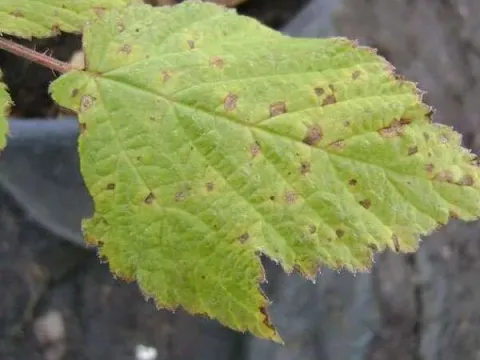
The most distinctive symptom is the development of chlorotic rings, lines, and spots on the leaves, which are typically visible during the spring growth phase.
Leaves often exhibit curling, crinkling, or deformation. In some raspberry cultivars, the symptoms may appear as a mild mosaic or be masked, making detection difficult without testing.
Affected canes are often stunted, with shortened internodes, which gives the plant a compressed or "fan-like" appearance. Fruit production is usually poor or completely absent on infected canes.
In severe cases, necrosis may occur at the edges of the leaves or on the roots, which contributes to the gradual decline and eventual death of the affected plant.
- Chlorotic rings or patterns on leaves.
- Leaf distortion, wrinkling, or curling.
- Stunted growth and reduced internode length.
- Small, malformed, and low-quality berries.
- Gradual decline and death of the plant.
The primary control strategy is the use of virus-indexed, certified healthy planting material, which ensures that the nursery stock is free from RRSV.
Pre-planting soil testing for the presence of vector nematodes is essential. If populations are high, soil fumigation or solarization may be required to reduce nematode numbers.
Weed management is critical, as many common weeds serve as symptomless reservoirs for the virus. Keeping fields and headlands weed-free helps reduce the risk of transmission.
Once infection is detected, affected plants, including their entire root systems, must be rogued out and destroyed to eliminate the source of the virus.
Implementing a strict crop rotation cycle and allowing sufficient time between plantings can help lower nematode populations and minimize the risk of re-infection.