
Raspberry spur blight
Didymella applanata
Didymella applanata is an ascomycete fungus that acts as the primary pathogen responsible for spur blight in raspberries. The fungus survives the winter as mycelium within infected canes and as fruiting bodies.
What the section contains
Raspberry spur blight
This pathogen is an obligate parasite that specifically targets the epidermal tissues of raspberry canes. Its life cycle involves the production of both ascospores and conidia, which are triggered by wet weather conditions.
The fungus spreads via wind-blown spores and water splashes, making it highly dependent on high humidity levels, particularly in the spring and early summer months.
The optimal developmental temperature range for this fungus is between 15 and 22 degrees Celsius, coinciding with the rapid growth phase of the raspberry plant.
Infection typically initiates at the leaf axils, where moisture persists longer, allowing the spores to germinate and penetrate the cane surface efficiently.
The primary host for Didymella applanata is the raspberry plant, though it can also infect blackberries. The fungus specifically attacks the canes, causing significant physiological stress to the plant.
Infection leads to the destruction of buds and the cracking of the cane bark, which interferes with the plant's vascular transport of water and essential nutrients.
Economic damage is severe, as infected canes often fail to survive the winter, resulting in poor fruit production and reduced yield quality during the following harvest season.
In dense, unmanaged plantings, the disease can spread rapidly, turning a localized infection into a widespread infestation that can destroy an entire patch within a few years.
The cumulative effect of the disease weakens the overall vigor of the raspberry bushes, making them more susceptible to secondary infections and winter frost damage.
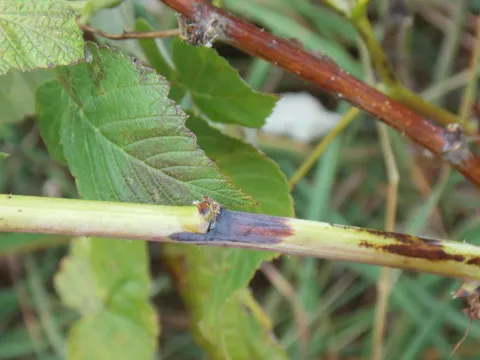
Initial symptoms include the appearance of light purple or brown-colored lesions on the lower portions of young canes, typically developing around the leaf nodes.
As the infection progresses throughout the season, these lesions expand and become darker, eventually causing the bark to split and peel away from the wood.
By late autumn, the infected areas become covered with small, black, pinhead-sized dots, which are the fungal fruiting bodies (pycnidia) where spores are produced.
Affected leaves may show dark brown spots with a yellow halo, eventually leading to premature leaf drop, which weakens the plant's ability to store energy for the winter.
On older, fruiting canes, the lesions turn grey or silver as the epidermis dies, providing a clear visual indication of severe and persistent fungal colonization.
Effective management requires a combination of cultural practices, such as proper sanitation, and the strategic application of fungicides during the growing season.
Maintaining air circulation through regular pruning and removing excess canes is vital to lower humidity levels around the canes and reduce the chances of spore germination.
Chemical control programs often involve applying fungicides during the green tip stage and continuing through the bloom period to protect new growth from infections.
- Remove and destroy all infected canes immediately after harvest.
- Ensure wide spacing between plants to maximize airflow and sunlight exposure.
- Apply balanced fertilizers, avoiding excessive nitrogen that promotes overly lush, succulent growth.
- Monitor for early signs of infection and apply targeted fungicide treatments as recommended.
Proactive prevention, including the choice of resistant varieties and maintaining overall plantation health, remains the most effective strategy for managing spur blight long-term.