
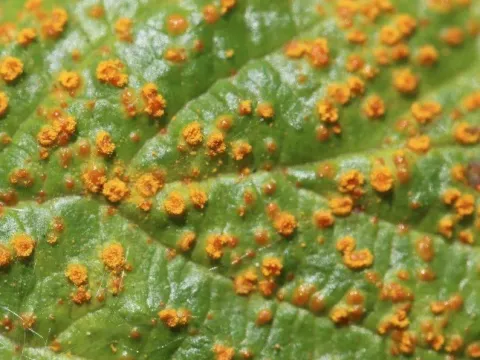
Raspberry rust
Phragmidium imitans
Phragmidium imitans is a specialized fungal pathogen belonging to the order Pucciniales (Rust fungi), classified within the kingdom Fungi.
What the section contains
Raspberry rust
This pathogen is an obligate parasite, which means it requires living host tissue, specifically within the Rubus genus, to complete its life cycle.
The fungus exhibits a complex life cycle, producing multiple types of spores that facilitate both primary infection and secondary spread during the season.
Overwintering occurs primarily as teliospores on fallen leaves or infected canes, allowing the fungus to survive cold temperatures effectively.
Spore dissemination is largely passive, relying on wind currents and splashing water to move between individual plants and adjacent garden rows.
The pathogen causes significant damage by infecting leaf tissues and canes, which interferes with the plant's essential photosynthetic processes.
Premature leaf drop is a common consequence of infection, which drastically reduces the plant's energy reserves before it enters the dormant season.
Infection of the canes can cause splitting and necrosis, weakening the structure and reducing the plant's overall vigor and cold tolerance.
The reduction in nutrient transport leads to lower yields and inferior fruit quality, affecting both size and flavor of the harvested berries.
Severe outbreaks can render entire plantations unproductive, necessitating complete removal of the crop to prevent further spread to healthy fields.
Primary infections begin in early spring when overwintering spores germinate under favorable temperatures and high humidity levels.
The disease progresses rapidly throughout late spring and early summer as urediniospores are released and transmitted to healthy foliage.
The peak of fungal activity typically occurs in late summer, especially if periods of rain are followed by warm, humid conditions.
By autumn, the fungus shifts toward the production of teliospores, signaling the end of the active infection cycle for the growing season.
Dense canopy growth that traps humidity and restricts airflow creates the perfect environment for the pathogen to thrive and multiply rapidly.
Initial symptoms include the appearance of small, yellow-orange spots on the upper leaf surface, which gradually expand over time.
On the underside of the leaves, distinct, raised pustules filled with bright yellow or orange spores are the most diagnostic sign of rust infection.
- Yellowing and distortion of leaves.
- Premature defoliation during the peak summer months.
- Formation of dark, sunken lesions on infected canes.
- Coating of dusty, orange-colored spores on the undersides of leaves.
- Overall stunted growth and reduced vegetative vigor of the raspberry plants.
The presence of these orange powdery pustules is the most reliable way to identify Phragmidium imitans in the field.
Sanitation is critical; all infected plant debris, including fallen leaves and pruned canes, should be removed and destroyed to limit inoculum.
Proper canopy management, including thinning and pruning, is essential to improve airflow and reduce the humidity levels that favor fungal growth.
Chemical control involving copper-based fungicides or systemic triazole applications can be effective when used during early stages of disease development.
Selecting resistant or less susceptible cultivars is the most sustainable approach for long-term management of raspberry rust in home or commercial gardens.
Optimizing plant nutrition, particularly avoiding excessive nitrogen and ensuring adequate potassium and phosphorus, helps boost natural plant immunity.