
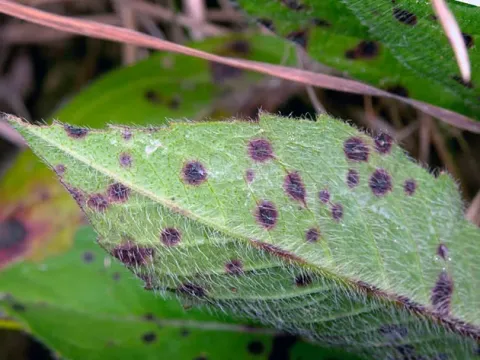
Raspberry Septoria leaf spot
Septoria rubi
The causative agent of this disease is the fungus Septoria rubi, which belongs to the Ascomycota phylum. It is a common pathogen affecting various species of the Rubus genus, including raspberry and blackberry.
What the section contains
Raspberry Septoria leaf spot
The fungus produces microscopic fruiting bodies known as pycnidia. These structures appear as tiny black dots on the infected parts of the plant and are responsible for releasing conidia (spores) that spread the infection.
The pathogen survives the winter in the form of mycelium and pycnidia within fallen leaves and on the canes of the plant. As temperatures rise in spring, the spores are disseminated by splashing rain and wind.
The fungus thrives in warm, humid environments. High humidity levels and poor air circulation within the raspberry patch are the primary conditions that facilitate the rapid spread of the disease.
Biological development involves a polycyclic pattern, meaning multiple infection cycles can occur within a single growing season if the weather conditions remain favorable.
Raspberry Septoria leaf spot primarily damages the leaves and canes of the plant. It is considered a significant disease in both commercial berry plantations and home gardens.
The damage caused by the fungus leads to the premature loss of leaf surface area, which directly impairs the plant's ability to photosynthesize and accumulate necessary nutrients.
Infection on the canes causes bark cracking and necrosis. This weakens the structural integrity of the stems, making them more susceptible to winter frost damage and reducing the overall lifespan of the cane.
Severe infections lead to a decline in plant vigor, which eventually reduces both the quantity and quality of the berries produced by the affected bushes.
If left unmanaged, the pathogen can weaken the entire patch, leading to a significant loss of productivity and the necessity for early replanting or extensive remedial actions.
Early symptoms of the disease usually become visible in late spring or early summer, following the bloom period, when warm weather stimulates fungal activity.
The disease continues to develop throughout the summer months. Prolonged rainy weather or frequent overhead irrigation significantly increases the risk of major outbreaks.
The most critical period for infection development is the mid-to-late summer phase, when the pathogen colonizes the current year's canes, which will be the primary fruiting wood for the following season.
As autumn approaches, the fungus concentrates its activity on forming hardy structures within the plant tissue to survive the winter dormant phase.
The severity of the disease is highly seasonal and depends largely on the frequency and intensity of rainfall during the active growth period of the raspberry bushes.
The primary symptom is the appearance of small, circular spots on the leaves. Initially brown, these spots turn white or light gray in the center, which is characteristic of the infection.
A distinct dark or reddish-brown border typically surrounds the light-colored center of each spot, helping to differentiate it from other types of leaf spots.
On the stems, the spots are larger and irregular, often appearing as patches that cause the bark to crack, peel, and eventually die back.
A key diagnostic feature is the presence of tiny black pycnidia embedded in the center of the white spots, visible to the naked eye upon close inspection.
- Circular white spots on foliage.
- Dark, defined borders around lesion centers.
- Cracking and peeling of the cane bark.
- Black pycnidia dots visible on lesions.
- Premature yellowing and dropping of leaves.
Sanitation is the most effective preventative measure. This involves the removal and destruction of infected canes and the collection of fallen leaves at the end of the season.
Proper canopy management, such as thinning out crowded canes and pruning to improve airflow, significantly reduces the humidity levels that the fungus requires to propagate.
Nutrient management plays a vital role; maintaining a balanced fertilizer schedule that avoids excessive nitrogen helps the plant remain resilient against fungal attacks.
Chemical control usually involves the application of copper-based fungicides or other broad-spectrum sprays during the early spring before bloom and after harvest.
For severe infestations, systemic fungicides categorized as triazoles or strobilurins can be utilized to prevent the further spread of the mycelium and protect new growth.