
Raspberry leaf curl
Rubus yellow
Description
How to identify
Raspberry leaf curl is a serious viral disease caused by a virus belonging to the Luteoviridae family. It is a specialized pathogen that specifically targets plants within the Rubus genus.
The primary vector for this pathogen is the raspberry aphid (Aphis idaei). The insect acquires the virus through feeding on infected phloem sap and transmits it during subsequent feeding cycles.
The virus is not mechanically transmissible through pruning tools or soil. It is strictly dependent on the aphid vector for its transmission from plant to plant within the field.
The infection is systemic and permanent, persisting throughout the entire lifespan of the raspberry cane and its root system. Once a plant is infected, it remains a reservoir for the virus.
Laboratory diagnosis through ELISA (Enzyme-Linked Immunosorbent Assay) or RT-PCR is required for a definitive identification of the viral presence in planting material.
What it damages
The disease affects various species of the Rubus genus, with red raspberries being the most susceptible. The infection causes significant metabolic disturbances within the host plant.
Disruption of the plant's vascular system hampers the transport of carbohydrates and essential nutrients, leading to rapid vigor decline and physiological stunting.
Yield losses are severe, often reaching over 70% in established plantations. The fruits produced on infected canes are usually small, crumbly, and lack desirable sweetness and texture.
Infected plants exhibit reduced cold tolerance, making them highly susceptible to winter kill. This significantly lowers the overall longevity of the berry patch.
The economic impact involves the loss of productive canes, the cost of rogueing infected plants, and the increased necessity for systemic insecticide applications.
Signs of infestation
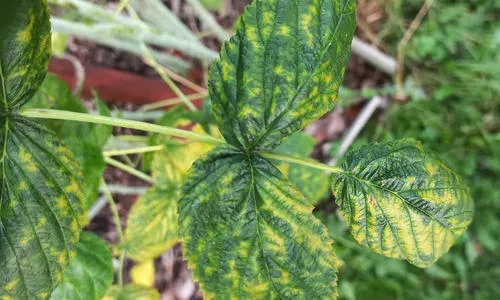
The initial signs involve a distinct yellowing of the leaf tissue between the veins, known as chlorosis. The leaflets typically curl downward along the margins, creating a cupped appearance.
Stunted growth is a hallmark symptom. New canes are significantly shorter, with compressed internodes, giving the plant a bushy or stunted appearance.
Plants display poor fruiting potential. The fruit-bearing spurs are often weak, leading to low flower production and poorly developed berry drupelets.
- Downward curling of leaves.
- Interveinal chlorosis (yellowing).
- Stunted, compressed internodes.
- Premature leaf senescence.
- Drastic reduction in cane vigor.
The severity of symptoms often fluctuates with environmental conditions, but the overall vitality of the plant continues to decline irreversibly over time.
Control measures
The most effective strategy is the use of virus-indexed, certified nursery stock. Starting with clean material is essential for establishing long-term productive plantations.
Vector management is crucial. Systematic monitoring and timely application of insecticides to control Aphis idaei populations significantly reduce the rate of virus transmission.
Prompt rogueing is mandatory. Any plant exhibiting symptoms of leaf curl should be immediately removed from the field, including the entire root system, to prevent spread.
Maintain proper distance from wild Rubus species, as these can serve as latent reservoirs for both the virus and the aphid vectors, facilitating constant re-infection.
Good agricultural practices, such as maintaining vigorous plant health and proper weed control, can help the plant better tolerate secondary stresses, although they do not cure the viral infection.
Causes diseases · 1
Discussion
No discussions yet — be the first.