
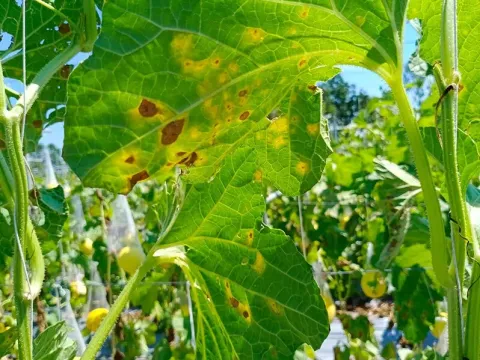
Phyllosticta leaf spot
Phyllosticta cucurbitacearum
Phyllosticta leaf spot is caused by the fungus Phyllosticta cucurbitacearum, a member of the Ascomycota division and the Dothideomycetes class.
What the section contains
Phyllosticta leaf spot
The fungus produces pycnidia, which are tiny, dark, flask-shaped asexual fruiting bodies found on the necrotic lesions of the plant tissues.
The pathogen survives the winter in infected plant debris left in the field and can also be seed-borne, facilitating its transmission to new areas.
Identification is confirmed by microscopic examination of the pycnidia and their spores (pycnidiospores) to differentiate it from other fungal leaf spots.
The pathogen shows high host specificity, primarily affecting plants within the Cucurbitaceae family, including cucumbers, melons, and squashes.
The fungus damages leaves, stems, and fruits, which leads to reduced photosynthesis and overall stunted plant growth.
Severe infestations can lead to premature leaf drop, which leaves the fruits exposed to sunscald and reduces their sugar accumulation.
Stem lesions can cause localized rotting, potentially resulting in the wilting or collapse of the entire vine under stress conditions.
Fruit spotting significantly degrades the aesthetic value and shelf life of the harvested produce, leading to substantial economic losses.
Plants weakened by other environmental stressors or pests are significantly more susceptible to extensive tissue damage by this pathogen.
The disease typically emerges during the mid-to-late growing season, favored by prolonged periods of leaf wetness and moderate temperatures.
Relative humidity levels above 80 percent create the ideal environment for the rapid germination of spores and subsequent infection of healthy leaves.
Frequent rainfall or heavy overhead irrigation during the summer months accelerates the spread of pycnidiospores across the field.
In greenhouses, poor airflow and high condensation on leaves provide perfect conditions for the pathogen to thrive throughout the year.
The infection cycle can repeat multiple times during the season as long as moisture is present and host tissue remains available.
Early symptoms appear as small, circular or angular brown spots on the leaves, usually bordered by a darker, sometimes purplish, margin.
As the spots expand, the center often turns light grey or white, and the necrotic tissue may become brittle, eventually tearing or falling out.
Tiny black dots, the pycnidia, appear scattered across the surface of the lesions, which is a characteristic diagnostic sign of this fungus.
On stems, the symptoms manifest as elongated, brownish necrotic streaks that may result in tissue cracking if the infection is persistent.
As the disease progresses, heavily infected leaves turn yellow, wilt, and eventually die, significantly reducing the plant's canopy.
Implementing a strict crop rotation schedule, avoiding cucurbits in the same soil for at least three seasons, is the first line of defense.
Sanitation practices, including the removal and deep burial of crop residues after harvest, are essential to reduce the primary inoculum load.
Improving greenhouse ventilation and reducing overhead watering helps manage the microclimate to keep leaf surfaces dry.
- Using certified disease-free seeds or seed treatments.
- Applying fungicides specifically labeled for leaf spot control.
- Maintaining balanced soil fertility to ensure robust plant health.
Regular scouting and prompt removal of the first infected leaves can help slow down the progression of the disease within the field.