
Phyllosticta leaf spot of hazel
Phyllosticta coryli
Description
How to identify
Phyllosticta leaf spot is a fungal disease affecting hazel (Corylus spp.), caused by the fungus Phyllosticta coryli. This pathogen belongs to the class Coelomycetes and specializes in attacking the foliage of host plants.
Taxonomically, the fungus is classified within the order Sphaeropsidales. Its life cycle involves the production of pycnidia, which are specialized fruiting bodies that serve as the primary source of inoculum during the growing season.
The fungus survives the winter period in the form of dormant mycelium and pycnidia located on fallen leaf debris. With the arrival of favorable warm and humid weather, the pycnidia release spores into the environment.
These spores are primarily disseminated by splash dispersal during rainfall or by wind currents. Once they reach the leaf surface, the fungi enter through stomata or mechanical injuries to establish an infection.
Proper identification requires professional microscopic examination to observe the specific pycnidia within the lesions. Distinguishing it from other leaf spot fungi is crucial for selecting appropriate management strategies.
What it damages
This pathogen impacts both wild hazel trees and commercial hazelnut orchards. While it is primarily a foliar disease, it significantly affects the physiological vigor of the tree, which can have secondary effects on crop output.
The disease causes premature defoliation, which hampers photosynthesis. Reduced carbohydrate production directly affects the tree's ability to develop healthy nuts and prepare for the upcoming dormant season.
Trees severely affected by Phyllosticta leaf spot show signs of general weakness, making them more susceptible to frost damage and other opportunistic environmental stressors during the winter.
While the fruit itself is rarely directly colonized by the fungus, the reduction in nut size and kernel weight is a common consequence of chronic infection, leading to economic losses for growers.
In nursery settings, the pathogen poses a significant risk, as infected saplings can introduce the disease into new orchards, creating a persistent cycle of infection that is difficult to eradicate later.
When it appears
The disease typically emerges in the early summer, shortly after leaf expansion. Infection rates peak during the mid-to-late summer, coinciding with periods of high humidity and rainfall.
Environmental conditions, particularly temperatures between 20°C and 25°C, coupled with moisture on the leaf surface, create the ideal climate for the germination and spread of Phyllosticta coryli.
Multiple generations of spores are produced throughout the growing season, allowing the disease to spread rapidly through an orchard if conditions remain favorable for the pathogen.
As autumn approaches and temperatures drop, the infection cycle slows down. The fungus retreats into the leaf litter, entering a stage of latency to survive the winter temperatures.
Monitoring the foliage for the first signs of spotting is essential in July and August. Proactive management during this period can prevent the pathogen from reaching epidemic levels by the end of the season.
Signs of infestation
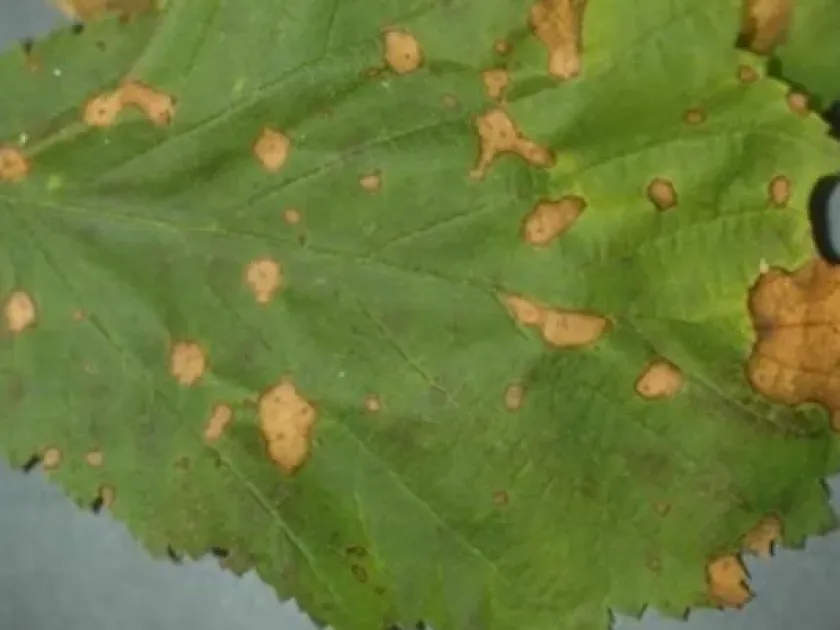
The most visible symptom is the development of distinct spots on the leaves. These lesions are usually circular or irregular in shape and are often surrounded by a dark, well-defined border.
The center of these spots typically turns a grayish-brown or ash-colored hue as the leaf tissue dies. These necrotic areas become thin and may crack or tear, leaving small holes in the leaf blades.
A diagnostic characteristic is the presence of tiny, black pinhead-like dots within the center of the necrotic spots. These are the pycnidia, and their presence confirms that the cause is fungal.
Severe infestations lead to extensive chlorosis, causing the foliage to wither and drop long before the natural onset of autumn. This premature defoliation is a key indicator of a heavy disease load.
Unlike bacterial blights, which may show oozing or different lesion patterns, the Phyllosticta leaf spot remains focused on the leaf blades and does not typically affect the woody tissue of the tree.
Control measures
Cultural practices are the first line of defense. Because the fungus overwinters in the leaf litter, removing and destroying all fallen leaves in the autumn is the most effective method for reducing the primary inoculum.
Pruning the canopy to improve air circulation helps to reduce humidity levels within the tree structure. This makes the environment less hospitable for fungal spore germination and colonization.
For chemical control, copper-based fungicides are highly recommended for early-season applications. In cases of severe pressure, systemic fungicides applied in mid-summer can effectively suppress disease development.
Avoiding overhead irrigation is critical, as it mimics rain and facilitates the splash dispersal of spores. Drip irrigation systems should be prioritized to keep foliage dry throughout the growing season.
Integrated Pest Management (IPM) involves regular scouting of orchards. Early detection allows for targeted treatments, which minimizes chemical use while maintaining the health of the hazelnut trees.
Causes diseases · 1
Discussion
No discussions yet — be the first.