
Phyllosticta leaf spot of soybean
Phyllosticta glycineum
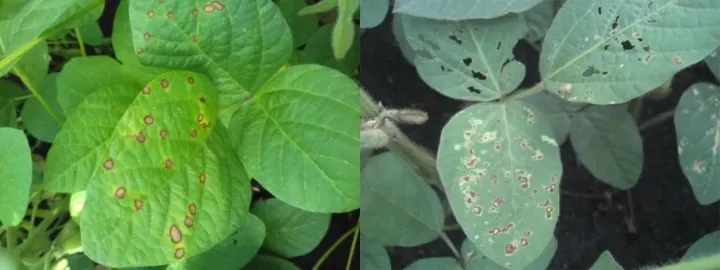
Description
How to identify
The causative agent of the disease is the imperfect fungus Phyllosticta glycineum, which belongs to the kingdom Fungi, phylum Ascomycota. It is a pathogen that specifically targets soybean plants across various developmental stages.
The fungus produces pycnidia, which are small, dark, flask-shaped structures that appear on the surface of the lesions. The presence of these pycnidia is a hallmark of Phyllosticta infection, enabling reliable field identification.
This pathogen survives in crop debris, soil, and infected seeds. It serves as an primary inoculum that remains dormant until environmental conditions become conducive for infection.
Dissemination of the pathogen occurs through conidia, which are splashed by rain, carried by wind, or spread by insect movement. Once attached to the plant surface, the spores germinate under conditions of high humidity.
The development of the fungus is favored by moderate temperatures and prolonged moisture. In such conditions, the fungal mycelium colonizes leaf tissues, leading to the characteristic necrotic lesions observed in infected fields.
What it damages
Phyllosticta leaf spot primarily impacts leaves, reducing the photosynthetic area of the plant. This limitation severely hinders the plant's ability to produce energy during critical reproductive stages.
As the disease progresses, early leaf drop occurs, which leads to reduced plant vigor and stunted development. This premature senescence significantly compromises grain filling and yield potential.
When the infection spreads to stems and pods, the integrity of the vascular system may be affected. Severe cases can lead to pod abortion or the production of discolored, low-quality seeds that are prone to rot.
The stress caused by the fungal infection makes the crop more susceptible to secondary pathogens, leading to complex disease profiles in the field that are harder to manage.
Overall economic losses can be substantial, particularly in high-density soybean stands where the microclimate facilitates rapid spread of the disease across the field.
Signs of infestation
The disease is characterized by circular or irregular spots on leaves, which typically appear ash-gray or light brown in color. These spots are usually bordered by a dark brown or black margin, creating a clear visual contrast.
The center of the spots eventually develops tiny, black, pepper-like dots known as pycnidia. This is a critical sign for diagnosing Phyllosticta leaf spot as opposed to other common soybean blights.
Stem infections manifest as elongated or irregular dark lesions. These lesions can cause structural weakness in the stem, increasing the risk of lodging during strong winds or heavy rain.
Pod symptoms involve dark, sunken lesions that can penetrate the pod wall and damage the developing seeds inside. These pods often show stunted development and poor seed maturation.
- Ash-gray or brown leaf spots with dark margins.
- Small black pycnidia appearing within the lesions.
- Premature defoliation of the canopy.
- Dark, sunken spots on soybean pods.
Control measures
Effective management begins with crop rotation. Avoiding soybean cultivation for at least three years on the same plot significantly reduces the soil-borne inoculum of the fungus.
Proper field sanitation is essential. Incorporating crop residues into the soil through deep plowing helps accelerate decomposition and destroys the overwintering structures of the pathogen.
The use of disease-free, certified seeds is crucial for preventing the introduction of the pathogen into new areas. Seed treatment with systemic fungicides provides an excellent barrier against early-season infection.
Foliar application of fungicides is recommended when disease symptoms appear and weather conditions remain favorable for fungal spread. Systemic compounds are generally more effective than contact ones.
Maintaining optimal planting densities and controlling weeds in and around the field are necessary cultural practices. This ensures adequate airflow through the canopy, which keeps the foliage dry and suppresses fungal growth.
Causes diseases · 1
Discussion
No discussions yet — be the first.