
Phyllosticta
Phyllosticta
Phyllosticta is a large genus of fungi (Kingdom Fungi, Phylum Ascomycota) that acts as a serious plant pathogen. These fungi are characterized by the production of pycnidia, which are flask-shaped structures that release conidia.
What the section contains
Phyllosticta
The pathogen is ubiquitous in agricultural and horticultural settings. It infects a wide variety of hosts, ranging from ornamental shrubs and flowers to fruit trees and essential vegetable crops, causing characteristic leaf spots.
The fungus colonizes host tissues by entering through stomata or wounds. Within the leaf, the mycelium spreads, producing enzymes that degrade plant cells, eventually resulting in necrotic tissue.
Because the genus contains numerous species, Phyllosticta often demonstrates high host specificity. However, their morphological characteristics, especially the presence of pycnidia, remain consistent across different species.
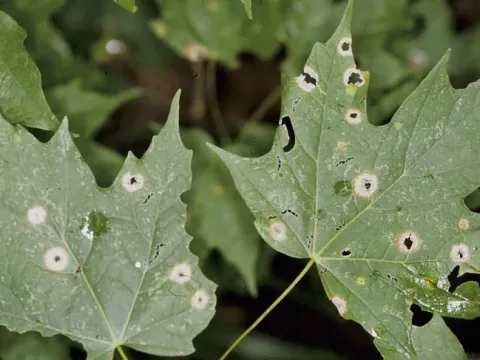
Effective identification relies on recognizing the pycnidia, which appear as minute black dots embedded within the centers of the necrotic spots on the leaves, visible even with a basic hand lens.
The damage caused by Phyllosticta is primarily aesthetic and physiological. In ornamental plants, it severely reduces the commercial value of the crop due to unsightly spotting.
In fruit-bearing plants, the pathogen compromises the photosynthetic efficiency of the foliage. This leads to reduced carbon assimilation, negatively impacting fruit size, sugar content, and overall yield.
Severe infections often lead to premature leaf drop, which weakens the plant's structural integrity and its ability to store nutrients for the following season, affecting long-term plant vigor.
When the infection is aggressive, it can extend from the leaves to the petioles and tender stems, causing systemic stress to the plant and opening pathways for secondary infections.
In commercial agriculture, heavy infestations result in significant economic loss, requiring additional expenses for fungicide applications and labor-intensive sanitation practices.
Phyllosticta typically overwinters as pycnidia or dormant mycelium within fallen leaves, organic debris, or in bark fissures of the host plant, serving as the primary inoculum for the next season.
Infection cycles initiate in the spring as temperatures rise, typically ranging between 15°C and 25°C. High humidity and prolonged leaf wetness are critical factors for the germination of the fungal spores.
The disease progresses rapidly during the summer months, particularly during periods of frequent rainfall, which facilitates the splash dispersal of conidia between leaves and adjacent plants.
Plants are most vulnerable during the peak of their growing season, especially if they are stressed by drought, poor nutrition, or existing insect damage that creates entry points.
Towards the end of the season, the fungus resumes the production of pycnidia on senescing leaves, ensuring the survival of the pathogen in the soil or plant litter through the winter months.
The most diagnostic signs are the formation of necrotic spots. These spots are often circular or irregular in shape and vary in color from light brown to deep brown, frequently surrounded by a distinct halo.
- Appearance of small, dark necrotic flecks on the leaf surface.
- Enlargement of spots, often merging to cover large areas of the leaf.
- Presence of tiny, black, flask-shaped pycnidia within the lesions.
- Development of a "shot-hole" effect as dead tissue detaches from the leaf.
- Premature yellowing (chlorosis) and abscission of leaves.
The texture of the spots can become thin and brittle over time. Unlike bacterial leaf spots, which are often oily or translucent, Phyllosticta spots remain dry and structured.
Under high humidity, a mucilaginous mass of spores may exude from the pycnidia, which is easily visible to the naked eye as a tiny white or pinkish droplet on the surface of the spot.
Consistent monitoring of the lower leaf canopy is essential, as the disease typically establishes itself there before spreading to the upper foliage of the plant.
Sanitation is the cornerstone of Phyllosticta management. Removing and destroying all infected leaf litter at the end of the season significantly reduces the primary inoculum for the following year.
Cultural practices such as pruning to improve air circulation are vital. Reducing canopy density allows for faster drying of leaves after rain, making it harder for fungal spores to germinate.
Preventative applications of copper-based fungicides are highly effective when applied in the spring or late autumn to protect vulnerable tissues from initial infection.
Systemic fungicides, including triazoles and strobilurins, should be utilized as part of an integrated pest management strategy if environmental conditions favor the disease.
Proper plant nutrition, avoiding excessive nitrogen fertilization, ensures that plant cells remain robust, providing a physical barrier against the invasion of the fungal hyphae.