
Phymatotrichopsis omnivora
Ozonium omnivorum
Phymatotrichopsis omnivora, previously known as Ozonium omnivorum, is a soil-borne fungal pathogen responsible for Texas root rot, one of the most destructive diseases affecting a wide range of plants.
What the section contains
Phymatotrichopsis omnivora
This pathogen is classified within the division Ascomycota and is characterized by its ability to produce resilient sclerotia, allowing it to persist in the soil for years even in the absence of suitable host crops.
The fungus propagates through dense mycelial strands that permeate the soil profile and aggressively colonize the root systems of host plants, causing systemic disruption of water and nutrient uptake.
Microscopic analysis reveals distinct, branched hyphae that form a characteristic web-like mantle over infected roots, providing a diagnostic visual marker for identification in the field.
Thriving in warm, alkaline soils with optimal temperatures between 25 and 30 degrees Celsius, this pathogen poses a severe threat to intensive agricultural systems, particularly in arid and semi-arid regions.
The host range of Phymatotrichopsis omnivora is remarkably broad, encompassing over 2,000 species of broadleaf plants including cotton, alfalfa, grapes, and various fruit trees.
Infection results in rapid wilting and necrosis of the root system, which prevents the plant from maintaining its water balance, ultimately leading to death in as little as a few days.
While monocotyledonous crops such as wheat and corn are largely immune to this pathogen, the economic impact on susceptible crops like cotton can be devastating, resulting in total yield loss in infested patches.
The pathogen causes significant financial losses in orchards and vineyards, where the loss of established, long-lived woody plants requires costly replanting and soil management interventions.
Damage is often localized in expanding circular patterns within a field, making it difficult to contain without stringent management of the infected soil environment.
Activity of the pathogen peaks during the summer months when soil temperatures reach the high levels required for the rapid growth of fungal mycelia within the rhizosphere.
Disease symptoms frequently emerge during the peak growing season, as infected plants become unable to meet the increased transpiration demands of their canopy due to compromised root integrity.
During the spring, increased soil moisture triggers the reactivation of dormant sclerotia, which initiate new growth cycles that search for and infect neighboring host roots.
As autumn approaches and soil temperatures drop, the fungus transitions back to its resting phase, producing new sclerotia that ensure the survival of the pathogen throughout the winter season.
Environmental conditions such as prolonged soil wetness after heavy summer rains can exacerbate the spread of the infection, leading to rapid and widespread wilting across a plantation.
The first external sign of infection is sudden wilting of the foliage, which may initially appear during the hottest part of the day and recover at night before becoming permanent.
Infected leaves often turn yellow and eventually bronze or brown, though they typically remain attached to the plant for an extended period after death occurs.
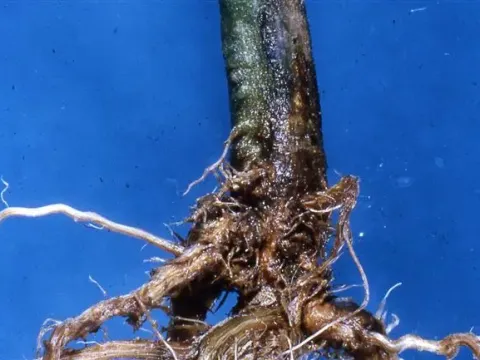
Excavation of the root system reveals severe rotting, with the bark of the roots easily sloughing off to expose a blackened or necrotic internal tissue structure.
A fine, tan-colored or yellowish mycelial mat is often visible on the surface of the root system, which serves as a definitive indicator of Phymatotrichopsis omnivora presence.
In fields, the disease is identified by the characteristic appearance of dead or dying plants in circular patches, which may expand slowly from year to year if left unmanaged.
Integrated management is essential, with long-term crop rotation using resistant monocot species, such as wheat or sorghum, being the most effective method to reduce soil inoculum levels.
Deep tillage practices can help disrupt the mycelial network in the soil, potentially slowing the spread of the pathogen, although this does not eliminate the deep-seated sclerotia.
Improving soil organic matter content and maintaining a balanced nutritional program can help promote healthy plant growth, increasing the plant's overall tolerance to infection.
Preventing the movement of infested soil via agricultural machinery is a critical quarantine measure to limit the spread of the fungus to previously unaffected fields.
- Selecting resistant cultivars for new plantings.
- Implementing strict sanitation protocols for farm tools and equipment.
- Monitoring fields regularly for the early detection of localized wilting patches.