
Phyllody
Phylloid disorder
Description
How to identify
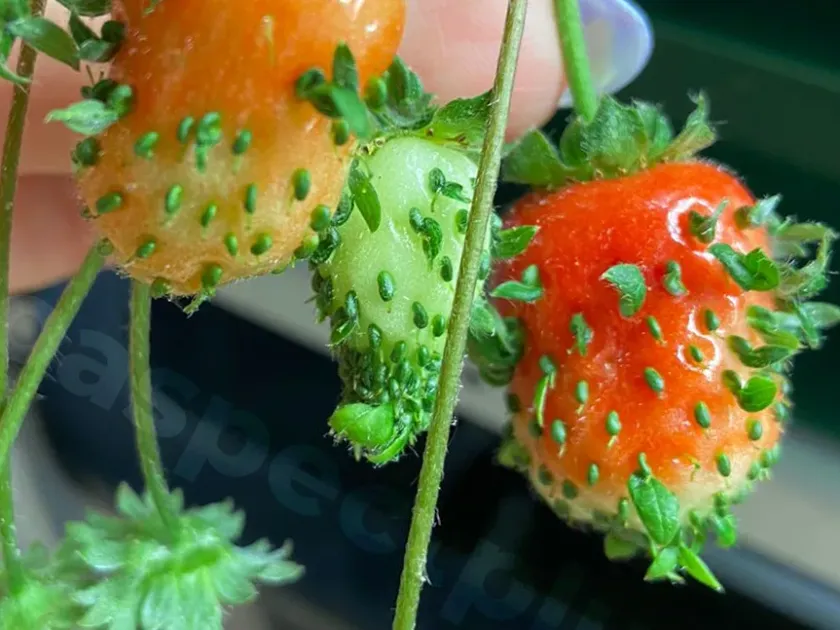
Phyllody is a plant disorder characterized by the transformation of floral organs (sepals, petals, stamens, and carpels) into leaf-like structures. This condition is a primary symptom of systemic infection by phytoplasmas.
Taxonomically, phytoplasmas belong to the class Mollicutes. They are microscopic prokaryotic organisms lacking a cell wall, inhabiting the phloem sieve elements of their host plants, which makes them invisible to standard light microscopy.
These pathogens are transmitted by sap-sucking insects, primarily leafhoppers. Once an insect feeds on an infected plant, it acquires the phytoplasma and remains a vector for the rest of its life, spreading the disease to healthy hosts.
Phyllody is not a fungal or viral disease. It is a developmental abnormality caused by effector proteins injected by the phytoplasma, which reprogram the plant's gene expression, forcing floral tissues to follow a leaf-development pathway.
While genetic mutations or herbicide damage can mimic these symptoms, the infectious nature of phytoplasmas makes them a significant threat, as they lead to widespread epidemics in both wild and cultivated plant species.
What it damages
Phyllody affects a wide range of crops, including solanaceous plants (tomatoes, peppers), legumes, and various ornamental species. The main agricultural impact is the total loss of reproductive capacity in affected plants.
Because floral organs are transformed into vegetative structures, the plants become sterile. Flowers fail to produce fruit, or produce deformed, unmarketable structures that lack seed viability or commercial value.
In addition to flower sterility, infected plants often exhibit stunted growth, chlorosis, and a bushy appearance. The impairment of the phloem tissue disrupts nutrient transport, leading to a general decline in plant vigor.
The economic loss is significant, as infected plants cannot recover. Furthermore, they act as reservoirs for the pathogen, necessitating the removal and destruction of the infected crops to stop the spread.
- Complete loss of reproductive function.
- Flower sterility and abnormal development.
- Stunted plant growth and reduced vigor.
- Economic loss due to failure in fruit set.
When it appears
The prevalence of phyllody is linked to the seasonal activity of insect vectors. Epidemics typically peak from late spring to mid-summer when leafhopper populations reach their highest density.
The incubation period within the host plant can last several weeks or months. Consequently, visual symptoms of phyllody often appear later in the growing season, even if the initial infection occurred much earlier.
Warmer temperatures favor both the rapid multiplication of phytoplasmas and the migration of insect vectors, creating optimal conditions for disease outbreaks in agricultural fields.
In perennial crops, the pathogen often overwinters in the roots or rhizomes. When spring growth begins, the phytoplasma moves into the new shoots, allowing the disease to recur annually in the same plants.
The disease spread is typically focal. Initial infections are often found at field margins near hedgerows or wild vegetation where vectors hibernate and feed on alternative host plants.
Signs of infestation
The most distinctive sign is the metamorphosis of flowers into green, leaf-like structures. Petals may become thick, green, and rigid, losing their characteristic color and delicate texture.
Plants often display a "witches' broom" appearance, characterized by excessive branching, shortened internodes, and the development of numerous small, crowded leaves that emerge from axillary buds.
Flowers may become enlarged or severely reduced in size depending on the specific host and phytoplasma strain. Virescence, or the turning of colored parts into green, is a common early indicator.
Disruption of the plant's hormonal balance can also lead to color changes in leaves, such as reddening or yellowing, as the transport of sugars and nutrients is inhibited throughout the plant.
Symptoms are not always uniform. Some plants may show partial phyllody, where only a few floral organs are affected, while others exhibit complete transformation of all flowers on the plant.
Control measures
Effective management focuses on the control of insect vectors. Using systemic insecticides early in the growing season can significantly reduce the population of leafhoppers and the transmission of the pathogen.
Sanitation is crucial. Weed control in and around the fields is essential to remove reservoir plants that host both the phytoplasma and the insect vectors, thereby breaking the disease cycle.
Once infected, plants should be removed and destroyed immediately. There is no cure for phytoplasma-infected plants, and leaving them in the field only serves as a source for further insect-mediated spread.
The use of certified, disease-free planting material is the most important preventive measure. Since phytoplasmas can spread through vegetative propagation, clean stock is vital for long-term health.
Plant breeding for resistance remains the most sustainable solution. Currently, no chemical treatments can eliminate phytoplasmas once they have colonized the vascular system of a host plant.
Causes diseases · 1
Discussion
No discussions yet — be the first.