
Phyllactinia guttata
Phyllactinia guttata
Phyllactinia guttata is a fungal pathogen classified within the kingdom Fungi, phylum Ascomycota, and order Erysiphales. It is a specialized biotroph that causes powdery mildew disease on a wide range of woody plants.
What the section contains
Phyllactinia guttata
The mycelium of this fungus typically colonizes the abaxial (lower) surface of leaves. A diagnostic feature is the presence of cleistothecia, which are small black fruiting bodies equipped with specialized appendages featuring bulbous bases.
As an obligate parasite, the fungus utilizes haustoria to penetrate host epidermal cells and extract nutrients. Its lifecycle involves both asexual production of conidia for rapid dispersal and sexual reproduction via cleistothecia for overwintering.
The pathogen overwinters as cleistothecia on leaf litter on the forest or garden floor. In the spring, when environmental conditions become suitable, these structures release ascospores to infect new foliage.
Secondary infections occur throughout the growing season as conidia are dispersed by wind currents. This repeating cycle allows the fungus to rapidly spread across a canopy during warm and humid weather conditions.
This pathogen infects a broad host range, including common tree species such as birch, hazel, beech, elm, hornbeam, and alder. It is also occasionally found on fruit-bearing trees in orchards.
Infection interferes with the host's normal physiology, particularly photosynthesis. The presence of the fungus blocks stomata and degrades chlorophyll, resulting in reduced energy production and stunted growth.
Severe infestations often lead to premature leaf drop, which can significantly weaken a tree's vigor. In young seedlings, this premature defoliation can reduce winter hardiness and lead to mortality.
In ornamental settings, the primary damage is aesthetic, as the foliage becomes chlorotic, distorted, and covered with fungal growth. This reduces the value of landscaping and public park specimens.
In nursery production, Phyllactinia guttata can cause significant economic losses by inhibiting the growth of young trees and potentially disqualifying them for sale due to poor health conditions.
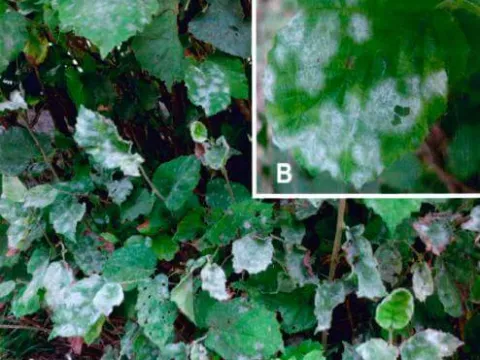
The initial signs of infection are often subtle, appearing as a thin, white, spiderweb-like mycelium on the undersides of leaves. Unlike other mildews, it may not create a thick, dense white layer on the top of leaves.
Later in the season, small black dots appear on the leaf surface. These are the mature cleistothecia, which signify the sexual stage of the fungus and are easily visible with the naked eye or a hand lens.
Affected leaves may curl, turn yellow, or show signs of necrosis. In some cases, the fungus may also spread to petioles and soft, green succulent stems, causing them to twist and stop growing.
In humid environments, the signs of infection become much more pronounced. The disease development is often favored by shaded, stagnant air conditions which are common in dense tree canopies.
Diagnosis requires close inspection of the underside of the foliage. The specific morphology of the cleistothecia appendages, seen under a microscope, is the definitive way to identify this species from other powdery mildews.
The most effective cultural management practice is the sanitation of leaf litter. Removing and disposing of infected leaves in the autumn prevents the pathogen from successfully overwintering in the garden.
Pruning trees to improve airflow and increase light penetration into the canopy can significantly reduce disease pressure. Proper spacing between trees is essential to prevent the spread of spores.
Chemical control involving fungicides may be necessary for valuable trees or nursery stock. Applications of sulfur-based products or systemic fungicides like triazoles are effective if applied at the first signs of symptoms.
Preventative sprays should be timed to coincide with the period of active shoot growth in the spring. Monitoring weather patterns is crucial, as high humidity and moderate temperatures trigger infection cycles.
Biological control agents, such as beneficial bacteria (e.g., Bacillus subtilis), can provide suppression of fungal growth in integrated pest management programs, offering an eco-friendly approach to disease mitigation.