
Phyllachora gratissima
Phyllachora gratissima
Phyllachora gratissima is an ascomycete fungus that acts as a specialized plant pathogen. It primarily targets the foliage of avocado trees, causing characteristic leaf spot disease symptoms.
What the section contains
Phyllachora gratissima
The life cycle involves the formation of ascostromata within the host leaf tissue. These dark, shield-like structures house the sexual spores of the fungus, allowing it to survive unfavorable periods and disperse during wet seasons.
As an obligate biotroph, the pathogen is closely adapted to its host. It derives nutrients directly from the living cells of the avocado leaf, making it a persistent problem in tropical avocado-growing regions.
Taxonomically, it belongs to the family Phyllachoraceae. Its development is highly dependent on humidity levels and host plant stress, which can trigger aggressive colonization of the foliage.
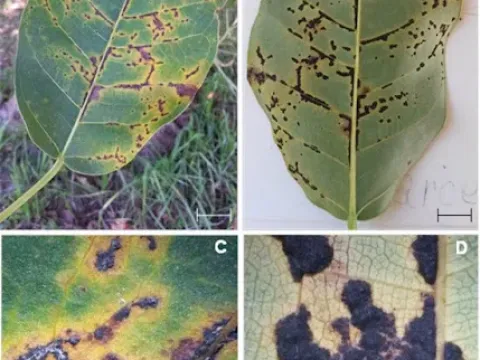
Diagnostic field identification relies on spotting the distinct black stromata emerging through the epidermal layer of the leaves, a clear indication of a mature infection.
The primary impact of Phyllachora gratissima is the reduction of the photosynthetic capacity of avocado trees. Leaves covered in fungal spots cannot effectively produce energy, leading to decreased vigor.
Severe infestations can lead to premature leaf drop. When a significant portion of the canopy is lost, the tree loses its ability to shade its own fruits, leading to sunburn and poor fruit quality.
Reduced foliage also limits the carbon intake of the tree, which directly affects flowering and fruit set in the following season. This cumulative damage can significantly decrease commercial yields over time.
Young avocado plants in nurseries are particularly vulnerable. A heavy infestation can stunt their growth, delay their maturation, and render them unsuitable for plantation establishment.
Economic damage is twofold: the loss of direct yield and the rising costs of frequent fungicide applications needed to contain the spread of the pathogen in high-value orchards.
Infection begins as small, chlorotic spots that slowly expand. Over time, these spots darken and develop into black, shiny stromata that rise slightly above the leaf surface.
The presence of a yellow halo around the black fungal spots is common, indicating the host plant's struggle to contain the localized tissue damage caused by the fungus.
During humid conditions, the stromata may release spores that are easily spread by rain splash or wind. This causes secondary infections, creating new spots on previously healthy parts of the foliage.
Eventually, heavily infected leaves may become necrotic and dry out. In some cases, the infected tissue can tear or crumble, leading to the formation of ragged holes across the leaf blade.
The disease tends to manifest across the entire canopy, but lower, more shaded branches usually show the first and most severe signs of the infection due to higher humidity.
Integrated pest management (IPM) is essential for controlling this pathogen. Sanitation is the most important step: collecting and destroying fallen leaves reduces the primary spore source for the next season.
Pruning is highly effective for disease control. By thinning the canopy, growers can improve airflow and reduce the humidity levels that the fungus requires for infection and development.
Copper-based fungicides are standard for prophylactic treatment. Regular applications during the onset of the wet season are critical to prevent the establishment of the fungal colonies.
In cases of high disease pressure, systemic fungicides should be integrated into the spray program. Rotating chemical groups is necessary to prevent the development of resistant fungal populations.
- Sanitary removal of infected foliage;
- Canopy thinning to improve airflow;
- Prophylactic copper fungicide sprays;
- Monitoring the orchard during high-humidity periods.