
Phyllosticta leaf spot
Phyllosticta circumscissa
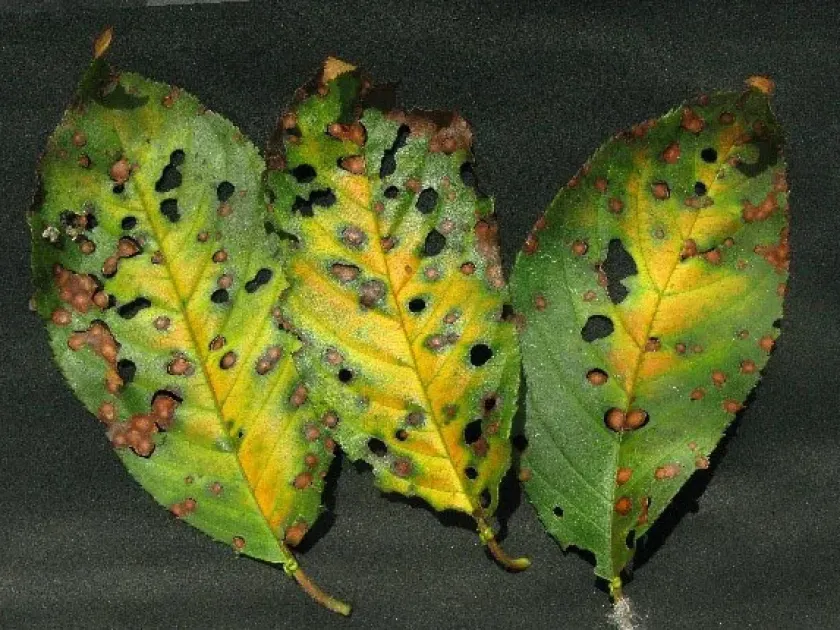
Description
How to identify
The causative agent of the disease is the fungus Phyllosticta circumscissa, a member of the Ascomycota division. This pathogen reproduces via pycnidia, which are small, flask-shaped asexual fruiting bodies that develop within the infected plant tissues.
Under microscopic examination, these pycnidia appear as dark, spherical structures embedded in the plant epidermis. They release conidia (spores) that act as the primary inoculum for spreading the infection to healthy leaves and branches.
The fungus is characterized by a specific ability to survive as a saprophyte on fallen leaves during the winter months. This survival strategy ensures that the fungus remains present in the orchard, ready to initiate a new infection cycle as soon as spring temperatures rise.
The pathogen is highly host-specific, mainly targeting members of the Prunus genus. It effectively utilizes the host's tissue for growth, leading to necrotic spots and significant leaf surface damage during the active growing season.
Biologically, Phyllosticta circumscissa is favored by temperate climates with high seasonal humidity. Its adaptability to both living tissue and decaying organic matter makes it a persistent threat in home gardens and commercial stone fruit orchards.
What it damages
The disease targets various stone fruit species, including cherries, apricots, peaches, and almonds. The primary damage occurs on the leaves, where the fungus destroys the chlorophyll-containing cells, reducing the tree's overall photosynthetic efficiency.
Severe infestations cause premature leaf drop, a condition known as defoliation. This process deprives the tree of the energy reserves needed for cold hardiness, often leading to increased susceptibility to winter damage and reduced bud survival.
In addition to leaf damage, the fungus can occasionally infect shoots, forming small lesions or ulcers. These lesions can compromise the integrity of the branches, providing an entry point for other pathogens and structural damage.
In nurseries, Phyllosticta leaf spot can stunt the growth of young saplings, significantly delaying their development and marketability. Consistent infections over several years can weaken mature trees, leading to lower fruit yields.
The economic impact involves both direct crop losses and increased operational costs due to the need for systematic fungicide applications to keep the infection below the economic threshold.
When it appears
Infection cycles typically begin in late spring, following the flowering period. As temperatures rise and humidity increases, the fungus releases spores from overwintered leaves, initiating primary infections on developing foliage.
The summer season, specifically during periods of frequent rainfall and warm temperatures, represents the peak activity for this pathogen. High humidity is a critical factor, as moisture is required for spore germination and colonization.
The disease cycle can repeat multiple times throughout the summer. If favorable conditions persist, new pycnidia will continue to form on the underside of infected leaves, spreading the fungus to the upper parts of the tree canopy.
By late autumn, the fungus prepares for winter survival by colonizing dead organic matter. The rate of infection tends to decrease as the host plant enters dormancy, but the survival stage is well-established by this time.
The severity of an outbreak is highly dependent on the climate in the current year. Years with prolonged wet weather in late May and June often result in much more significant Phyllosticta outbreaks compared to dry, hot seasons.
Signs of infestation
The initial symptoms are small, circular, or irregular spots on the leaves. These spots are often yellow-brown or reddish-brown, typically outlined by a distinct dark margin that separates the dead tissue from the healthy leaf area.
As the infection progresses, the center of the spot turns gray or light brown. In many cases, the dead tissue becomes dry and brittle, eventually falling out of the leaf, creating a distinct "shot-hole" appearance similar to other bacterial spots.
- Development of brown spots with dark, well-defined rims.
- Appearance of microscopic black pycnidia in the center of necrotic spots.
- Falling out of dead tissue, creating holes in the leaf blades.
- Early yellowing and premature shedding of the foliage.
- Small necrotic lesions on the young bark of succulent shoots.
The black dots, or pycnidia, are the most reliable sign for identifying this specific fungus. They are usually visible under a standard hand lens, allowing growers to confirm the presence of the pathogen on the infected leaves.
Differentiating Phyllosticta from other leaf spots requires careful observation of the pycnidia patterns. Unlike some other fungal diseases, the spots caused by this pathogen show uniform distribution across the leaf surface.
Control measures
The most important control strategy is good orchard sanitation. Collecting and destroying all fallen leaves at the end of the season is essential, as this eliminates the primary source of the fungus for the following year.
Proper pruning practices are necessary to improve air circulation within the tree canopy. Keeping the foliage dry helps reduce the likelihood of spore germination, as the fungus requires a film of water to infect the host.
Chemical control should be implemented early, particularly in orchards with a history of the disease. Copper-based fungicides are highly effective as a preventative measure when applied just before or after the flowering stage.
During the growing season, if symptoms appear, use systemic fungicides, such as triazoles or strobilurins. It is essential to rotate chemical classes to prevent the fungus from developing resistance to specific active ingredients.
Maintaining tree vigor through proper fertilization and irrigation helps the plants resist infections. A healthy tree can better tolerate some leaf loss and recover more effectively from environmental stress and disease pressure.
Discussion
No discussions yet — be the first.