
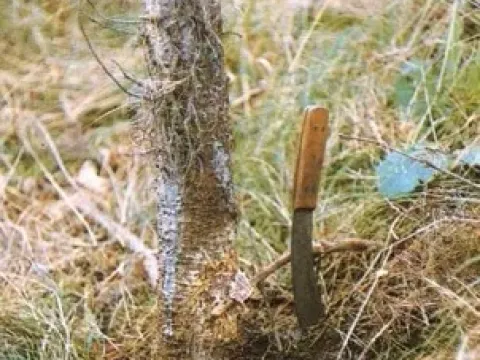
Peniophora sacrata
Peniophora sacrata
Peniophora sacrata is a species of basidiomycete fungus within the Peniophoraceae family. Taxonomically, it belongs to the Basidiomycota phylum, Agaricomycetes class, and Russulales order.
What the section contains
Peniophora sacrata
This fungus is recognized as a wood-decay agent. It typically manifests as a thin, resupinate (crust-like) fruiting body that adheres closely to the bark of its host, making it sometimes difficult to spot at early stages.
The biological nature of this fungus allows it to act as a facultative parasite. It thrives on weakened host trees, penetrating the bark to access the nutrient-rich wood tissues, which it gradually breaks down using complex enzymatic processes.
Microscopic identification is necessary for definitive diagnosis. Researchers examine the specific shape and size of cystidia and basidia, as well as the unique color and structure of the fungal mycelium found within the wood fibers.
Ecologically, the fungus is highly adaptive. It functions by slowly colonizing the woody tissue, where it can persist for several years, effectively turning the tree's structure into a substrate for its continued growth and reproduction.
Peniophora sacrata primarily attacks weakened or stressed forest trees. It affects both coniferous and deciduous species, causing decay that leads to significant structural degradation of the timber.
As the fungus degrades the lignin and cellulose in the wood, the structural integrity of the tree is compromised. This often leads to brittle wood, which increases the likelihood of trees snapping or falling during high-wind events.
The damage extends to the cambium layer, which is essential for nutrient transport. Disruption of these vascular tissues results in the yellowing of foliage and the gradual dieback of branches, eventually killing the tree.
In timber production, the presence of this fungus significantly lowers the market value of logs. The decay renders the wood unsuitable for construction purposes, representing a notable economic burden in forestry management.
Additionally, infected trees become focal points for further infestations. By weakening the tree's natural defenses, Peniophora sacrata invites secondary pests such as bark beetles, which accelerate the total decline of the host tree.
The activity of the fungus is closely linked to climatic conditions. During the warmer months, higher temperatures facilitate rapid fungal growth and the colonization of new tissue within the host tree.
Spore dispersal occurs predominantly during periods of high humidity and rainfall. These weather patterns are critical for the fungus, as they provide the moisture necessary for spores to germinate once they land on a susceptible surface.
During the peak of the growing season, the mycelium spreads aggressively throughout the wood. This is when the decay process is most active and visible symptoms begin to manifest on the exterior of the host.
In winter, the fungus enters a state of dormancy. The mycelium remains within the wood, waiting for the return of warmer weather to resume its metabolic activities, demonstrating its high survival capacity in varying climates.
Autumn marks the end of the main reproductive cycle, where the fungus produces the final crop of spores for the season, ensuring that its presence persists in the environment until the following spring.
The most visible sign of infection is the appearance of thin, crusty fungal mats on the surface of the bark. These are the fruiting bodies and are often the first outward indicator of a mature infestation.
Internal symptoms are often discovered when peeling back the bark. Beneath the surface, the presence of light-colored, web-like mycelium indicates that the fungus has successfully bypassed the tree's outer defense layers.
The foliage of infected trees often shows premature signs of decline. This includes yellowing needles or leaves, thinning crowns, and branch dieback, reflecting the tree's struggle to maintain its vital functions.
Localized patches of bark may become discolored or necrotic. Over time, these areas may soften, indicating that the wood beneath is no longer healthy and is being actively consumed by the pathogen.
In advanced stages, the wood becomes significantly lightened in color and loses its density, turning into a brittle mass. This structural change is a hallmark of wood-decay fungi like Peniophora sacrata.
Sanitation is the most effective management strategy. Forest managers must identify and remove infected trees promptly to prevent the spread of spores to healthy neighboring trees within the same stand.
Practicing careful silviculture is essential. Avoiding mechanical damage to tree trunks during logging or thinning operations prevents the entry of fungal spores into the tree's vascular system.
Maintaining high stand vigor through proper thinning and nutrient management helps trees develop better resilience against fungal pathogens, reducing their susceptibility to opportunistic invaders like this one.
In nurseries or high-value landscapes, systemic fungicides may be used as a preventative measure. However, treatment of established trees with advanced wood decay is rarely successful, emphasizing the importance of prevention.
- Regular forest health surveys and monitoring.
- Safe removal and destruction of dead wood and debris.
- Promoting biodiversity to reduce pathogen spread.
- Application of biological control agents where appropriate.