
Oculimacula acuformis
Oculimacula acuformis
Description
How to identify
Oculimacula acuformis is a pathogenic fungus that causes eyespot disease in various cereal crops, significantly impacting wheat production worldwide.
The fungus is classified within the Phaeosphaeriaceae family and is characterized by the production of conidia and ascospores that facilitate its survival and spread.
It is an ascomycete pathogen that primarily infects the basal stems of cereals, leading to systemic structural weakness and impaired nutrient transport.
The pathogen is closely related to Oculimacula yallundae, with which it shares a similar ecological niche and clinical presentation in the field.
Accurate identification requires careful inspection of the stem base for specific lesion patterns, often supplemented by laboratory verification.
What it damages
The primary hosts for Oculimacula acuformis are winter wheat, winter rye, and barley, which are susceptible during their vegetative growth stages.
The fungus invades the leaf sheaths and stem tissue, creating lesions that compromise the structural integrity of the plant, often leading to lodging.
Lodging caused by eyespot disease makes mechanical harvesting extremely difficult and results in significant yield losses due to grain shriveling and poor quality.
Infested crops often show stunted growth and reduced capacity to withstand biotic and abiotic stresses, leading to decreased overall profitability.
Yield losses can be substantial, with severe cases leading to over 30% reduction in grain production depending on the onset and severity of the infection.
When it appears
Infection cycles typically initiate in the autumn, when spores from crop residues move onto young seedlings during cool, damp weather conditions.
Throughout the winter, the fungus continues to grow slowly within the basal stem tissue, maintaining its presence in the field environment.
Spring serves as the period of maximum disease development, as rising temperatures and frequent rainfall favor the production and dispersal of conidia.
The fungus survives primarily in infected stubble left in the soil, which acts as the main inoculum source for subsequent cereal crop cycles.
Favorable conditions for development include prolonged periods of moisture and moderate temperatures, which facilitate the rapid spread of the disease.
Signs of infestation
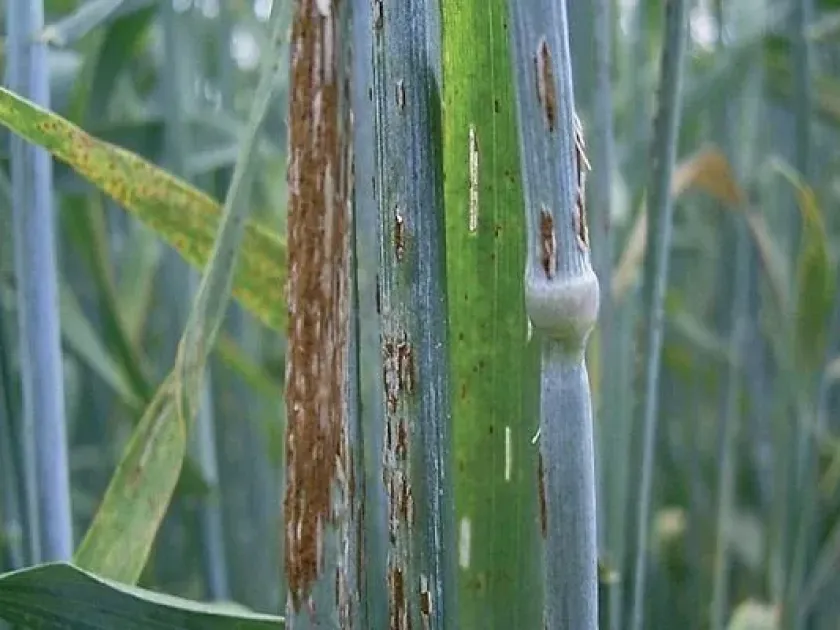
The most diagnostic sign of infection is the presence of eye-shaped lesions at the base of the stem, characterized by a light center and a dark border.
During humid conditions, a greyish fungal growth or mycelial mat may be observed within the lesions, confirming the presence of the pathogen.
As the infection deepens, the structural integrity of the stems becomes compromised, resulting in twisted, bent, or completely fallen stalks.
Heads of infected plants may appear bleached and empty, or they may contain only poorly developed, shriveled grain due to restricted nutrient flow.
- Characteristic eyespot lesions on lower stems.
- Presence of fungal mycelium in moist weather.
- Severe stem lodging despite adequate crop management.
- Premature bleaching of heads and poor grain fill.
Control measures
Crop rotation is the fundamental strategy for control, with a recommended break of at least two to three years between susceptible cereal crops.
Deep plowing and incorporation of crop residues help to accelerate the decomposition of infected stubble, thereby reducing the inoculum pool in the soil.
The application of systemic fungicides during the early stem elongation phase is highly effective in preventing the spread of infection to upper nodes.
Selecting varieties that possess genetic resistance to eyespot is an essential component of an integrated pest management program for winter wheat.
Adjusting seeding rates to avoid overly dense canopy environments can help decrease humidity at the base of the plants, making the microclimate less suitable for fungal growth.
Causes diseases · 1
Discussion
No discussions yet — be the first.