
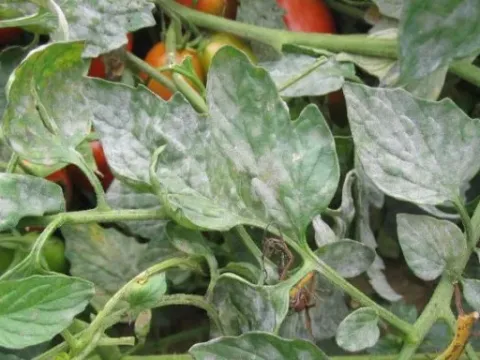
Oidiopsis
Oidiopsis sicula
Oidiopsis sicula, often identified by its anamorph stage Leveillula taurica, is a highly specialized fungal pathogen belonging to the Erysiphaceae family. Unlike common powdery mildews, it is an endoparasite.
What the section contains
Oidiopsis
The fungus develops its mycelium primarily within the host's leaf tissue. It accesses the interior through the stomata, colonizing the mesophyll layer, which distinguishes it from surface-feeding fungi.
Conidiophores emerge from the stomata to produce spores on the surface, creating the characteristic white, powdery appearance that is often associated with this type of infection.
As an obligate biotroph, the pathogen relies entirely on living plant tissue for its survival and development, meaning it cannot persist on decaying matter for extended periods.
Taxonomically, it is classified within the Ascomycota division. Its unique internal growth habit makes it particularly resilient to contact-based fungicidal treatments, necessitating systemic solutions.
This pathogen has a wide host range, primarily targeting Solanaceous crops such as tomatoes, peppers, and eggplants, as well as various cucurbits like melons and cucumbers.
The infection causes severe metabolic disruption, leading to chlorosis, necrosis, and premature defoliation of the host plant, significantly impacting overall photosynthetic output.
Yield losses can be catastrophic, particularly in greenhouse environments where high humidity and temperature control create perfect conditions for the rapid spread of the fungus.
Severe infestation causes the plant to drop its leaves prematurely, which exposes the fruit to direct sunlight, leading to sunscald and a substantial reduction in market quality.
Economic losses are compounded by the high costs of frequent chemical interventions and the loss of produce that fails to meet quality standards due to stunted development.
The pathogen thrives in warm, temperate conditions with temperatures typically ranging between 20°C and 28°C, which are optimal for the germination of conidia.
In protected cultivation, such as greenhouses, Oidiopsis sicula can remain active year-round, posing a constant threat to continuous crop production cycles.
In open-field settings, the disease incidence usually peaks during the latter half of the growing season when environmental fluctuations favor fungal sporulation and dispersal.
Wind is the primary vector for conidia distribution, allowing the fungus to spread rapidly across fields from initial localized infection points.
The latent period, or the time between initial infection and the appearance of visible signs, typically lasts from one to two weeks, depending on the ambient temperature and humidity.
The initial symptoms present as small, yellowish or chlorotic spots on the upper leaf surface, which eventually grow and merge as the internal mycelium spreads.
On the underside of the leaf, directly beneath the chlorotic spots, a fine, white powdery growth can be observed, which indicates the emergence of conidiophores through the stomata.
- Gradual yellowing and subsequent browning of lower leaves.
- Leaf curling and deformation in heavily infected plants.
- Premature defoliation starting from the lower canopy.
- Reduced fruit set and stunted growth due to the plant's depleted energy resources.
In advanced stages, the leaves turn brown and necrotic, giving the entire plant a burnt or withered appearance that drastically reduces the plant's viability.
Early identification is key, as the internal nature of the fungus means that by the time external symptoms are obvious, the plant is already significantly compromised.
Effective management requires the application of systemic fungicides, specifically those that can be absorbed by the plant to target the mycelium inside the leaf tissue.
Cultural practices, such as maintaining optimal plant spacing and ensuring good airflow, are crucial for reducing the humidity levels that the pathogen exploits for infection.
Integrated Pest Management (IPM) strategies, including the removal and destruction of infected plant debris, help reduce the inoculum pressure in the environment.
Regular monitoring of crops is essential for detecting the first signs of the disease, allowing for early and more effective intervention before the infection reaches epidemic levels.
Selecting and planting resistant cultivars remains the most sustainable and efficient approach for long-term control against this persistent and damaging fungal pathogen.