
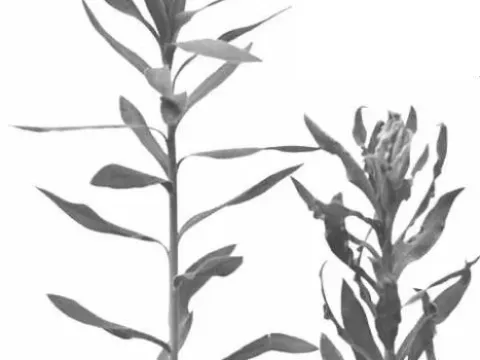
Oat blue dwarf virus
Oat blue
Oat blue dwarf virus (OBDV) is a viral pathogen of cereals, taxonomically belonging to the Marafivirus genus within the Tymoviridae family. The virus consists of a single-stranded RNA genome.
What the section contains
Oat blue dwarf virus
The virus is exclusively transmitted by the aster leafhopper, Macrosteles quadrilineatus. The interaction is persistent, meaning the leafhopper retains the virus for life after ingesting it from an infected host.
Mechanical transmission of OBDV through sap or field operations is not possible. The virus spreads primarily through the movement of infected insect vectors between host plants.
Perennial grasses act as the main over-wintering reservoirs for the virus. These reservoirs allow the pathogen to persist in agricultural landscapes even in the absence of primary crop hosts.
Diagnosis in the field is complicated because symptoms can overlap with nutrient deficiencies or stress. Reliable detection relies on serological assays, such as ELISA, or molecular methods like PCR.
The primary hosts of OBDV include oats, barley, and wheat. While oats are the most susceptible and exhibit severe symptoms, other cereals may show milder effects.
The disease causes significant physiological stress, leading to severely stunted growth. Infected plants fail to achieve their yield potential, often producing no grain at all.
Yield losses are directly proportional to the prevalence of the leafhopper vector and the timing of infection. Early-season infections often result in total crop failure within the affected patches.
The disease significantly impairs the quality of the harvested grain. Stunting and abnormal development reduce the biomass, making the crop unsuitable for high-quality grain processing.
Because the disease is vector-driven, damage usually occurs in patchy patterns across a field. These patterns often correlate with areas where the leafhopper population initially colonized.
The hallmark symptom is a distinct dark or bluish-green discoloration of the leaves. This blue-green hue is a clear diagnostic indicator of the virus's impact on leaf pigments.
Internodes are significantly shortened, resulting in extreme stunting. Infected plants often develop an excessive number of tillers, creating a bushy, clumped appearance.
Leaf blades often appear rigid or leathery and may show signs of curling. In advanced stages, yellowing and necrosis may appear at the tips of the leaves.
Reproductive growth is severely hampered. The panicles or heads often fail to emerge properly from the sheath, and if they do, they are usually sterile or poorly filled.
Plants affected by OBDV stand out clearly in the field due to their dwarfism and off-color appearance, usually appearing as distinct, localized patches of diseased vegetation.
Effective management focuses on limiting the vector population. Insecticide applications during the peak migration periods of leafhoppers can mitigate the initial spread of the virus.
A crucial cultural practice involves managing weeds along field edges and meadows. By eliminating these reservoirs, farmers reduce the potential inoculum source for the leafhopper vectors.
Planting resistant or tolerant cultivars is the most sustainable approach to managing OBDV. Breeding programs prioritize varieties that exhibit low susceptibility to the virus.
Adjusting planting dates can help avoid the synchronization of young, vulnerable crops with the peak flight and feeding activity of leafhopper populations.
Integrated Pest Management (IPM) strategies, which combine monitoring, biological control, and limited pesticide use, are recommended to keep the virus from reaching outbreak proportions.