
Northern corn leaf blight
Exserohilum turcicum
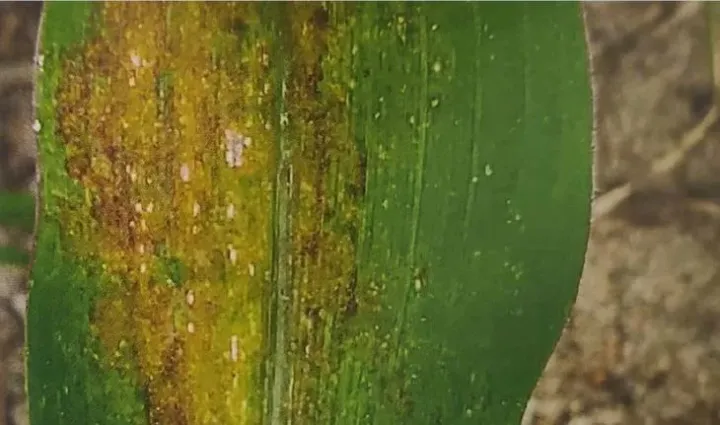
Description
How to identify
Northern corn leaf blight (NCLB) is caused by the fungal pathogen Exserohilum turcicum (formerly Helminthosporium turcicum). It is a significant disease affecting maize crops worldwide, particularly in regions with humid and temperate climates.
The fungus survives as mycelium and conidia in infected crop debris on the soil surface. Primary infection is initiated by wind-blown or rain-splashed conidia that land on the leaves of susceptible host plants.
The disease development is highly dependent on environmental conditions. A period of prolonged moisture (dew, light rain, high humidity) combined with temperatures ranging from 20°C to 25°C is ideal for spore germination and infection.
The lifecycle of the pathogen involves multiple cycles of asexual reproduction within a single growing season. Conidia are produced on the lesions and can cause secondary infections, potentially leading to rapid disease progression.
Identification in the field involves looking for characteristic lesions, while laboratory confirmation is done by examining the long, spindle-shaped conidia under a microscope, which are distinctive for Exserohilum turcicum.
What it damages
The primary host for this pathogen is maize (corn). The disease specifically targets the leaf tissue, which is detrimental to the plant's photosynthetic capacity, especially during the grain-filling stage.
Severe infections result in a dramatic reduction in leaf area. When the upper leaves are damaged before pollination or grain filling, the plant cannot synthesize enough carbohydrates, leading to poor kernel fill and significant yield losses.
Yield losses can range from 10% to 50% depending on the hybrid's resistance and the timing of the infection. Plants weakened by NCLB are also more susceptible to stalk rots, which often leads to lodging and harvest difficulties.
In addition to quantitative losses, NCLB reduces grain quality and overall crop vigor. Infected plants may show premature senescence, negatively impacting the total biomass and fodder quality if the crop is intended for silage.
Economic impact is significant in areas where conditions favor the disease, necessitating consistent monitoring and integrated pest management strategies to keep infection levels below the economic threshold.
When it appears
NCLB typically appears later in the growing season, often around tasseling. However, under favorable wet weather conditions, symptoms can develop much earlier, even on seedlings, especially in continuous corn production systems.
Signs of infestation
The earliest signs appear as small, elliptical, water-soaked spots on lower leaves. As the disease progresses, these lesions expand into elongated, spindle-shaped necrotic areas that run parallel to the leaf veins.
These lesions are typically greyish-green to tan in color, often surrounded by a chlorotic halo. As the spots enlarge, they can coalesce, killing large portions of the leaf tissue and giving the plant a scorched appearance.
Under humid conditions, the centers of the lesions produce abundant dark-colored spores, which give the leaf a fuzzy, velvety appearance. This sporulation serves as the primary source for further spread of the disease.
While leaf damage is the most common symptom, in severe cases, the fungus can also infect the leaf sheaths and even the husks of the ears, leading to direct grain infection.
- Elongated, cigar-shaped necrotic leaf lesions.
- Greyish-tan centers within the spots.
- Dark, velvety sporulation on the leaf surface.
- Premature drying and death of leaves starting from the bottom up.
Control measures
The most effective strategy to manage NCLB is the use of resistant or tolerant corn hybrids. Breeding for specific resistance genes has been the cornerstone of controlling this disease in commercial maize production.
Cultural practices are essential for inoculum reduction. Crop rotation is highly recommended, as planting maize after another crop allows time for infected corn residue to decompose, significantly reducing the survival of the fungus.
Tillage practices that incorporate crop residues into the soil can also help by speeding up the degradation process of the infected plant material, thereby reducing the initial spore load for the following season.
Fungicide applications, particularly using strobilurins and triazoles, are effective if applied at the correct growth stage when disease pressure is high. Timing is critical to prevent the spread of the pathogen to the upper leaves.
Proper nutrient management, especially ensuring adequate potassium levels, helps maintain overall plant health. Strong, healthy plants are better able to tolerate infection and maintain photosynthetic activity even when challenged by the pathogen.
Causes diseases · 1
Discussion
No discussions yet — be the first.