
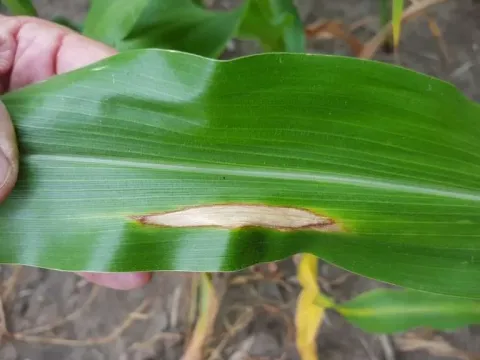
Northern corn leaf blight
Setosphaeria turcica
The pathogen responsible for Northern corn leaf blight belongs to the kingdom Fungi, genus Setosphaeria, species Setosphaeria turcica (anamorph Exserohilum turcicum). It is a major fungal disease affecting maize crops worldwide.
What the section contains
Northern corn leaf blight
The fungus overwinters as mycelium and conidia on infected corn debris. During the growing season, spores are spread by wind or splashing rain to the lower leaves of the host plant, starting the infection cycle.
This pathogen specifically infects maize and some related grasses. It thrives in humid conditions and moderate temperatures, often leading to significant yield losses in susceptible varieties if environmental conditions remain favorable.
The fungus can produce multiple cycles of spores within a single growing season. This polycyclic nature allows the disease to spread rapidly through a field, especially if rainfall is frequent and the canopy remains dense.
Systematic classification identifies various races of the pathogen, which is a major factor in breeding efforts to develop resistant corn hybrids that can withstand local disease pressure.
The primary damage results from the destruction of the photosynthetic surface of the leaves. As leaf area decreases, the plant's ability to produce sugars for grain filling is significantly impaired.
Severe infestations can lead to substantial yield losses, often ranging from 30% to 50% in vulnerable fields. The plants appear to die prematurely, resulting in poorly filled ears and light, shriveled kernels.
The disease also affects the quality of silage by reducing the nutritional value of the corn plant. Furthermore, damaged tissues are susceptible to colonization by other fungi, leading to stalk rot and ear mold complications.
The economic impact is most severe when infection occurs early in the development of the plant, specifically before or during the pollination stage, which disrupts the reproductive cycle of the maize.
In addition to grain yield, Northern corn leaf blight negatively impacts the structural integrity of the plant, often leading to increased lodging as stalks become weakened by the reduction in nutrient reserves.
Symptoms typically begin on the lower leaves as small, elliptical, water-soaked spots. These spots gradually elongate into distinct, cigar-shaped lesions that are tan or grayish-brown in color.
In high-humidity environments, these lesions produce abundant dark-colored spores, giving the spots an olive or fuzzy appearance. This sporulation is a key indicator for field diagnosis.
As the disease progresses, lesions can merge and cover large portions of the leaf surface, causing the leaf to turn necrotic and dry out. This systemic necrosis often moves from the bottom of the plant toward the top.
In cases of severe infection, lesions may also appear on the leaf sheaths and husks of the ears, which can compromise the quality of the harvested grain and introduce secondary pathogens into the ear.
- Cigar-shaped, tan-colored leaf lesions.
- Olive-gray fungal sporulation on lesions.
- Progressive necrosis starting from lower leaves.
- Premature plant death and reduced grain filling.
The most effective management strategy is the use of resistant corn hybrids. Modern breeding programs focus on incorporating specific resistance genes to mitigate the risk of infection in high-pressure regions.
Cultural practices, such as tillage to bury crop residues, are essential to reduce the initial inoculum load. Crop rotation is also recommended to prevent the buildup of the fungus in the soil over consecutive seasons.
Chemical control involving fungicides can be highly effective when applied at the right time. Applications are generally recommended when early symptoms are observed, particularly if environmental conditions favor disease spread.
Maintaining balanced soil fertility, especially adequate potassium levels, helps improve the plant's natural resistance to fungal pathogens, making it a critical component of integrated pest management.
Regular scouting of fields during the late vegetative stages is crucial for early detection. Timely fungicide applications, if justified by economic thresholds, can protect the leaf area during the critical grain-filling period.