
Merlinius
Merlinius
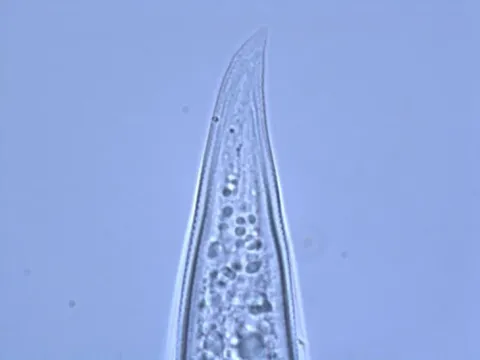
Merlinius is a genus of plant-parasitic nematodes belonging to the family Merliniidae. These organisms are microscopic roundworms that primarily inhabit the soil, acting as ectoparasites of plant roots.
What the section contains
Merlinius
They are characterized by a well-developed stomatostylet, which they use to pierce the cortical cells of roots and inject digestive enzymes before consuming the cell contents. Unlike endoparasites, they do not enter the root tissue fully.
The taxonomic identification of Merlinius species requires morphological analysis under high-magnification microscopy, focusing on features such as the labial region, stylet length, and tail structure of the nematodes.
These nematodes exhibit a cosmopolitan distribution, thriving in various soil types and climates, which makes them a constant threat to agricultural productivity worldwide.
Their life cycle typically consists of four molts, with both juveniles and adults being capable of feeding on plant roots. They can survive adverse environmental conditions in the soil by entering a quiescent state.
Merlinius nematodes are polyphagous pests, capable of infesting a wide range of crops including cereals, grasses, potatoes, and various vegetable species, leading to significant yield losses.
The primary damage occurs to the root system, where the feeding activity causes necrosis, cortical lesions, and the destruction of root hairs, which are vital for water and nutrient uptake.
Infested plants often display reduced growth rates, lack of vigor, and stunted appearance. In severe cases, the reduced root system cannot support the plant's nutritional needs during critical growth stages.
Feeding wounds created by Merlinius serve as entry points for secondary soil-borne pathogens, including fungi and bacteria, which often exacerbate the damage and lead to root rots.
Economic losses are often cumulative and are exacerbated by environmental stresses such as drought or nutrient deficiencies, which the damaged plants are less able to tolerate compared to healthy ones.
Typical symptoms in the field include irregular patches of chlorotic and stunted plants. These symptoms often correlate with areas where nematode populations have reached high densities.
Plants may show premature wilting during hot periods because the compromised root system cannot compensate for the plant's water transpiration needs.
Above-ground signs are often non-specific and can be confused with nutrient deficiencies, soil compaction, or poor water management. This makes visual observation difficult to diagnose accurately.
Examination of the roots usually reveals a reduced, discolored, and necrotic root mass. In some cases, lateral root branching may be significantly inhibited, leading to a shallow root system.
Confirmation of a Merlinius infestation requires systematic soil and root sampling, followed by extraction in a laboratory setting to count and identify the nematode populations present.
Effective management begins with crop rotation, utilizing non-host or antagonistic plant species to break the life cycle of the nematodes and decrease their density in the soil.
Cultural practices such as the use of healthy, nematode-free planting material, proper weed control, and optimized irrigation management can significantly reduce the pressure of these pathogens.
Bio-control agents, such as specific soil-dwelling fungi (e.g., Paecilomyces spp.) or bacteria that parasitize nematodes, are increasingly used in integrated pest management (IPM) strategies.
In cases of high infestation levels, chemical nematicides can be utilized. However, their use is heavily regulated, and application must be precise to be effective while minimizing environmental impact.
Long-term control is best achieved by integrating multiple strategies, including periodic soil monitoring to determine nematode thresholds and implementing preventative agronomic measures.