
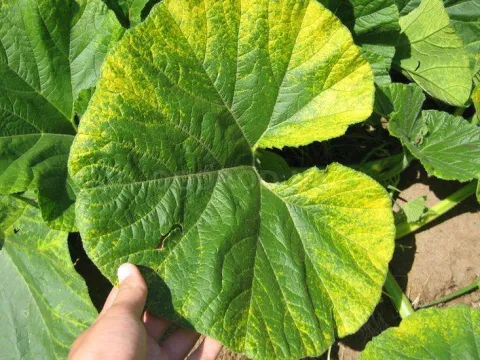
Melon chlorosis
Melon chlorotic
Melon chlorosis is a condition marked by the yellowing of green leaf tissues, caused by the failure of chlorophyll production. It may be triggered by viral pathogens, specifically those transmitted by insects, or by physiological imbalances in the plant.
What the section contains
Melon chlorosis
In many cases, the pathogen is a virus vectored by pests like the sweetpotato whitefly (Bemisia tabaci) or aphids. Once introduced into the plant, the virus interferes with systemic nutrient transport.
Distinguishing between viral infection and nutrient deficiency (e.g., iron or magnesium lack) is essential. While nutrient deficiency usually responds to foliar fertilizers, viral chlorosis requires rigorous vector control.
The condition often starts on younger leaves when caused by nutritional factors, whereas viral-induced chlorosis may appear randomly throughout the canopy of the plant.
Field diagnosis should involve observing the pattern of yellowing and checking for the presence of sucking insect populations on the underside of leaves.
The damage caused by melon chlorosis is primarily reflected in the reduction of photosynthetic efficiency. This leads to stunted plant growth, decreased vine length, and lower fruit quality.
If the infection occurs during the flowering stage, the fruit set is severely impacted. Plants often abort their flowers or produce undersized, pale, and tasteless melons that lack commercial value.
Weakened plants become susceptible to secondary pathogens, including powdery mildew and various root rots, which can kill the plant prematurely.
Economic losses in infected fields can be significant, sometimes resulting in total crop failure if the virus spreads early in the development of the melon plantation.
The inability of the plant to synthesize enough sugars leads to poor ripening, making the harvest unsuitable for long-term storage or transport to distant markets.
Melon chlorosis symptoms typically emerge during the peak growing season, particularly when temperatures rise and plants are under maximum growth stress.
The prevalence of the disease is closely tied to the lifecycle of its vectors. Infestations usually spike during warm, dry periods when whitefly populations multiply rapidly in field conditions.
High solar radiation combined with suboptimal soil moisture can exacerbate chlorotic symptoms, as the plant struggles to transpire and absorb nutrients efficiently.
Symptoms often manifest more clearly after a period of rapid development, when the metabolic demands of the melon vines exceed the capacity of the compromised root system.
As the season nears its end, infected plants show signs of senescence much faster than healthy ones, leading to premature field collapse before the final harvest cycle.
The hallmark symptom is interveinal chlorosis, where the tissue between the veins turns yellow while the primary veins remain green, creating a distinct network pattern.
- Interveinal yellowing of the foliage;
- Leaf curling and deformation at the margins;
- Overall stunting and reduced internode length;
- Premature dropping of blossoms and small fruit;
- Reduced fruit sugar content and uneven ripening.
In cases of viral infection, yellowing may be accompanied by mosaic patterns or severe leaf puckering, which differentiates it from simple nutrient deficiency.
As the disease progresses, leaves may become bleached or necrotic at the edges, leading to tissue death and the shedding of the plant's canopy.
Stunted root systems, often found in plants suffering from chlorosis, prevent the plant from recovering even when supplemental water is provided.
Integrated Pest Management (IPM) is the most effective approach, focusing on controlling insect vectors like whiteflies and aphids through the timely use of systemic insecticides.
Preventative measures include the removal of weeds around field borders, which often serve as reservoirs for viruses that infect melons during the off-season.
For nutritional chlorosis, soil testing and corrective applications of chelated iron or magnesium can rapidly restore chlorophyll levels and plant health.
Using certified virus-free seeds and planting resistant or tolerant melon varieties are critical strategies for mitigating the impact of infectious chlorosis.
Proper irrigation management prevents root hypoxia, which helps maintain the plant's ability to uptake necessary nutrients throughout the entire vegetative period.