
Meliola mangiferae
Meliola mangiferae
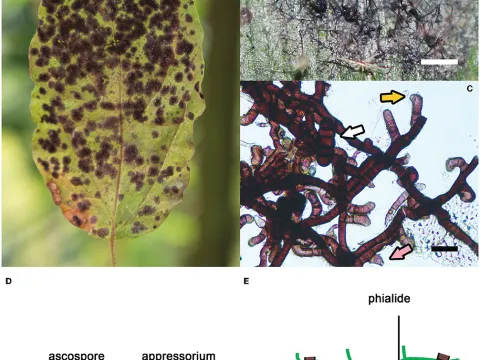
Meliola mangiferae is a fungal pathogen belonging to the order Meliolales. It is commonly identified as a black mildew or sooty mold fungus that grows on the surface of plant tissues.
What the section contains
Meliola mangiferae
Taxonomically, this organism is classified within the kingdom Fungi, class Sordariomycetes. It is a specialized parasite that thrives in tropical and subtropical environments, colonizing the external surfaces of hosts.
The mycelium of this fungus is dark, carbonaceous, and clearly visible. It forms dense, dark patches that look like soot deposited on the surface of the plant, which gives the disease its common name.
Diagnostic characteristics include specific structures known as hyphopodia, which allow the fungus to attach firmly to the cuticle of the plant leaf, resisting natural washing by rain.
While the fungus does not invade the internal tissues of the plant, its dense growth creates a significant physical barrier that interferes with the vital functions of the host plant.
The primary host for Meliola mangiferae is the mango tree (Mangifera indica). It damages the foliage and young shoots, often appearing in association with sap-sucking insect infestations.
The fungus thrives on honeydew secreted by aphids, scales, and mealybugs. This symbiotic relationship between the insect and the fungus leads to rapid colonization of the tree canopy.
The primary damage is the shading of leaves, which prevents photosynthesis. This reduces the energy production of the tree, leading to stunted growth, leaf yellowing, and decreased fruit yields.
In addition to physiological stress, the aesthetic value of the fruit is heavily compromised. Fruit covered in sooty mold is often rejected by consumers, leading to significant economic losses for growers.
Heavy infestations can lead to premature leaf drop, weakening the tree and making it more susceptible to environmental stressors and other competing pests or diseases.
The most prominent sign is the presence of a black, velvet-like or sooty coating on the upper surface of the leaves. This coating can sometimes extend to twigs and fruits.
The mold is superficial and can be wiped off with physical force, but the presence of the soot typically reappears if the underlying cause (the insect pest) is not managed properly.
Affected leaves may show signs of chlorosis or wilting due to the reduced access to sunlight and poor gas exchange caused by the thick fungal layer covering the stomata.
Sticky residue or honeydew on the foliage is an early warning sign that the conditions for sooty mold development are present, even before the fungus becomes fully visible.
In humid conditions, the mold grows more rapidly and may appear darker, indicating an active state of fungal development across the affected areas of the tree.
The most effective strategy is the integrated management of sap-sucking insects. By controlling aphids, scales, and mealybugs, the source of nutrients for the fungus is eliminated.
Cultural practices, such as proper pruning, are essential to improve canopy ventilation and light penetration. This helps to maintain lower humidity levels that are unfavorable for fungal growth.
Application of copper-based fungicides can help clean the leaf surfaces and suppress fungal activity. These treatments are most effective when applied early in the infection cycle.
Orchard monitoring systems that track insect populations help in preventing outbreaks. Timely interventions reduce the need for excessive chemical usage in the later stages of crop development.
- Sanitation by removing heavily infected branches.
- Using biological control agents to manage pest populations.
- Proper fertilization to ensure strong plant vigor and resistance.