
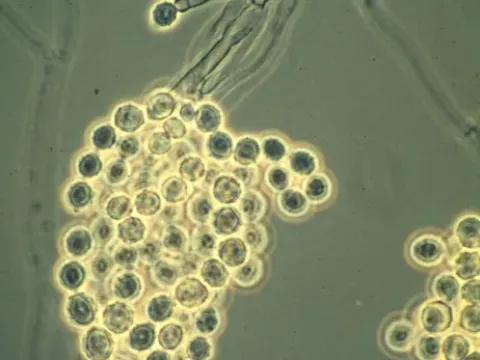
Microascus brevicaulis
Microascus brevicaulis
Microascus brevicaulis is an ascomycete fungus known for its significant role as a plant pathogen and saprotroph. It is classified within the order Microascales and is widely recognized for its anamorphic state, Scopulariopsis brevicaulis, which is frequently found in clinical and agricultural contexts.
What the section contains
Microascus brevicaulis
This fungus is highly resilient, capable of thriving in diverse environmental conditions including soil and decaying plant materials. Its biological cycle involves both asexual reproduction via conidia and sexual reproduction through the formation of cleistothecia, allowing it to survive harsh winter conditions.
Structurally, the fungus develops septate mycelium and specialized conidiophores. The conidia are distinctively shaped with a truncate base, which serves as a primary morphological feature for identification during laboratory examinations under a microscope.
The ability to produce a wide array of extracellular enzymes enables this fungus to degrade organic substrates, such as cellulose and various proteins. This enzymatic arsenal allows it to rapidly colonize seeds and fruits, overcoming the natural defenses of the host plant.
Being an opportunistic pathogen, Microascus brevicaulis frequently exploits pre-existing damage on plant surfaces, such as micro-cracks or insect wounds, to initiate an infection that can quickly lead to widespread tissue decay.
The primary agricultural damage caused by Microascus brevicaulis is the infection of seeds, which leads to seed rot and post-emergence damping-off. This is particularly problematic in cold, wet springs where seeds remain dormant in the soil for extended periods.
In post-harvest scenarios, the fungus causes severe fruit and vegetable decay. It is known to invade crops during storage, forming soft, mushy lesions that can eventually compromise the entire batch if the humidity and temperature are not strictly regulated.
The pathogen also impacts greenhouse production, where it affects seedlings of various horticultural crops. It causes lesions on the hypocotyls, leading to weakened stems and eventual collapse of the young plants, rendering them unfit for transplanting.
In the field, root rot infections caused by this fungus lead to stunted growth and reduced nutrient uptake. Affected plants exhibit yellowing of the foliage and premature wilting, as the root system loses its integrity and capacity to support the plant.
Economic losses arise from both the reduction in yield due to poor crop establishment and the direct financial impact of spoilage during storage and transit, necessitating strict management practices to minimize its spread.
A hallmark sign of Microascus brevicaulis infection is the presence of a characteristic powdery, off-white to yellowish-brown mold on the surface of seeds or affected plant parts. This appearance is distinct from common white molds.
In fruits and vegetables, lesions start as small, soft, discolored areas that quickly enlarge. The decayed tissue often becomes watery and emits a distinct, musty odor, indicating that the structural integrity of the plant cells is being destroyed by the fungal enzymes.
Seedlings infected by the fungus exhibit a darkened, constricted stem at the soil line, commonly referred to as "black leg" symptoms. This tissue degradation makes the stems brittle, causing the seedlings to lean over or break off entirely.
Microscopic analysis of the infected tissues reveals the presence of large quantities of conidia arranged in chains. These spores are highly resistant and can easily be disseminated by irrigation water or agricultural machinery between fields.
Field patches with poor plant density are a common indicator of soil-borne infection. In these areas, the seeds failed to germinate because the embryo was destroyed by the fungus before the radical could emerge.
Effective control of Microascus brevicaulis starts with the selection of high-quality, fungicide-treated seeds. Systemic seed treatments provide the necessary protection against early-season fungal colonization in the soil.
Cultural management practices, such as optimizing soil drainage and avoiding over-irrigation, are essential to create an environment less favorable for fungal growth. Furthermore, crop rotation helps to prevent the buildup of inoculum in the soil.
Storage management is critical for preventing post-harvest decay. Maintaining low temperatures and consistent, low-humidity airflow in storage facilities inhibits the growth of the pathogen and extends the shelf life of the produce.
Biological control agents, particularly certain strains of Trichoderma species, have proven effective in inhibiting the growth of Microascus through competitive exclusion and the production of antifungal compounds.
- Use of certified, fungicide-treated seeds.
- Implementation of robust crop rotation schemes.
- Sanitation of storage areas and agricultural tools.
- Monitoring humidity levels to prevent fungal development.