
Melon yellowing-associated virus
Melon yellowing-associated
Description
How to identify
Melon yellowing-associated virus (MYaV) is a plant virus belonging to the genus Crinivirus within the family Closteroviridae. It is known to specifically target cucurbit crops worldwide.
The virus possesses a bipartite genome consisting of positive-sense single-stranded RNA. These particles are typically long and flexuous, which is a hallmark of the Closteroviridae family.
Transmission occurs through insect vectors, primarily the whitefly species Bemisia tabaci. The virus is transmitted in a semi-persistent manner, where the vector can acquire the virus after a short feeding period and remains infectious for a limited duration.
Once inside the plant, the virus is restricted to the phloem tissue, where it replicates and spreads. This systemic infection interferes with the plant's ability to transport sugars and nutrients, leading to the characteristic yellowing symptoms.
The virus is not known to be mechanically transmissible through pruning or standard handling, nor is it transmitted through seeds, making insect control the primary focus of its management.
What it damages
The primary hosts of MYaV are members of the Cucurbitaceae family, most notably melons (Cucumis melo). Other affected crops include watermelons, cucumbers, and pumpkins, which suffer varying degrees of yield loss.
Infection leads to severe economic losses due to reduced fruit size and lower sugar content. Fruits from infected plants often fail to reach commercial quality standards, rendering them unmarketable.
The virus negatively impacts the photosynthetic efficiency of the plant. As the leaves become chlorotic and eventually necrotic, the plant's metabolic output drops, significantly hindering fruit development.
If the infection occurs during the early vegetative stage, the plant may remain stunted throughout its entire life cycle, producing few or no marketable fruits.
The impact is exacerbated by the presence of high whitefly populations, which can facilitate the rapid spread of the virus across large commercial fields, leading to significant percentage losses in harvest volume.
Signs of infestation
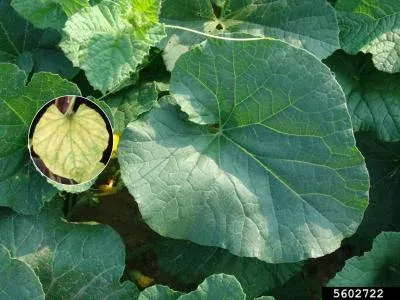
The most prominent symptom of MYaV is interveinal chlorosis, where the leaf tissue between the veins turns bright yellow, while the veins themselves remain green, creating a distinct mosaic pattern.
As the disease progresses, the leaves may curl upwards at the margins, become brittle, and eventually develop necrotic patches. This leads to premature leaf senescence and death.
Infected plants typically show reduced growth, including shorter internodes and smaller leaves compared to healthy plants. The overall vigor of the crop is noticeably lower.
Symptoms are usually most apparent on the older and middle leaves first, which is consistent with the systemic movement of the virus through the phloem from the source of infection.
- Interveinal yellowing (chlorosis) of the leaves.
- Upward curling and brittleness of leaf margins.
- Development of brown necrotic spots on yellowed tissues.
- Significant stunting and reduced plant height.
- Reduced sugar accumulation and poor fruit quality.
Control measures
Controlling MYaV relies almost entirely on managing the whitefly population, which serves as the exclusive vector for the virus in field conditions. Effective insecticide programs are essential.
Cultural practices, such as removing weed hosts from around the planting area, are crucial. Many common weeds act as reservoirs for both the virus and the whiteflies, allowing the cycle to persist.
Spatial isolation is highly recommended. Planting new crops away from older, infected fields can significantly delay the arrival of whiteflies and prevent early-season infection.
In protected cultivation, the use of insect-proof nets is the most reliable method to exclude whiteflies entirely, preventing the introduction of the virus into the greenhouse environment.
Integrated Pest Management (IPM) strategies, which include monitoring whitefly counts and using biological control agents or targeted chemical applications, provide the best defense against MYaV outbreaks.
Causes diseases · 1
Discussion
No discussions yet — be the first.