
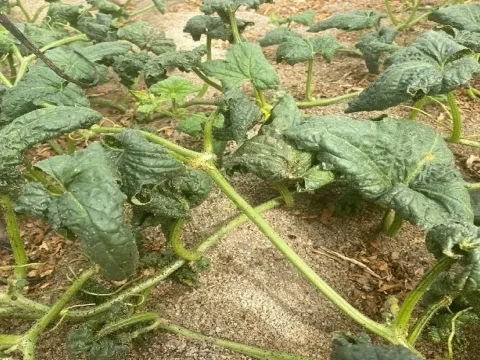
Melon necrotic spot virus
Melon necrotic
Melon necrotic spot virus (MNSV) is a highly contagious plant pathogen belonging to the Carmovirus genus. It consists of small icosahedral particles containing a single-stranded RNA genome.
What the section contains
Melon necrotic spot virus
This virus is an obligate parasite that lacks independent motility. Its survival in nature depends on soil-borne vectors and its ability to persist in plant debris and greenhouse substrates for extended periods.
The primary vector for the transmission of the virus is the chytrid fungus Olpidium bornovanus, which resides in the rhizosphere of the host plant. Without the presence of this fungus, soil-borne transmission is negligible.
Taxonomically, the virus is classified as a pathogen causing both local and systemic infections in members of the Cucurbitaceae family. Its high genetic diversity presents challenges for breeding resistant cultivars.
Laboratory diagnosis via ELISA (Enzyme-Linked Immunosorbent Assay) or RT-PCR is necessary for identification, as symptoms often mimic those of fungal root rots or bacterial infections.
While melons are the primary host, the virus also causes significant damage to cucumbers, watermelons, and squashes in both greenhouse and open-field environments. Hydroponic systems are particularly vulnerable.
The virus interferes with the host plant's metabolism, blocking the translocation of essential nutrients. This systemic disruption leads to severe growth retardation and a significant decline in fruit yield.
In commercial agriculture, crop losses can range from 50% to 80% if early infection occurs. The fruit often develops unsightly necrotic lesions, rendering it unsuitable for commercial sale.
The infection accelerates premature senescence, drastically reducing the overall harvest period. In protected cropping systems, an outbreak can decimate the entire crop within a few weeks.
The presence of the fungal vector Olpidium further weakens the root system, creating entry points for secondary bacterial pathogens and root rot, which complicates plant health management.
Initial symptoms on melon leaves manifest as small chlorotic spots that eventually develop into necrotic brown zones surrounded by a yellow halo. Infected leaves become deformed and eventually die.
Fruits display characteristic rounded or irregular necrotic spots. These often appear as depressed lesions that expand over time, leading to cracking of the fruit skin, which is a major quality issue.
Systemic infection often results in the shortening of internodes, leading to a stunted, "curly" appearance of the plant apex. Stems may show browning near the petioles of the leaves.
Root systems of infected plants appear unhealthy, often showing signs of decay caused by the fungal vector. The plants remain wilted even when soil moisture is adequate due to impaired water uptake.
- Yellowing and mosaic patterns on young leaves
- Deep brown necrotic spots on maturing fruit
- Stunting and lack of vegetative vigor
- Necrosis of root hairs and secondary roots
The most effective strategy for managing MNSV is the use of resistant or tolerant cultivars. Breeding programs focus on developing varieties that either resist the virus or the fungal vector.
Stringent sanitation practices, including the disinfection of tools, pots, and substrates, are essential. Steam sterilization of soil effectively kills the spores of the fungal vector, stopping the cycle.
In hydroponic production, careful monitoring of nutrient solution temperature is critical. Lower temperatures favor the activity of the fungal vector, increasing the risk of virus transmission.
Early detection and immediate removal of symptomatic plants can limit the spread of the pathogen within the greenhouse. Affected plots should be avoided for cucurbit cultivation for 2-3 years.
Biological fungicides aimed at controlling Olpidium bornovanus populations can help mitigate the initial infection risk. Consistent phytosanitary monitoring is key to maintaining a virus-free crop.