
Melon yellow mosaic virus
Melon yellow
Melon yellow mosaic virus (MYMV) is a viral pathogen belonging to the genus Tymovirus. It is characterized by small, isometric virions that infect cucurbit species worldwide.
What the section contains
Melon yellow mosaic virus
The virus relies on host plants for replication, utilizing the plant's cellular machinery to propagate its genome after gaining entry through mechanical damage or insect feeding.
It survives during off-seasons in alternative weed hosts, which serve as a continuous reservoir for the virus, ensuring its persistence in the environment year-round.
Transmission occurs primarily through beetle vectors, such as leaf beetles, which carry the virus on their mouthparts and transmit it during the feeding process.
Environmental conditions play a crucial role, with warm, humid weather favoring both the population growth of insect vectors and the systemic spread of the virus within the plant.
The host range includes melon, cucumber, squash, and watermelon, causing significant systemic disruption in plant physiology and development.
By interfering with photosynthesis and nutrient transport, the virus restricts the development of stems and leaves, leading to stunted overall growth.
The quality of fruit is severely compromised, as infected melons often exhibit malformations, size reduction, and irregular skin coloration.
In cases of early infection, the entire crop yield can be jeopardized as infected seedlings may fail to produce any viable fruit at all.
Agricultural economic impact is substantial, particularly in regions where intensive cucurbit production is common and vector populations are high.
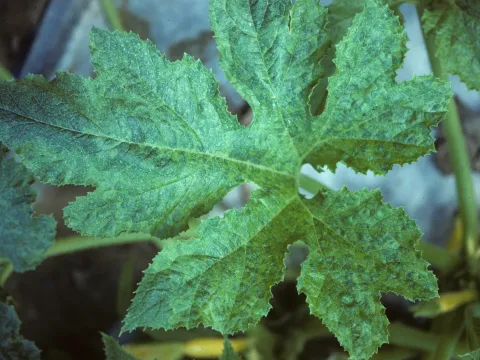
The most prominent sign is the development of a distinct yellow mosaic pattern on the leaves, characterized by chlorotic patches that expand over time.
Leaves often exhibit severe crinkling, cupping, or curling, which indicates significant disruption to the plant's normal growth architecture.
Fruit symptoms include the appearance of yellow spots, mottle patterns, or necrosis on the rind, which significantly reduces the aesthetic and commercial value.
Plants generally display shortened internodes, giving them a bushy or rosetted appearance that distinguishes them from healthy, vigorous counterparts.
Flowering and fruit set are inhibited, leading to a noticeable reduction in the number of fruits per plant and an overall loss in productivity.
Management focuses primarily on reducing the population of insect vectors, as their control is key to preventing the secondary spread of the virus within the field.
Eliminating weed reservoirs around the field edges is essential, as these plants harbor the virus during intervals when the main crop is absent.
The use of virus-resistant or tolerant cultivars is considered the most effective long-term strategy for minimizing losses in susceptible areas.
Strict sanitation practices, including the sterilization of tools and the immediate removal of symptomatic plants, help prevent mechanical virus transmission.
- Regular monitoring for insect vector activity.
- Application of reflective mulch to deter beetle pests.
- Implementation of crop rotation to break the pathogen's life cycle.