
Maize stripe
Maize stripe
The causative agent of the disease is the Maize stripe virus (MStV), which is classified within the Tenuivirus genus. The virus consists of filamentous particles and a segmented RNA genome.
What the section contains
Maize stripe
The virus is not mechanically transmissible via sap or contact, and it does not spread through seeds, necessitating the presence of a specific insect vector for successful dispersal.
Systematically, it is known to be an obligate parasite relying on the delphacid planthopper Peregrinus maidis, which serves as the primary and often exclusive vector in affected regions.
The virus is widely distributed in tropical and subtropical climates, where environmental conditions support the year-round activity of its insect vector.
Laboratory diagnosis is essential for confirmation, usually employing ELISA or RT-PCR, as visual symptoms are often confused with nutrient deficiencies or other viral infections.
Corn (Zea mays) is the primary economic host, but the virus can also infect other grasses, including rice, sorghum, and various wild graminaceous weed species.
Yield losses can be devastating, sometimes resulting in total crop failure in heavily infested areas, particularly when plants are infected at an early growth stage.
Infection leads to systemic physiological impairment, reducing the photosynthetic efficiency and overall biomass production of the host plant.
Beyond yield reduction, the disease affects the nutritional quality of fodder corn, making it less suitable for livestock consumption if harvested from heavily diseased fields.
The virus represents a significant threat to global cereal production in warm regions, frequently exacerbating the impact of other concurrent environmental stresses.
Infection typically begins shortly after seedling emergence, triggered by the migration of planthoppers from surrounding wild grass hosts to the newly planted corn crops.
The disease cycle is heavily influenced by temperature, with warmer periods accelerating both the replication of the virus within the host and the life cycle of the vector.
Secondary spread occurs throughout the growing season as subsequent generations of vectors colonize the corn field and feed on infected tissues, spreading the virus further.
Rainy seasons often promote the growth of alternative grass hosts, ensuring a constant inoculum supply for the vector populations that move onto cultivated crops.
During the off-season, the virus survives in perennial grass roots or within the insect vectors, remaining ready to reinfect new crops as soon as favorable conditions return.
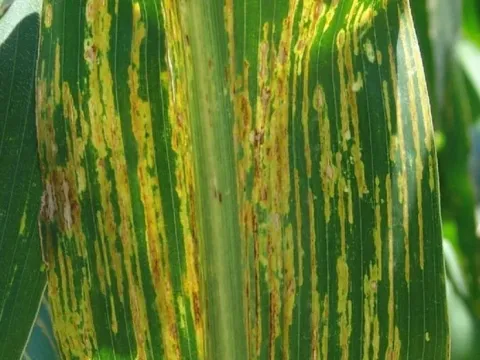
The hallmark symptoms include the development of thin, chlorotic, or yellow longitudinal stripes that emerge from the base of the leaves and extend to the tips.
Young, infected plants frequently exhibit severe stunting and reduced leaf expansion, which can lead to a deformed, bunched appearance of the foliage.
As the infection progresses, leaf tissue may become necrotic, brittle, and prone to premature wilting, significantly weakening the plant structure.
The reproductive development is severely compromised, often resulting in barren plants, poorly filled ears, or a complete absence of grain formation.
- Chlorotic longitudinal leaf striping
- Severe plant stunting
- Leaf deformation and twisting
- Poor ear development and grain filling
- Premature senescence of tissues
Managing the vector population is the most critical component of disease control, as limiting the planthopper Peregrinus maidis directly reduces viral transmission.
Cultural practices, such as the removal of wild grass hosts from field margins, help to eliminate the primary sources of inoculum that initiate field outbreaks.
Adjusting planting dates to avoid synchrony with peak vector migration periods can significantly lower the incidence of early-season infection.
The application of systemic insecticides, particularly as seed treatments or early foliar sprays, provides essential protection during the most vulnerable vegetative growth stages.
Breeding and utilizing corn hybrids with genetic resistance to the virus or the vector remain the most sustainable and effective long-term strategies for large-scale production.