
Mal secco
Mal de
Mal secco is a highly destructive fungal disease caused by the pathogen Plenodomus tracheiphilus. It is a vascular pathogen that specifically targets the xylem tissues of citrus trees, leading to systemic wilting.
What the section contains
Mal secco
The pathogen belongs to the class Dothideomycetes. It survives and spreads by producing spores (pycnidia) that are released during periods of high humidity and rainfall, facilitating the infection of new hosts.
The fungus invades the tree through wounds caused by pruning, insects, or environmental stress. Once inside, the mycelium colonizes the vascular bundles, blocking the transport of water and nutrients.
Environmental conditions play a critical role in the disease's epidemiology. Cool, humid conditions are favorable for spore germination and colonization, making the disease more prevalent in certain seasons.
Mal secco remains a significant threat to global citrus production, as it can persist in plant debris and spread through contaminated pruning tools or infected nursery stock.
The disease primarily affects lemon, citron, and bergamot trees, causing significant economic losses. In severe cases, the infection can destroy an entire citrus orchard within a few years.
By clogging the xylem vessels, the fungus induces a permanent wilting state. The tree loses its ability to sustain photosynthesis, resulting in chlorosis, leaf drop, and eventually total necrosis.
Damage is characterized by a rapid decline of the canopy. The disease is often called "apoplexy" because of the speed with which seemingly healthy branches can dry out and die.
The systemic nature of the infection makes it extremely difficult to treat. Because the pathogen spreads throughout the vascular system, localized pruning is often ineffective once the infection reaches the main trunk.
Losses are compounded by the high cost of eradicating infected plants and the need for long-term quarantine measures in citrus-growing regions.
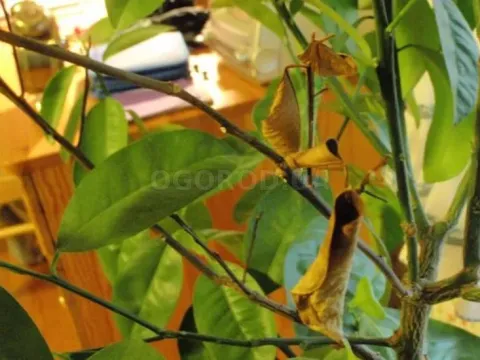
Initial symptoms include the yellowing of leaves at the tips of the branches, followed by sudden defoliation. This pattern often starts from the periphery and moves toward the center of the tree.
A diagnostic sign is the reddish-orange or salmon-colored discoloration of the wood found when cutting into infected branches. This staining is caused by the accumulation of fungal toxins.
In advanced stages, the bark develops necrotic lesions and cracks. These lesions are often sites where the fungus produces fruiting bodies that release spores to spread further.
The disease usually manifests in the spring, coinciding with the active growth period of the tree. The rapid drying of shoots, often referred to as "dieback," is a hallmark sign.
- Yellowing and rapid defoliation of shoots.
- Salmon-pink discoloration of internal wood.
- Necrotic lesions and bark splitting on trunks.
- Sudden dieback of entire canopy sections.
Integrated management is essential for controlling mal secco. The most effective approach is the use of resistant citrus varieties and rootstocks developed through breeding programs.
Sanitation is paramount. Tools must be disinfected with appropriate fungicides or bleach after every cut to prevent the transmission of spores from infected to healthy trees.
Infected trees must be removed and destroyed immediately upon detection. Pruning should be avoided during periods of high rain to prevent the entry of fungal spores into fresh wounds.
The prophylactic application of copper-based fungicides during the rainy season helps protect sensitive young shoots from initial infection, although it cannot cure established internal infections.
Proper orchard management, including balanced fertilization and avoiding mechanical stress, helps maintain tree vigor, making the host less susceptible to the penetration of the fungus.