
Hypochnus sasakii
Hypochnus sasakii
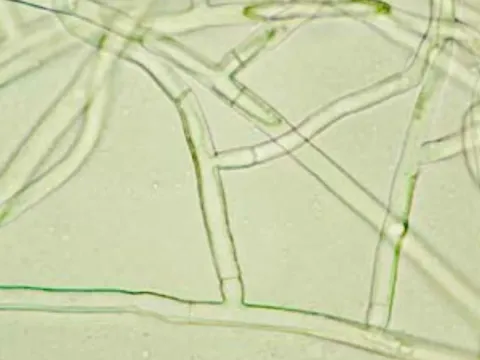
Hypochnus sasakii (anamorph: Rhizoctonia solani) is a soil-borne basidiomycete fungus that serves as the causal agent of the destructive sheath blight disease in various crops.
What the section contains
Hypochnus sasakii
The pathogen does not produce conidia; instead, it relies on vegetative hyphae and sclerotia for survival, dispersal, and infection, making it a persistent threat in agricultural soils.
Taxonomically, it is often associated with the Thanatephorus cucumeris complex, a group of fungi known for causing significant economic losses in global rice production.
The fungus is highly opportunistic, capable of infecting plants through the direct penetration of the epidermis or by entering through natural openings like stomata.
Due to its broad host range and ability to survive in harsh environmental conditions, it remains one of the most studied and feared pathogens in tropical and subtropical agriculture.
The primary host for Hypochnus sasakii is rice (Oryza sativa), where it causes sheath blight, a disease that can lead to total crop failure under severe conditions.
In addition to rice, the pathogen is known to affect a wide range of legumes, tubers, and various vegetable crops, facilitating its survival across different cropping systems.
Infection results in the degradation of the plant's structural integrity, leading to stunted growth, leaf senescence, and, in advanced cases, the lodging of the stems.
The disease reduces the plant's ability to fill grains, leading to empty or poorly filled panicles, which directly impacts the yield potential and grain quality.
In dense, high-yielding rice stands, the pathogen can spread rapidly from the lower leaves to the upper canopy, resulting in massive patches of withered, dead plants.
The fungus thrives in high-temperature environments, typically ranging between +25°C and +30°C, combined with high relative humidity levels above 90%.
Epidemics are most common during the active growth stages of rice, specifically after canopy closure, which creates a humid and stagnant microclimate ideal for hyphal growth.
Sclerotia resting in the soil or floating on the surface of irrigation water serve as the primary inoculum, germinating when conditions become favorable.
Rain splashes and moving irrigation water facilitate the secondary spread of the infection throughout the field, allowing the disease to move from infected patches to healthy plants.
While the pathogen is most active during the peak growing season, it remains dormant in the soil during off-seasons, awaiting the next host crop to repeat the cycle.
Initial symptoms are characterized by water-soaked, grayish-green lesions that typically appear on the leaf sheaths near the waterline.
As the lesions expand, they develop irregular, elongated shapes with distinct brown or dark margins, surrounding a grayish-white center of dead tissue.
Under conditions of high humidity, a white, cottony fungal mat (mycelium) may be observed covering the surface of the infected lesions on leaves and stems.
As the infection progresses upwards, leaves begin to yellow, dry out, and curl, eventually dropping off and reducing the plant's overall photosynthetic capacity.
In the final stages of the disease, small, hard, dark brown sclerotia are formed on the surface of the decaying tissue, which will eventually fall to the soil.
Management begins with the use of resistant or tolerant rice varieties, which remain the most cost-effective long-term strategy for controlling sheath blight.
Proper water management is critical; draining fields at specific intervals can disrupt the spread of floating sclerotia and lower the humidity within the crop canopy.
Adjusting nutrient management, specifically avoiding excessive nitrogen fertilizer applications, helps prevent succulent growth that is highly susceptible to fungal penetration.
- Application of systemic fungicides, such as strobilurins and triazoles, during the most susceptible growth stages.
- Field sanitation through the removal and destruction of infected crop residues to reduce the initial inoculum level.
- Integration of biological control agents, including Trichoderma species, which are known to compete with and parasitize the pathogen.
A successful control program requires an integrated approach, combining cultural practices, biological methods, and chemical interventions to minimize yield losses.