
Hypochnus filamentosus
Hypochnus filamentosus
Hypochnus filamentosus is a fungal pathogen scientifically recognized today as Thanatephorus cucumeris, with Rhizoctonia solani serving as its anamorph (asexual stage). It belongs to the Basidiomycetes phylum and is a notorious soil-borne threat.
What the section contains
Hypochnus filamentosus
The fungus is characterized by the production of branching hyphae that exhibit right-angle septation. It survives in the soil and on plant debris by forming dark, hard structures known as sclerotia, which are resistant to harsh environmental conditions.
This pathogen acts as a facultative parasite, meaning it can survive as a saprophyte on decaying organic matter when no living host is present. This versatility makes it an extremely difficult pathogen to eradicate from agricultural fields.
Identification is primarily based on microscopic examination of the mycelium and the observation of typical symptoms on host plants. The presence of sclerotia is a diagnostic feature often used in field inspections.
Laboratory diagnosis involves culturing the pathogen on potato dextrose agar or similar media to observe its growth patterns, hyphal branching, and the eventual development of its characteristic colony morphology.
The fungus has an exceptionally wide host range, attacking crops such as potatoes, sugar beets, beans, tomatoes, and various cereal grains. It is particularly devastating during the early stages of plant development.
In potatoes, it causes "black scurf," where sclerotia coat the tubers, leading to lower market quality and compromised germination. The disease often results in reduced stand counts and overall yield loss.
For vegetable seedlings, the pathogen induces damping-off, where the stems rot at the soil line. This causes the seedlings to collapse and die, often leading to total crop failure in affected areas of greenhouses or fields.
Cereals are affected by root rot and stem base decay, which hinders nutrient transport and leads to lodging. This significantly limits grain filling and results in reduced harvests of poor-quality grain.
In conditions with high moisture, the fungus may attack fruit surfaces that are in contact with the soil, causing necrotic brown lesions that render the produce unsellable.
The fungus is most active in moist soil with temperatures between 15°C and 20°C (59–68°F). High humidity is essential for the sclerotia to germinate and produce active, infectious hyphae.
The most vulnerable period for host plants is the germination phase. Newly emerged seedlings are highly susceptible to penetration by the fungus, often succumbing to the disease before they become established.
Throughout the growing season, the pathogen continues to spread if conditions remain wet. Rain splashes and irrigation water can transport fungal propagules from the soil to the foliage or fruits of healthy plants.
During the transition to colder months, the fungus shifts its biological focus to the production of sclerotia. These structures remain in the soil as resting stages, waiting for the return of favorable conditions in the next season.
Farm machinery is a significant vector for spread, as contaminated soil containing sclerotia is easily moved from infested fields to clean areas during tillage and harvesting operations.
The most obvious sign of infection is the presence of black, dirt-like sclerotia on the surfaces of tubers or roots. Unlike soil particles, these are firmly attached and cannot be washed away easily.
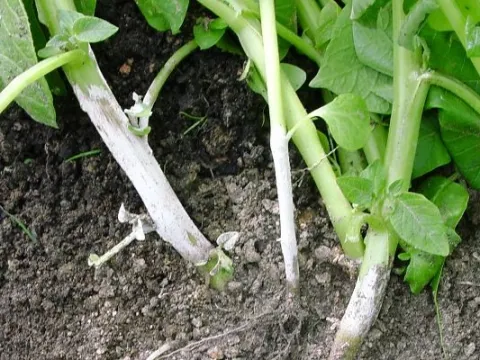
Infected seedlings exhibit brown, shriveled lesions at the base of the stem. The affected tissue becomes soft and necrotic, causing the plant to wither and eventually fall over.
Adult plants show signs of general unthriftiness, yellowing of the lower leaves, and stunted growth. In severe cases, the entire root system may become rotted, leaving the plant loose in the soil.
During periods of high humidity, a thin, web-like white or gray mycelium may be visible on the soil surface around the base of the infected plant, acting as a clear indicator of active fungal growth.
Internal tissue breakdown in the stems or roots is also common, which may cause the stem to become hollow or brittle, leading to structural failure under moderate wind or pressure.
Integrated pest management (IPM) is essential for controlling this pathogen. The primary objective is to reduce the inoculum level in the soil and prevent initial infection during the planting phase.
Crop rotation is a fundamental practice. Avoid planting susceptible crops in the same field for at least 4 to 5 years, allowing time for the sclerotia in the soil to lose their viability naturally.
Treating seeds and tubers with systemic or contact fungicides is highly recommended. Active ingredients such as fludioxonil or azoxystrobin are frequently used to provide a protective barrier around the developing root system.
Cultural practices that improve soil drainage and aeration help limit the proliferation of the fungus. Avoiding excessive moisture in seedbeds is crucial for maintaining seedling health.
- Use certified disease-free planting material to prevent field contamination.
- Remove and destroy all infected plant debris after harvest to reduce resting stages.
- Promote soil health by using green manures and maintaining proper pH levels.