
House finch
House finch
Description
How to identify
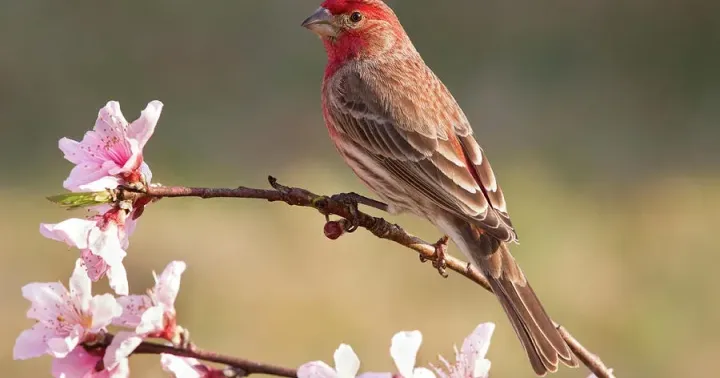
The House finch (Haemorhous mexicanus) is a small passerine bird in the finch family. Adult birds typically measure about 13–15 cm in length and possess a stout, conical beak specialized for cracking seeds.
Males are easily identified by their reddish or raspberry-colored heads, breasts, and rumps, especially during the breeding season. They provide a striking contrast to the females, which are drab brown with streaks.
These birds are highly social and are frequently found in flocks, especially in suburban areas, parks, and agricultural settings where food resources are abundant and accessible.
Biological success of the species is attributed to its high adaptability to human-altered environments, allowing it to exploit various garden and orchard crops as primary food sources.
In agronomy, they are classified as opportunistic pests. While not a pathogen in the microbial sense, their feeding behavior directly results in physical destruction of plant reproductive tissues.
What it damages
House finches cause significant damage by feeding on the flower buds of fruit trees during early spring. This destruction reduces the flowering potential and future yield of orchards significantly.
During the ripening season, they focus on berries and stone fruits like strawberries, cherries, and raspberries. Their feeding habits create open wounds in the fruit, rendering them unsalable.
In agricultural fields, they target sunflower heads and grain crops during the milk stage. They peck out developing seeds, leading to yield loss and reducing the quality of the harvested produce.
The feeding activity often leads to secondary infections. Damaged tissues are prone to fungal or bacterial decay, which can spread to healthy parts of the plant if not addressed quickly.
In intensive fruit production, House finch activity can result in substantial financial losses if the population remains unchecked and no bird-deterrent strategies are in place.
When it appears
Activity is most pronounced in early spring, as birds seek out nutritious buds to survive the transition period before the onset of general insect and plant growth.
The period of flowering and fruit set is critical, as birds often congregate in orchards, potentially damaging the reproductive organs of plants and causing premature fruit drop.
Mid-summer is the peak for berry damage. As fruit sugars increase, the temptation for House finches grows, making protective measures mandatory during the maturation phase.
Autumn brings renewed interest in late-season vegetable seeds and remnant grains, as birds forage to build up fat reserves for the winter months ahead.
Throughout winter, House finches often gravitate toward feed storage areas, sheds, and uncovered grain supplies, continuing to pose a risk to stored agricultural goods.
Signs of infestation
Signs of infestation include the presence of pecked or missing buds on branches in early spring. The ground beneath trees may be littered with bud scales, indicating recent feeding.
Fruits and berries will display characteristic jagged or torn holes where the birds have fed. These damaged fruits often show signs of rapid fermentation or rot on the bush.
In sunflower fields, damaged heads exhibit missing seeds, often with hulls scattered on the ground. Birds typically work from the center or edges of the sunflower head.
Frequent, distinct calls and the presence of social flocks in the garden are clear indicators of their feeding interest in your specific location.
- Missing or damaged fruit tree buds.
- Torn wounds on ripe berries and stone fruits.
- Pecked out seeds in sunflower heads.
- Presence of bird droppings on foliage and fruit.
Control measures
Exclusion netting is the most effective way to protect berry crops and small fruit trees. Physical barriers prevent the birds from reaching the fruit entirely.
Visual deterrents, including reflective tape, holographic devices, or plastic owl decoys, can discourage birds from settling in the area during the vulnerable ripening phase.
Bioacoustic deterrents that broadcast predator alarm calls are highly effective for larger orchard settings, creating a stress response that discourages the flock from returning.
Integrated pest management includes timely harvesting of crops to limit the window of opportunity for bird damage, ensuring a higher percentage of the yield is recovered.
Maintaining a clean field environment by clearing fallen fruit and waste helps reduce the attractiveness of the garden to scavenging bird populations.
Causes diseases · 1
Discussion
No discussions yet — be the first.