
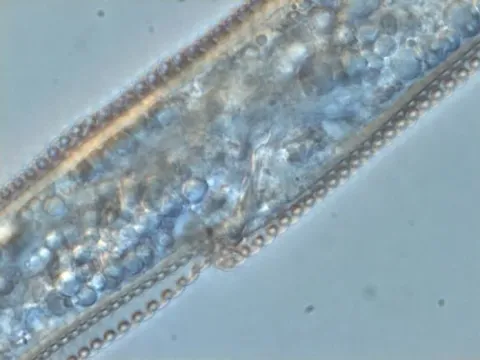
Hemicycliophora uniformis
Hemicycliophora uniformis
Hemicycliophora uniformis is a microscopic ectoparasitic nematode belonging to the family Hemicycliophoridae. It is classified under the phylum Nematoda, class Chromadorea.
What the section contains
Hemicycliophora uniformis
This organism is distinguished by a specific, thick cuticle that forms a sheath-like structure over its body, which is a key identification feature for nematologists.
The adult length typically ranges from 0.6 to 1.0 mm. Due to their small size and translucent body, they are impossible to detect without specialized microscopic equipment.
They possess a well-developed stylet, which is utilized to pierce the root epidermal cells of host plants and extract cytoplasmic contents for nutrition.
Proper identification usually requires the processing of soil samples and root extracts using the Baermann funnel technique or other nematode extraction protocols.
Hemicycliophora uniformis is considered a polyphagous pathogen, affecting a wide variety of vegetable crops, berries, and several ornamental plant species.
By feeding exclusively on the root surface, these nematodes cause significant tissue damage that prevents efficient water and nutrient uptake by the plant.
The feeding sites often become necrotic, which disrupts the normal development of root hairs and lateral roots, leading to a stunted root architecture.
Secondary infections occur frequently as the nematode-damaged tissue becomes a site of entry for bacteria and fungi, compounding the damage caused by the nematode alone.
The economic impact is primarily driven by yield reduction, decreased fruit size, and compromised plant quality, rendering crops unsellable in professional markets.
Visible symptoms on the host plants include chlorosis, significantly reduced growth rates, and an overall lack of vigor in the field.
During the day, plants often exhibit wilting symptoms despite adequate soil moisture, indicating that the root system is unable to sustain transpiration.
Examination of the root system often reveals a lack of root hair development and darkened, necrotic tissue that has been subjected to continuous feeding.
Patches of stunted or chlorotic plants often appear in irregular patterns across the field, reflecting the distribution of the nematode population in the soil.
- Stunted growth compared to healthy neighboring plants.
- Early leaf yellowing (chlorosis) and wilting.
- Poor root structure with minimal development of fine roots.
The primary control strategy involves crop rotation using non-host crops, which helps to break the nematode lifecycle and reduce soil population density over time.
Improving soil health through the incorporation of green manures and organic matter can stimulate beneficial soil microorganisms that prey on nematodes.
Sanitation practices, such as ensuring all agricultural equipment is clean when moving between fields, prevent the spread of soil-borne pathogens to unaffected areas.
Chemical control via the application of targeted nematicides may be necessary in high-pressure scenarios, provided they meet local regulatory and environmental standards.
Regular soil testing is essential to monitor population levels and determine if the threshold for treatment has been exceeded before implementing chemical interventions.