
Shot hole disease
Stigmina carpophila
Shot hole disease is caused by the fungus Stigmina carpophila (syn. Clasterosporium carpophilum), which belongs to the Ascomycota phylum and specifically targets stone fruit trees.
What the section contains
Shot hole disease
The fungus overwinters as mycelium within infected buds, twigs, and bark cankers. In the spring, when temperatures rise and moisture is present, it produces conidia.
The disease cycle is driven by rainfall and humidity, which facilitate the spread of spores from overwintering sites to new spring growth, such as developing leaves and flowers.
The pathogen infects plants by penetrating through stomata or wounds caused by mechanical damage, wind, or insect bites. Once inside, it begins to colonize the plant tissue.
Stigmina carpophila is an obligate parasite that secretes enzymes to degrade plant cell walls, leading to the characteristic necrosis of the infected areas.
The pathogen affects various stone fruit species, including peaches, nectarines, apricots, cherries, and plums, causing significant economic losses in commercial production.
Infection leads to defoliation, as heavily spotted leaves wither and drop prematurely. This weakens the tree, reducing its ability to accumulate nutrients for winter survival.
Fruit quality is severely impacted. Small lesions appear on the skin, which can progress into deep scabs or cracks, making the fruit unmarketable for fresh consumption.
Twig infections lead to dieback and the characteristic "gumming," where the tree excretes sticky resin from the wounds to isolate the infection, which further weakens the wood.
Severe infestations can stunt tree growth, reduce yield in subsequent seasons, and in extreme cases, lead to the death of young or weakened trees.
Primary infections occur in early spring during the bud swell and bloom stages. The fungus requires persistent moisture from rains to germinate and infect vulnerable tissues.
The infection period continues throughout the spring and early summer as long as there is high humidity and precipitation, which aids in the splash-dispersal of fungal spores.
Summer weather, characterized by dry conditions, can slow the spread of the pathogen, although the fungus remains active internally within the infected tree tissues.
Autumn marks a critical period for infection of the current year's shoot growth. These infected shoots will serve as the primary inoculum source for the following season.
Multiple generations of spores can be produced within a single growing season if the environmental conditions remain optimal for fungal development.
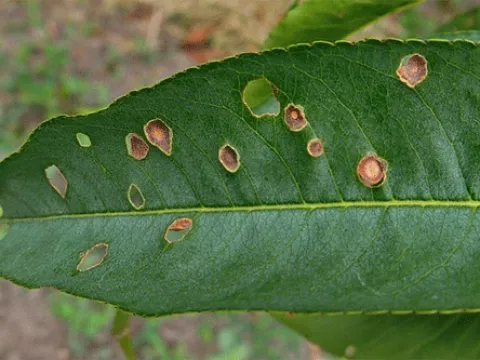
On leaves, the disease begins as tiny reddish-brown spots that enlarge. Within a few weeks, the dead tissue falls out, leaving behind small, circular holes known as "shot holes."
On shoots and twigs, you will notice small, dark lesions that often ooze sap (gummosis). These lesions can eventually girdle the twig, causing the tip to die.
Flowers and flower buds turn black and shrivel, often failing to develop into fruit. If the infection reaches the fruit, it manifests as small, raised, reddish-purple spots.
As the fruit matures, these spots can become crusty or corky, causing the surrounding tissue to stop growing and resulting in deep, unsightly cracks on the fruit surface.
- Circular holes in leaves surrounded by a yellow or red halo.
- Dark, sunken, or raised spots on the fruit.
- Gummy lesions on twigs and branches.
- Premature yellowing and shedding of leaves.
Sanitation is the first line of defense: prune and remove all diseased twigs and branches during the dormant season to eliminate the primary sources of infection.
Collect and destroy all fallen leaves and mummified fruits from the orchard floor, as these harbor the fungus throughout the dormant winter months.
Apply copper-based fungicides during the dormant season and at bud break to protect the trees from early infections and reduce the overall spore load.
Incorporate systemic fungicides into the spray schedule during the growing season if weather forecasts predict extended periods of wet, rainy conditions.
Proper orchard management, including thinning the canopy for better air circulation and balanced fertilization, significantly improves tree vigor and disease resistance.