
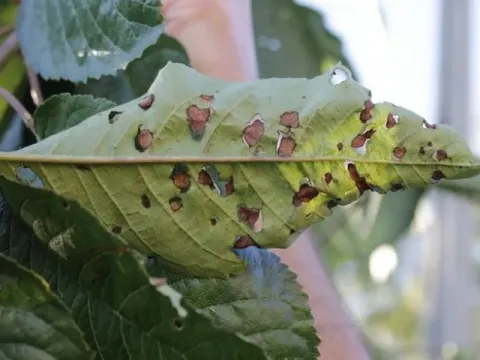
Shot hole disease of stone fruits
Wilsonomyces carpophilus
Shot hole disease, also known as coryneum blight, is a fungal infection caused by Wilsonomyces carpophilus, a pathogen that exclusively attacks stone fruit trees.
What the section contains
Shot hole disease of stone fruits
The fungus is categorized as an ascomycete and typically overwinters in dormant buds, twigs, and cankers formed during previous seasons.
Its life cycle relies on the production of conidia, which are disseminated by rain splash, wind currents, and mechanical contact during damp weather.
The pathogen is highly specialized and infects various tissues, including leaves, fruits, and woody stems, displaying high virulence in humid conditions.
Due to its ability to remain dormant within plant tissues, this fungus is a persistent threat that requires long-term management strategies.
The disease primarily affects peaches, nectarines, apricots, cherries, and plums, causing both cosmetic and structural damage to the trees.
Severe defoliation weakens the trees significantly, reducing their vigor, winter hardiness, and the ability to produce high-quality yields in subsequent years.
Fruit damage leads to scabby lesions, rendering the produce unmarketable and susceptible to rot during storage and transit processes.
Cankers on twigs and branches can lead to excessive gummosis (oozing of sap) and eventually cause branch dieback, which stunts tree growth.
In young orchards, the disease can hinder the development of the tree framework, making the trees more vulnerable to environmental stresses.
The disease cycle begins in early spring, as temperatures rise above 5°C and moisture levels remain high enough for fungal germination.
Spore production is most aggressive during prolonged rainy periods, which provide the necessary surface moisture for conidia to penetrate plant tissues.
Hot, dry summers typically limit new infections, but irrigation systems can create microclimates that allow the fungus to persist throughout the season.
Autumn remains a critical period for infection, as the fungus colonizes the new buds and wood that will harbor the pathogen through the winter months.
The timing of disease development is synchronized with tree phenology, with the most damage occurring during bud break and petal fall stages.
The most distinctive symptom is the appearance of small, circular spots on leaves that eventually fall out, creating a "shot hole" appearance.
Twigs often display small, reddish-purple lesions that may expand into sunken cankers, frequently accompanied by significant gum exudation.
Fruits show small, dark red spots that grow into rough, corky scabs, often causing the fruit surface to become distorted and misshapen.
Infected blossoms usually darken and shrivel, often falling prematurely, which reduces the total fruit set for the affected season.
Dormant buds that are infected may fail to bloom in the spring, remaining dark and necrotic instead of progressing through normal development.
Successful management requires a combination of strict orchard hygiene and a proactive fungicide spray program during critical phenological windows.
Removing and burning all infected twigs, as well as clearing debris from the orchard floor, is essential to reduce the primary inoculum load.
- Apply copper-based fungicides in late autumn and early spring to provide protective barriers.
- Use systemic fungicides at the popcorn stage and again immediately after petal fall to protect vulnerable tissues.
- Ensure proper canopy management through regular pruning to improve air circulation and reduce humidity levels.
- Carefully monitor the orchard after periods of heavy rain to detect early signs of the infection.
- Utilize disease-resistant varieties if available, and ensure trees are planted in well-drained soil to optimize their overall health.
Integrated pest management strategies are crucial, as reliance on a single method often proves insufficient against this persistent fungal pathogen.