
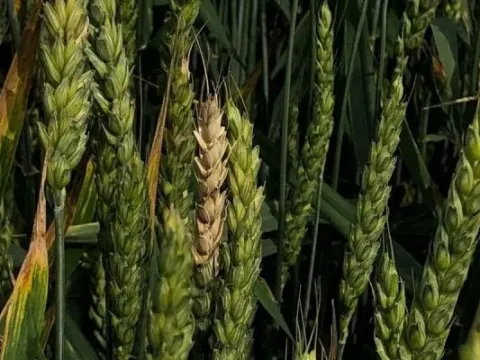
Fusarium proliferatum
Fusarium proliferatum
Fusarium proliferatum is a member of the kingdom Fungi, phylum Ascomycota, and genus Fusarium. It is a highly significant soil-borne plant pathogen recognized for its broad host range and potential to produce hazardous mycotoxins.
What the section contains
Fusarium proliferatum
The fungus is characterized by the production of microconidia arranged in chains, which is a key microscopic feature for laboratory identification. Its mycelium typically appears as white to pale violet colonies.
Genetically, it is closely related to Fusarium verticillioides. It is considered a facultative parasite, capable of surviving on decaying organic matter in the soil for extended periods of time between growing seasons.
The pathogen is highly adaptable to various environmental conditions, making it a persistent threat in diverse agricultural regions worldwide. It thrives in soils containing high levels of organic carbon.
Accurate identification is crucial for effective management, often requiring PCR-based molecular techniques to differentiate it from other species within the Fusarium fujikuroi complex.
This pathogen causes severe damage to numerous essential crops, including maize, wheat, rice, sorghum, asparagus, and various onion species. It is a major cause of economic losses in agriculture.
In maize, it is a primary agent of Fusarium ear rot, leading to poor grain development and yield reduction. The infestation often compromises the overall grain quality significantly.
Root and crown rot are common symptoms in vegetable crops, such as onions and garlic, often leading to total plant failure during the peak of the growing season.
A critical aspect of the damage caused by Fusarium proliferatum is the production of fumonisins and other mycotoxins, which can render grain unsuitable for human or livestock consumption.
Indirect damage includes decreased seed germination rates and increased susceptibility of seedlings to other opportunistic soil pathogens, leading to patchy and sparse stands.
The infection cycle typically begins in the early spring, when spores in the soil infect germinating seeds or young root systems, leading to seedling blight.
Secondary infections often occur during the flowering stage of crops like maize. Spores are dispersed via rain splashes and wind, landing on silk or vulnerable plant tissues.
Warm and humid weather conditions, specifically temperatures between 22°C and 28°C and high humidity, significantly accelerate the spread and colonization of plant tissues.
Late-season rainfall often correlates with increased severity of ear rot in corn, as the fungus takes advantage of high moisture levels to colonize maturing kernels.
The fungus can overwinter in soil, crop residues, or infected seeds, providing a persistent source of inoculum for subsequent planting seasons in affected fields.
The initial signs of infection include pre-emergence or post-emergence damping-off, where the plant appears stunted, chlorotic, or collapses entirely due to root decay.
On maize ears, the infection manifests as a white or pinkish fluffy mycelial growth that can spread across individual kernels or encompass the entire ear.
In onion and asparagus, foliage may show premature yellowing, tip dieback, and stunted growth, indicating severe impairment of the vascular and root systems.
- Darkening and rot of the root system and root crown.
- Visible fuzzy white or rose-colored mold on infected tissue.
- Stunting of the entire plant or delayed development.
- Presence of a musty odor in infected seeds or storage organs.
Microscopic examination of infected tissues will typically reveal the presence of characteristic microconidial chains, which confirms the pathogen's identity.
Crop rotation is the most effective cultural practice to manage Fusarium proliferatum, as it helps break the life cycle of the soil-borne pathogen.
Seed treatment with professional-grade fungicides is essential to protect young plants from soil-borne inoculum during the critical initial stages of development.
Implementing integrated pest management (IPM) to control insects that feed on stalks and ears is vital, as insect-inflicted wounds provide easy entry points for fungal spores.
Selecting and planting hybrid varieties with documented resistance to Fusarium diseases can significantly reduce the risk of infection and yield loss.
Post-harvest management, including the deep plowing of crop residues, helps incorporate organic matter into the soil, promoting microbial antagonism that suppresses fungal survival.