
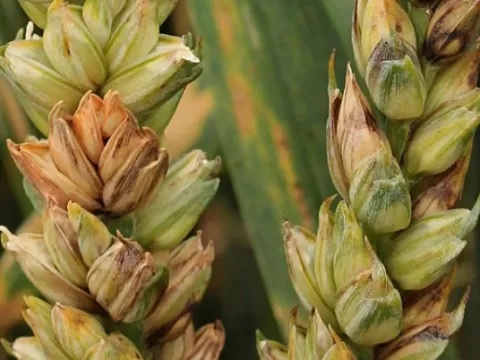
Fusarium poae
Fusarium poae
Fusarium poae is a microscopic fungus belonging to the kingdom Fungi, phylum Ascomycota, and genus Fusarium. It is a specialized plant pathogen responsible for significant diseases in various agricultural crops.
What the section contains
Fusarium poae
In natural conditions, the fungus typically produces a fluffy mycelium that ranges from white to pink in color. Its reproduction is facilitated by microconidia and macroconidia, which allow the pathogen to spread rapidly within crop fields.
Systematically, this species is part of the Fusarium complex causing head blight. It is frequently encountered in temperate climates and is known as a prolific producer of various mycotoxins.
Identifying this species in the field is difficult, as it shares symptoms with other Fusarium species. Consequently, professional laboratory analysis of infected plant material is required for accurate identification.
The pathogen is highly resilient and persists in soil, on plant debris, and can be seed-borne. This ability to survive in various environments makes it a challenging pest to manage effectively.
The primary hosts for Fusarium poae are cereal crops, including wheat, barley, rye, and oats. The fungus can infect both vegetative parts and the reproductive organs of the plants.
Infection disrupts the grain-filling process, resulting in shriveled, lightweight grains. This loss in grain mass and quality significantly impacts both the yield and the market value of the crop.
Besides cereals, the fungus also attacks maize and various wild grasses, serving as a continuous source of inoculum in agricultural landscapes where monocultures are frequently practiced.
A major concern is the accumulation of mycotoxins in the infected grain. These toxins are hazardous to both humans and livestock, often rendering the harvest unsuitable for food or feed processing.
The economic impact of this pathogen includes direct yield losses and significant financial loss due to grain quality downgrades, which often fail to meet strict safety and industrial standards.
Pathogen development typically begins in spring when soil temperatures reach +10…+15°C and moisture levels are high. Primary infection usually originates from infested soil or crop residues.
The flowering phase of cereal crops is the most critical period, as Fusarium poae actively attacks the developing heads. During this stage, spores are dispersed by wind, rain splashes, or insect vectors.
Warm and humid weather conditions during the flowering phase significantly accelerate the spread of the disease. In such conditions, spores can germinate and penetrate plant tissues within a few hours.
As the season approaches harvest, the fungus enters a dormant state by forming chlamydospores. These resilient structures survive adverse environmental conditions in the soil, waiting for the next season.
The disease cycle is tightly coupled with cereal phenology and weather patterns, making crops that flower during humid, rainy weather most susceptible to severe infections.
The first signs of infection are often characterized by premature bleaching of the head. Affected spikelets or parts of the head appear dry and bleached against the healthy, green plant tissue.
A characteristic sign is the appearance of a pink or orange-colored mold on the glumes. This mold consists of fungal mycelium and a vast number of spores developing on the surface of the tissue.
When the stem or leaf sheath is infected, tissue darkening and necrosis occur. This can lead to stem weakness and lodging, which makes the crop difficult to harvest and further reduces grain quality.
Internal changes in the grain include loss of luster, dull coloring, increased brittleness, and visible evidence of fungal colonization within the seed tissues.
Severe infection often results in empty heads (floret sterility) or the formation of extremely underdeveloped, shriveled seeds that have a very low germination rate.
Effective control of Fusarium poae requires an integrated approach that combines cultural, chemical, and biological strategies to disrupt the pathogen's life cycle and reduce inoculum.
- Implementing crop rotation to avoid planting cereals after high-risk previous crops that harbor the fungus.
- Deep plowing or thorough incorporation of crop residues into the soil to accelerate decomposition.
- Using high-quality, certified seeds and applying appropriate fungicidal seed treatments.
- Applying systemic fungicides during the flowering stage, which is crucial for preventing head infection.
- Managing insect pests that damage heads, as they create infection sites and facilitate the spread of fungal spores.