
Fusarium moniliforme
Fusarium moniliforme
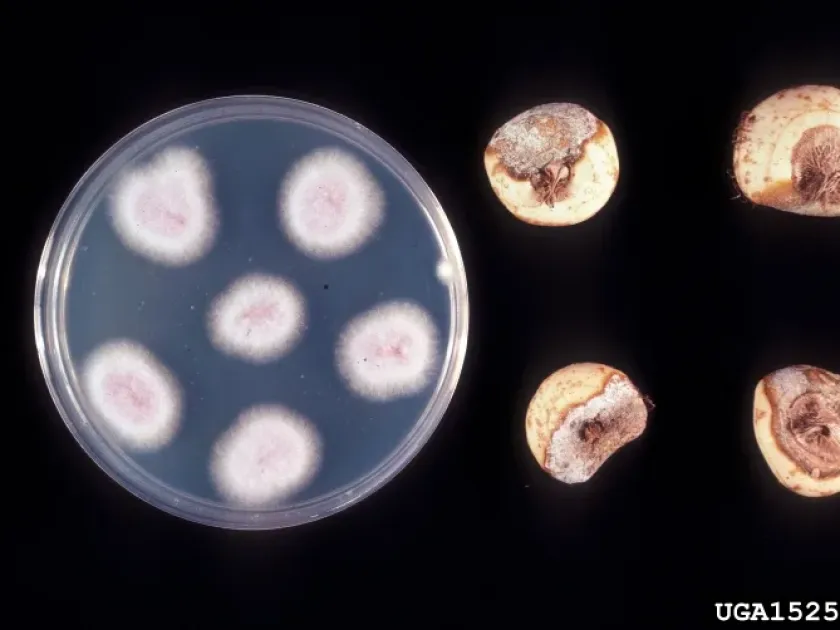
Description
How to identify
Fusarium moniliforme, currently recognized as Fusarium verticillioides in modern taxonomy, belongs to the kingdom Fungi, phylum Ascomycota. It is an imperfect fungus that produces microconidia, macroconidia, and chlamydospores.
The mycelium of the fungus is typically white or pinkish, aerial and cottony. A primary diagnostic characteristic is the formation of microconidia in chains, which helps researchers distinguish it from other related species within the genus.
The life cycle includes both asexual reproduction through conidia and sexual reproduction via its teleomorph, Gibberella moniliformis. The pathogen survives efficiently in soil and on crop residues through thick-walled chlamydospores.
Infection spreads through contaminated seed, soil, and the dispersal of conidia by wind and water splash. It thrives in warm, humid climates, which facilitate the rapid spread of spores throughout the field.
This pathogen is widely studied due to its ability to produce mycotoxins, specifically fumonisins, which pose significant health risks to livestock and humans consuming infected grain.
What it damages
Corn is the primary host for Fusarium moniliforme. The pathogen is responsible for systemic infections causing root rot, stalk rot, and most notably, ear rot in maize crops.
Beyond corn, the fungus can infect sorghum, rice, sugarcane, and cotton, acting as a versatile pathogen that survives in diverse agricultural ecosystems across the globe.
The damage is reflected in reduced crop yields, poor grain filling, and substantial economic losses. It impairs the nutrient uptake of the plant and limits its overall growth potential.
Stalk rot caused by this pathogen weakens the structure of the corn stalk, leading to lodging, which complicates mechanical harvesting and results in further yield loss in the field.
Grain quality is severely compromised, rendering it unsuitable for feed or food processing due to the presence of fungal toxins, which remain stable even during certain processing methods.
Signs of infestation
Ear infection symptoms are visible as a white or pale pink powdery growth appearing on the kernels, often spreading across the entire ear under moist conditions.
Stalk infection manifests as internal discoloration and rotting of the pith. When the stalk is split, the internal tissues often appear soft, brown, and disintegrated.
Seedling blight is a common symptom when infected seeds are used; the seedlings may fail to emerge or appear chlorotic and stunted shortly after germination.
Plants might show premature senescence, appearing dry and brittle in the field while surrounding healthy plants remain green, indicating a disruption in the vascular system.
- White or pinkish fungal mycelium on ears.
- Internal stalk pith decay and discoloration.
- Poor stand establishment and seedling death.
- Lodging due to weakened root and stalk integrity.
Control measures
The most effective strategy involves an integrated pest management approach, emphasizing the use of certified pathogen-free seeds and resistant corn hybrids.
Seed treatment with systemic fungicides is a crucial step to protect young seedlings from early-stage infections that originate from the soil or the seed coat itself.
Good agricultural practices, such as crop rotation and the thorough incorporation of crop residues into the soil, help reduce the primary inoculum load in the field.
Controlling insect pests that damage the ear is vital, as these injuries provide entry points for fungal spores, significantly increasing the risk of infection in the crop.
In high-risk areas, the timely application of foliar fungicides during the silking stage can mitigate the spread and colonization of the fungus on corn ears.
Causes diseases · 2
Discussion
No discussions yet — be the first.