
Fungal phytopathogens
Fungi and
Fungal phytopathogens are a diverse group of organisms belonging to the kingdom Fungi that have evolved to parasitize plants. Their vegetative structure consists of a network of hyphae known as mycelium, which colonizes the host tissue.
What the section contains
Fungal phytopathogens
Most of these pathogens belong to the phyla Ascomycota and Basidiomycota. They reproduce primarily through spores — such as conidia, ascospores, or basidiospores — which allow them to spread rapidly via wind, water, or mechanical contact.
Pathogens infiltrate plant tissues through natural openings like stomata or through wounds caused by insects or mechanical damage. Once inside, they secrete enzymes that degrade plant cell walls, allowing the fungus to extract nutrients from the host.
Accurate identification often requires laboratory diagnostics, including microscopic examination or molecular methods like PCR, as field symptoms of different fungal infections can appear remarkably similar.
Understanding the systematic position of a pathogen is crucial for agronomists, as it determines the specific lifecycle vulnerabilities and the most effective timing for intervention strategies.
Fungal phytopathogens cause significant damage to virtually all agricultural crops, ranging from cereals and vegetables to orchards. In severe cases, they can lead to complete yield loss during epidemic outbreaks.
Common diseases include rusts, powdery mildew, various types of rots, and wilt syndromes like Fusarium. Fungi can attack roots, stems, leaves, and fruits, severely disrupting the normal physiological processes of the plant.
Root rot pathogens destroy the plant's ability to absorb water and minerals, leading to rapid wilting. Foliar infections destroy photosynthetic tissue, resulting in reduced biomass, stunted growth, and poor crop maturation.
Many fungi produce mycotoxins — secondary metabolites that are toxic to humans and livestock. The presence of these toxins often leads to the rejection of grain batches and massive economic losses in the food industry.
Furthermore, fungal diseases negatively impact the quality of planting material, causing poor seed germination and weak seedling vigor, which leads to thinning plant stands in the field.
The development of fungal diseases is strictly dependent on environmental conditions, particularly humidity and temperature. Spring often marks the beginning of the infection cycle as warming soil triggers spore germination.
Periods of high humidity, such as fog, dew, or heavy rainfall, are the primary catalysts for infection spread. Many fungi rely on water films on leaf surfaces to facilitate the movement of spores and subsequent colonization.
During the summer, dense crop canopies create a humid microclimate that favors rapid fungal growth. Poor air circulation within these stands allows the mycelium to thrive, often leading to sudden outbreaks.
As autumn approaches, many fungi transition to survival stages, creating sclerotia, chlamydospores, or other resilient structures that can survive harsh winter temperatures in the soil or on crop debris.
By monitoring meteorological data, agronomists can calculate the risk level for various diseases, allowing for timely application of protective measures before the pathogen becomes uncontrollable.
Signs of fungal infection include various morphological changes in plant tissues, ranging from chlorosis and necrosis to the development of fungal structures on the plant surface.
- White or grey powdery fungal growth characteristic of powdery mildew.
- Pustules (spore clusters) on leaves and stems, often ranging in color from orange to black (rust diseases).
- Lesions or spots with distinct halos, often indicating blight or leaf spot diseases.
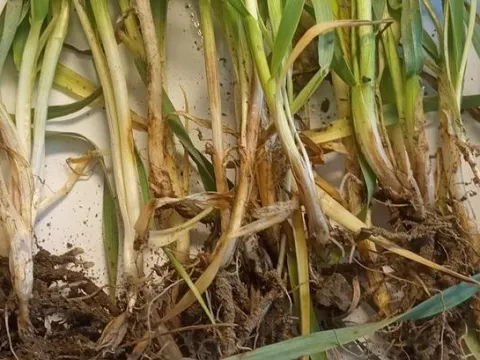
- Soft rot or tissue degradation, often accompanied by discoloration of stems.
- Deformed growth, such as curling leaves, galls, or stunted stalks.
Early visual diagnosis in the field is essential for minimizing the spread of infection, as it allows for immediate targeted treatment before the pathogen achieves widespread colonization.
Effective management of fungal phytopathogens requires an integrated approach that combines cultural, chemical, and biological strategies to minimize disease pressure.
Cultural practices are the first line of defense; they include crop rotation to break the pathogen lifecycle, deep plowing to bury infested residue, and the use of resistant or tolerant crop varieties.
Chemical control involves the application of fungicides, either as seed treatments to prevent early-season infections or as foliar sprays during the growing season to protect developing tissues.
Resistance management is vital in chemical control; growers must rotate fungicides with different modes of action to prevent the selection of resistant fungal strains that can render treatments ineffective.
Biological control, utilizing beneficial microorganisms such as Trichoderma or Bacillus species, provides an eco-friendly way to suppress pathogens by competing for nutrients or by directly attacking fungal mycelium.