
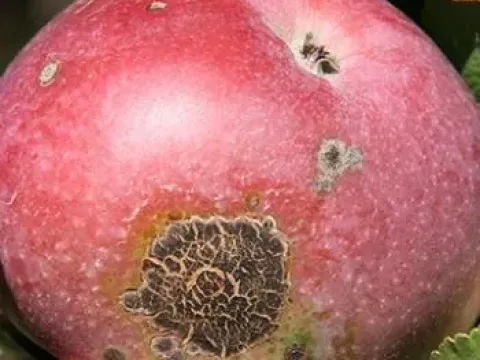
Fruit injury
Fruit injury
Fruit injury refers to any structural or physiological damage to the fruit's surface or internal tissue, which acts as a primary entry point for opportunistic pathogens. It is a critical issue in both horticultural production and post-harvest logistics.
What the section contains
Fruit injury
These injuries are often colonized by common fungal pathogens such as Monilinia spp., Botrytis cinerea, and Penicillium expansum. Without these physical openings, many pathogens would be unable to penetrate the waxy cuticle of a healthy fruit.
Classification of fruit injury covers both abiotic factors (hail, frost cracks, wind bruising) and biotic factors (feeding wounds from insects, punctures by larvae, or bird damage).
Diagnosis requires a thorough examination of the lesion. If the center of the injury shows signs of mycelial growth or bacterial oozing, the damage has become an active site of infection.
Understanding the nature of the injury is essential for agronomists to determine whether the problem requires chemical intervention, orchard netting for protection, or improved handling protocols.
Fruit injury affects all major crops, including pome fruits (apples, pears), stone fruits (peaches, cherries), and various solanaceous vegetables. The damage manifests as physical disfigurement and internal breakdown.
The primary economic impact is the direct loss of marketability. Injured fruit is rejected at sorting stations, leading to reduced profitability for the grower and waste in the food supply chain.
Furthermore, injured fruit serves as a focal point for secondary spread. Once a single fruit begins to rot in a crate, the decay can quickly spread to adjacent healthy fruits, leading to mass spoilage.
Physiologically, injury triggers ethylene production, which accelerates the ripening and senescence processes. This results in the premature softening and degradation of the fruit's texture.
In addition to direct loss, fruit injury forces growers to incur additional expenses for sorting labor and the disposal of infected organic matter, which can harbor further inoculum in the orchard.
The timing of fruit injury spans the entire production cycle. Early-season injuries are often weather-related, occurring during blossom or fruit set when frost or heavy wind causes physical damage to the tender epidermis.
Summer is characterized by damage from insect populations, such as codling moths or fruit flies. These pests create galleries within the fruit, providing direct access for fungal and bacterial agents to reach the internal tissue.
Pre-harvest and harvest periods are critical. Mechanical impact during picking, bruising in containers, and poor transport conditions are the most common causes of injury that lead to severe post-harvest losses.
Environmental conditions play a major role in the development of rot after the injury occurs. Warm, humid weather accelerates the incubation period of pathogens, often leading to rapid tissue collapse within 48 hours.
Seasonal management plans must account for these periods, ensuring that protective measures are in place before the fruit reaches the vulnerable stage of maturation.
The most common sign of fruit injury is a localized necrotic lesion that may be depressed or discolored. In many cases, this is followed by a halo of lighter tissue or a rapid spread of decay.
- Surface blemishes or visible punctures.
- Development of circular, soft, dark spots.
- Fungal sporulation (gray, white, or blue-green mold).
- Water-soaked appearance of the surrounding tissue.
- Fermentation odors resulting from microbial activity.
In some instances, internal browning or collapse may occur without obvious external symptoms, which is typical for specific physiological disorders triggered by initial physical stress.
Viral infections may also cause fruit deformations, which act as points of weakness, though these usually lack the distinct fungal mold associated with necrotic injuries.
Any loss of firmness or integrity of the fruit skin, even if minor, should be treated as a potential site for infection and prioritized for removal or immediate processing.
Effective control starts with integrated pest management (IPM) to reduce insect damage, which is a major precursor to fruit injury. Using orchard netting and pheromone traps can significantly lower the incidence of primary wounds.
Nutritional management is also key; maintaining sufficient calcium levels in fruit improves cell wall stability, making the skin more resistant to cracking and physical stress during development.
During the harvest, staff must be trained in careful handling techniques to avoid bruising. Using cushioned bins and temperature-controlled transport helps minimize damage that occurs after the fruit leaves the tree.
Fungicide applications, when necessary and timed correctly, can protect the fruit surface from pathogen germination, providing a safety net for any unavoidable minor micro-injuries.
In cold storage facilities, maintaining precise temperatures and airflow is crucial. Rapid cooling reduces the metabolic rate of the fruit and slows down the growth of decay-causing microorganisms in the event of injury.