
Fusarium boothii
Fusarium boothii
Fusarium boothii is a member of the kingdom Fungi, phylum Ascomycota, genus Fusarium. It is a critical plant pathogen within the Fusarium graminearum species complex.
What the section contains
Fusarium boothii
This fungus is a filamentous organism capable of producing macroconidia in sporodochia and ascospores in perithecia, which facilitates its persistence in soil and crop debris.
As a specialized fungal species, Fusarium boothii possesses unique genetic markers that differentiate it from other related species, although they are morphologically similar.
Accurate identification of this pathogen usually requires molecular techniques like PCR analysis, as traditional methods cannot easily distinguish it from other Fusarium species in the field.
This fungus has evolved to efficiently infect a variety of hosts, making it a globally significant pathogen in major grain-producing regions.
This pathogen is primarily known for causing Fusarium head blight (FHB) in small grain cereals and ear rot in maize, leading to substantial economic losses.
Key agricultural crops affected include wheat, barley, rye, and maize, all of which are essential for global food security and feed production.
The damage caused by Fusarium boothii extends beyond yield reduction; it involves the severe contamination of grains with mycotoxins like deoxynivalenol (DON).
Infected crops exhibit lower test weight, reduced germination rates, and poor storage quality, which makes the product unsuitable for human consumption or animal feed.
The cumulative impact on agriculture is profound, as the presence of mycotoxins often leads to the rejection of harvests by commercial grain processors and exporters.
The life cycle begins with the fungus overwintering as mycelium, perithecia, or chlamydospores on infested crop residues left on the soil surface.
During the flowering stage of crops, spores are dispersed by wind and rain splashes to the wheat heads or maize silks, which are the most susceptible plant tissues.
Warm temperatures combined with high relative humidity (above 85%) during the anthesis stage create optimal environmental conditions for infection and disease progression.
Multiple generations of spores can be produced throughout the growing season, potentially leading to rapid disease outbreaks if favorable weather persists.
The pathogen is particularly problematic in fields with continuous monocropping and minimal tillage practices, where fungal inoculum remains prevalent in the environment.
The most common symptom on wheat is the premature bleaching of parts of the spike, often accompanied by a pink or orange fungal growth on the glumes.
Infected maize ears show extensive white or pinkish fluffy mycelium, which eventually covers the kernels and can result in the complete decay of the ear.
Affected grains often appear shriveled, discolored, and light in weight, indicating a loss of starch and protein content due to fungal colonization.
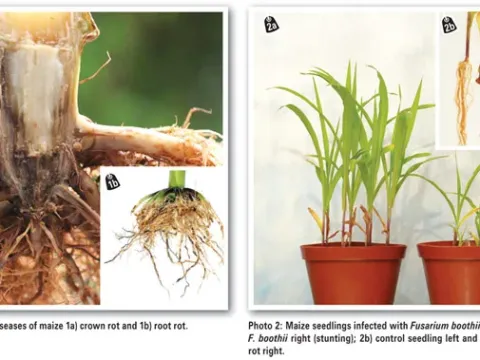
Seedling blight, another manifestation of the pathogen, appears as stunted growth, root decay, and the death of young plants shortly after emergence.
- Premature bleaching of grain spikes
- Pink or orange sporulation on glumes
- Cottony white mycelium on maize ears
- Shriveled and light-weight grains
- Damping-off of seedlings
Effective management begins with strict crop rotation, ensuring that cereals are not grown after maize to avoid the buildup of the pathogen in the soil.
Cultural practices such as deep tillage help bury crop residues, which accelerates their decomposition and reduces the viability of fungal structures.
Applying fungicides during the flowering period is a standard practice to suppress Fusarium infection and significantly decrease the level of mycotoxins in the grain.
Seed treatment with systemic fungicides is essential to protect young seedlings from early-stage infections and to ensure proper establishment of the crop.
Using resistant or tolerant crop cultivars, developed through intensive breeding programs, remains a highly sustainable and effective component of integrated pest management.