
Fuligo
Fuligo
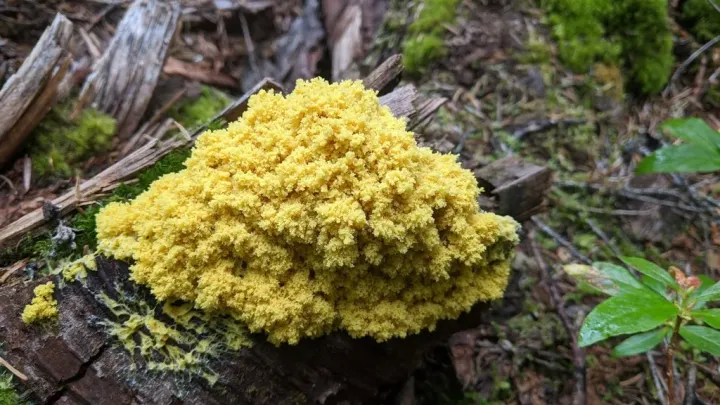
Description
How to identify
Fuligo (genus Fuligo) belongs to the group of organisms known as myxomycetes or slime molds. Biologically, they are not fungi, but rather plasmodial organisms that exist as a large mass of multi-nucleated cytoplasm capable of amoeboid movement.
The most prominent species, Fuligo septica, is commonly referred to as dog vomit slime mold due to its distinct yellowish, foamy appearance. It is primarily a saprotroph, decomposing organic matter such as wood chips, mulch, and decaying plant tissue.
The life cycle involves a plasmodium stage, where the organism moves across surfaces in search of nutrients. This stage is characterized by its bright yellow, cream, or orange color and a soft, viscous, foam-like texture.
As the plasmodium matures, it transforms into an aethalium, a reproductive structure filled with dark spores. At this stage, the body becomes firmer, dry, and often turns darker, ranging from grey to black, and releases spores for dispersal.
In an agricultural context, Fuligo is considered a surface contaminant. It does not infect the plant's vascular system, but its physical presence can cause ecological shifts in the plant's immediate environment.
What it damages
Fuligo most frequently affects lawn grasses, nursery plants, and vegetable seedlings, especially those growing in damp, heavily mulched environments. It thrives in shaded areas with high moisture levels.
The primary damage is caused by the physical smothering of plant foliage and stems. By covering the plant surface, the slime mold blocks light and hinders gas exchange, effectively depriving the plant of the ability to photosynthesize efficiently.
The moisture trapped beneath the slime layer creates an ideal micro-environment for secondary infections. Bacteria and pathogenic fungi often colonize the area covered by Fuligo, leading to localized rot and tissue death.
For ornamental plants and lawns, the aesthetic damage is significant. The sudden appearance of bright, unsightly patches of slime mold can be alarming to property owners and requires prompt removal for visual maintenance.
While Fuligo does not derive nutrients from living plant tissues, its mass-spreading nature can suppress young, fragile seedlings, potentially causing stunted growth due to light deprivation and increased humidity stress.
When it appears
The development of Fuligo is closely tied to periods of warm and wet weather. It is most active after heavy rainfall, particularly during the late spring and summer months when temperatures range between 15 and 25 degrees Celsius.
The life cycle initiates when spores germinate in moisture to form flagellated cells or myxamoebae. These cells eventually fuse to form the plasmodium, which migrates across the soil or plant surfaces to consume organic matter.
Sporulation (the formation of the dark aethalia) is typically triggered by environmental stressors such as drying conditions or a depletion of the organic food source. This transition happens rapidly, often within a few days of the plasmodium's emergence.
The spores of Fuligo are highly resilient and can remain dormant in the soil for years. They are easily dispersed by wind, splashing rain, or garden tools, allowing the organism to colonize new areas quickly when conditions are favorable.
Once conditions become dry, the organism enters a dormant phase or forms the hard, spore-bearing body, waiting for the return of high moisture to reactivate the cycle.
Signs of infestation
The most recognizable sign is the sudden emergence of a bright yellow or cream-colored foam-like substance on stems, leaves, or mulch. The texture is initially wet, soft, and sponge-like.
Over a short period, the substance begins to harden and change color, eventually becoming a brittle, grey, or black crust. If touched, this crust easily breaks, releasing a fine, dark, dusty powder composed of countless spores.
Plants affected by the slime mold may appear wilted or show signs of yellowing due to reduced photosynthesis. In dense lawn areas, a faint, musty odor may be present near the patches due to the decomposition of organic matter beneath the mold.
- Bright yellow or orange foamy patches on surfaces.
- Transformation from a wet, gooey consistency to a hard, crusty texture.
- Dark powdery spores released upon physical contact with mature bodies.
- Localized suppression of plant growth under the covered surface.
Distinguishing Fuligo from fungal pathogens like powdery mildew is straightforward: Fuligo is purely superficial, does not cause necrosis or lesions within the leaf tissue, and can be easily washed or wiped away.
Control measures
Effective management focuses on moisture control and cultural practices. Ensuring proper drainage and soil aeration is the most critical step in discouraging the colonization of Fuligo in gardens and nurseries.
Removing the food source is essential; clean up decaying wood, old mulch, and dense organic debris. Replacing mulch with less moisture-retentive alternatives can also help reduce the frequency of outbreaks.
On a small scale, the physical removal of the plasmodium using a strong stream of water or a brush is highly effective. Once the slimy mass is removed, allow the plant and surrounding soil surface to dry out completely.
Chemical control is generally unnecessary and often ineffective against slime molds. Copper-based fungicides may provide a temporary deterrent, but cultural and mechanical management remains the industry standard for control.
Prevention relies on optimized irrigation scheduling. By watering in the early morning, plants have the entire day to dry out, which prevents the prolonged damp conditions required for Fuligo to develop and spread.
Causes diseases · 1
Discussion
No discussions yet — be the first.